
What Makes a Good Video?

Key takeaways:
- Start with a clear purpose so you know exactly what you want the video to communicate.
- Understand your audience and adapt the content, language, length and style accordingly.
- Give the video a clear structure, with a beginning, middle and end that are easy to follow.
- Plan before filming using a script, storyboard or shot list where appropriate.
- Think carefully about composition and framing to keep shots clear and visually interesting.
- Prioritise good audio, as unclear dialogue can make even high-quality footage difficult to watch.
- Use lighting thoughtfully to ensure subjects are visible and to create the right atmosphere.
- Keep the viewer interested by removing unnecessary repetition and making each section contribute to the video.
- Edit with purpose rather than adding transitions, effects or graphics simply because they are available.
- Use storytelling techniques to create curiosity and give viewers a reason to keep watching.
- Experiment with different approaches and recognise that unsuccessful ideas are part of developing creative skills.
- Ask for feedback to understand how other people experience and interpret the finished video.
- Expensive equipment is not essential — a strong idea, clear sound, considered framing and effective editing are more important.
- Creating videos can develop transferable skills, including creativity, communication, organisation, collaboration and problem-solving.
- Tie-in to Atlas Summer Courses: skills involved in making effective videos — such as communication, critical thinking, creativity and responding to feedback — are valuable across many academic subjects.
- Do not suggest that filmmaking or video production is a standard part of Atlas Summer Courses unless it is specifically included in the current course.
- Main takeaway: a good video is not necessarily the one with the biggest budget or most impressive effects; it is one that knows what it wants to communicate and communicates it effectively.
What Makes a Good Video?
Video is one of the most versatile ways to communicate an idea. A good video can explain a complicated subject, tell a story, introduce an argument or capture somebody’s attention in a matter of seconds.
But good video is about much more than having an expensive camera or knowing how to edit.
The strongest videos usually begin with something simpler: a clear idea of what you want to communicate and who you want to communicate it to. Everything else — the script, shots, sound, editing and graphics — should help achieve that purpose.
Whether you are creating a video for a school project, presentation, social media or simply for fun, these principles can help you produce something more engaging and effective.
1. Start With a Clear Purpose
Before thinking about cameras, locations or editing software, ask yourself one question:
What is this video supposed to do?
Perhaps you want to explain something. Maybe you want to persuade an audience, document an experience, tell a fictional story or make people laugh.
Trying to achieve too many things at once can make a video confusing. A clear purpose gives you something against which every creative decision can be tested.
If a scene, graphic or piece of dialogue does not help communicate your central idea, ask whether you really need it.
2. Understand Your Audience
A good video is made with its audience in mind.
A scientific explanation for younger students will probably look very different from a video presenting the same subject to university students. A short social video requires a different approach from a documentary or academic presentation.
Think about what your audience already knows, what they might find interesting and what you want them to understand by the end.
This does not mean simply creating whatever you think people want to see. It means communicating your ideas in a way that makes sense to the people watching.
3. Give Your Video a Strong Structure
Even a short video benefits from structure.
In its simplest form, that might mean:
Beginning: introduce the subject and give people a reason to continue watching.
Middle: develop the idea, argument or story.
End: bring everything together and leave the viewer with something memorable.
You do not have to follow a conventional narrative every time, but viewers should be able to understand how one part of the video connects with the next.
Planning that structure before filming can also save considerable time during editing.
4. Plan Before You Start Filming
It can be tempting to pick up a camera and start recording immediately.
Sometimes spontaneity works. For more complicated videos, planning usually helps.
Depending on the project, you might create a script, shot list or storyboard before filming. A storyboard does not need to contain beautiful drawings; simple sketches showing what you want the viewer to see can be enough.
Planning encourages you to think about practical questions too. Where will you film? Who needs to be there? What equipment or props do you need? Are there noises or interruptions you need to consider?
The more problems you solve beforehand, the easier filming becomes.
5. Pay Attention to Composition
Where you position people and objects within the frame affects how a video looks and feels.
Rather than automatically putting everything directly in the centre, experiment with different framing. Consider the background as well as your main subject and remove anything unnecessarily distracting.
You can also vary your shots.
A wide shot can establish a location. A medium shot can show a person and their surroundings. A close-up can draw attention to an expression or important detail.
Using different perspectives gives you more options when editing and can make the finished video more visually interesting.
6. Don't Ignore the Sound
People often concentrate on picture quality when making their first videos, but sound can be just as important.
If viewers cannot clearly understand what somebody is saying, even beautifully filmed footage can become frustrating to watch.
Try to record somewhere without excessive background noise. Listen for traffic, wind, air conditioning, conversations and other sounds that you may not initially notice.
If possible, test your audio before recording an entire scene.
Music and sound effects can also influence atmosphere, but they should support the video rather than overwhelm dialogue or distract from its purpose. You should also make sure you have permission or an appropriate licence to use music, images and other material created by somebody else.
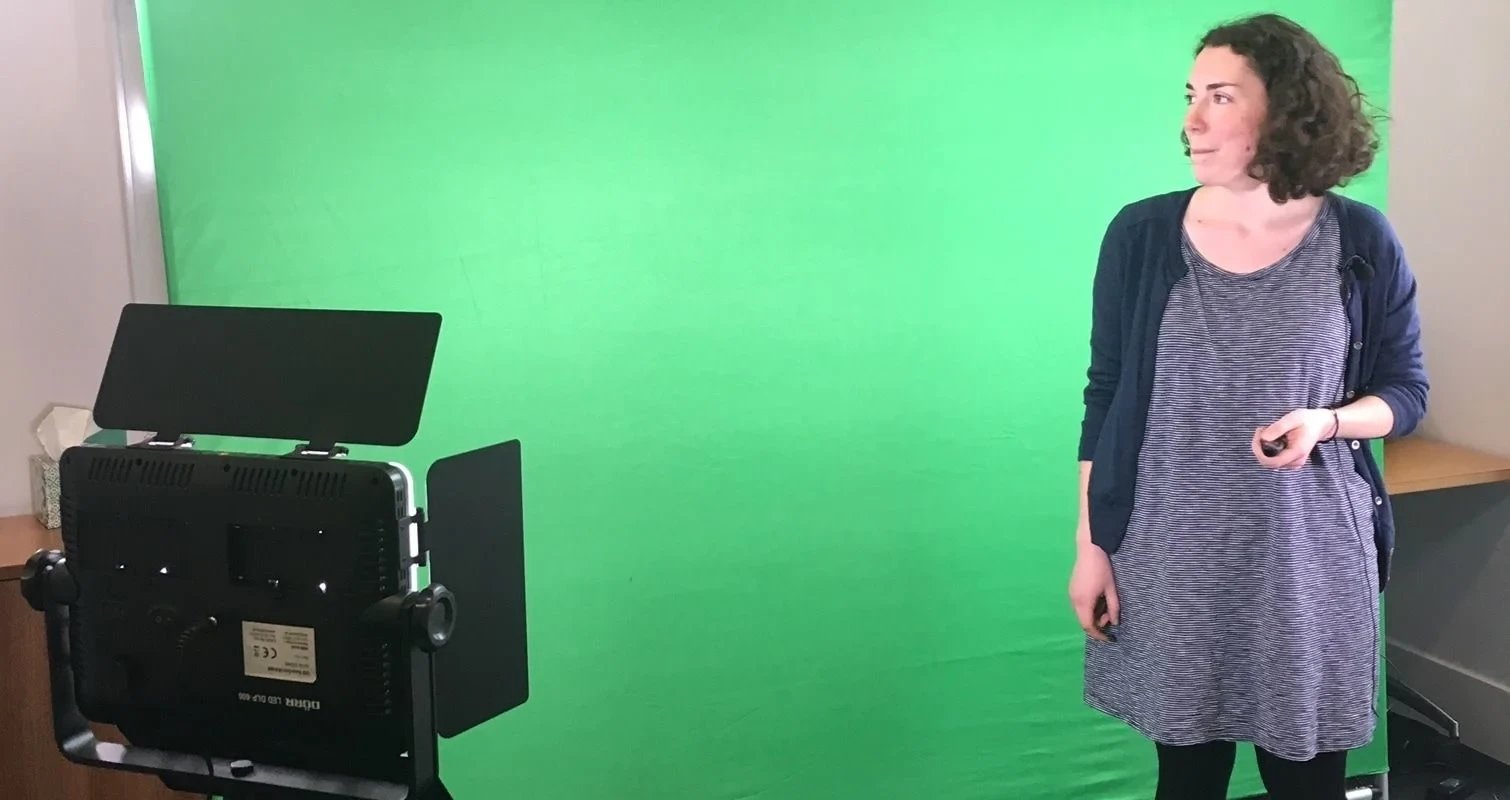
7. Think Carefully About Lighting
You do not necessarily need professional lighting equipment to create a clear image.
Natural light can work extremely well.
What matters is understanding where your light is coming from. If somebody stands in front of a bright window, for example, the camera may expose for the window and leave their face looking dark.
Try different positions and look at the image before recording.
Lighting can also be creative. Bright, even lighting might suit an explanatory video, while shadows and contrast could contribute to the atmosphere of a fictional scene.
The important thing is for the choice to feel deliberate.
8. Keep the Viewer Interested
A good video respects the viewer's attention.
That does not mean every video needs rapid cuts, dramatic music or constant movement. Sometimes a slow pace is exactly right.
Instead, ask whether each section is contributing something.
Could a 30-second explanation be communicated clearly in 15 seconds? Have you repeated a point? Is a particular shot staying on screen longer than necessary?
Good pacing depends on the subject, audience and format.
The aim is not always to make a video shorter. It is to make every part earn its place.
9. Edit With a Purpose
Editing is where separate pieces of footage become a finished video.
It is also where you make difficult decisions.
You might love a particular shot but discover that it slows the video down. A section that seemed essential when you wrote the script might turn out to be unnecessary once everything is assembled.
Be prepared to remove things.
Editing can also improve clarity through titles, graphics, captions and other visual information. But adding more effects does not automatically make a video better.
Transitions, animations and graphics should have a reason for being there.
Often, the simplest edit is the most effective.
10. Tell a Story
Storytelling is not limited to films and television programmes.
A documentary tells a story.
An advertisement can tell a story.
A science video might begin with a problem before revealing how researchers attempted to solve it.
Even a presentation can take viewers from a question to an answer.
Thinking in terms of storytelling can help you organise information in a way that creates curiosity and gives viewers a reason to discover what comes next.
Ask yourself what changes between the beginning and end of your video.
If the answer is "nothing", you may need to rethink the structure.
11. Be Willing to Experiment
Video combines a huge number of creative disciplines.
Writing, photography, performance, sound, music, graphic design, animation and editing can all contribute to the final result.
You are unlikely to master all of them immediately.
Experiment with different shots. Try rewriting a scene. Film something from several perspectives. Change the order during editing and see how it affects the story.
Some ideas will not work.
That is useful too.
Creative skills develop partly through understanding why something was unsuccessful and trying a different approach next time.
12. Ask for Feedback
After spending hours making a video, you know exactly what you intended every scene to communicate.
Your audience does not.
Show your work to somebody who was not involved in making it and ask what they understood.
Were any sections confusing?
Did their attention drift anywhere?
What did they remember afterwards?
Feedback does not mean you have to make every change somebody suggests. Creative decisions remain yours.
But understanding how another person experiences your work can reveal things that are difficult to notice when you have watched the same footage dozens of times.
What Skills Can Video-Making Develop?
Creating a video can involve much more than learning how to operate a camera.
Planning requires organisation. Scriptwriting requires clear communication. Storytelling encourages creativity. Filming involves problem-solving. Editing requires attention to detail and the ability to make decisions about what should stay and what should go.
Working as part of a production team can also involve collaboration. People may need to divide responsibilities, listen to different creative ideas and solve problems together.
These skills can be useful well beyond video production.
A student who becomes better at explaining an idea visually may also become a clearer presenter. Someone who learns to edit ruthlessly may start recognising unnecessary information in their writing. Someone directing other people may develop greater confidence communicating what they want to achieve.
Do You Need Expensive Equipment to Make a Good Video?
No.
Professional equipment can provide greater technical control, but equipment alone does not determine whether a video is effective.
Modern phones can record high-quality video, and basic editing tools provide enough functionality for many student projects.
If you have limited equipment, concentrate on the fundamentals:
a strong idea, clear structure, understandable sound, thoughtful framing and purposeful editing.
A technically perfect video with nothing interesting to communicate is unlikely to hold someone's attention.
A simple video with a genuinely good idea can.
Video, Creativity and Learning
Creating something yourself is very different from simply consuming information.
When students produce a video about a subject, they have to decide what matters, organise information, communicate it clearly and consider how somebody else will interpret it.
That process can encourage deeper thinking.
It can also provide a different way for students to express ideas. Some people feel most comfortable writing an essay; others enjoy speaking, designing, performing or creating something visual.
There is value in experimenting with different forms of communication and discovering where your strengths lie.
Developing Creative Skills at Atlas Summer Courses
At Atlas Summer Courses, students are encouraged to participate actively in their learning, ask questions, explore ideas and communicate their thinking.
The exact activities students complete depend on their subject, age group and current course programme, so we should not suggest that video production or filmmaking is a standard component of every Atlas course.
However, many of the skills involved in creating a strong video — creativity, communication, critical thinking, planning, responding to feedback and presenting ideas clearly — are useful across academic subjects.
Learning how to communicate an idea effectively is valuable whether the final result is an essay, presentation, discussion, creative piece or video.
What Makes a Video Good?
There is no single formula.
A two-minute animation, documentary interview, school presentation and short film can all be excellent for completely different reasons.
What they should have in common is intention.
Know what you want to communicate.
Think about your audience.
Plan before you film.
Record clear sound and considered images.
Edit with purpose.
And do not add something simply because you can.
Ultimately, the best videos are not necessarily the ones with the biggest budgets or most impressive effects.
They are the ones that know what they want to say — and find an effective way to say it.
About the author
Rhys Mackenzie is responsible for creating and maintaining educational content at Atlas Summer Courses, helping students and families access clear, accurate information about studying in Oxford. With several years of experience in digital content and student-focused resources, Rhys specialises in presenting academic programmes in a way that reflects the quality and integrity of Atlas Summer Courses' academic offering. Learn more about Rhys here.
Summary
Video's ubiquity doesn't guarantee its effectiveness. At a conference held in Oxford, experts emphasised small adjustments for better results: guiding note-taking, providing context, and arousing curiosity. Atlas Summer Courses seeks transformative education that engages and connects.