
What is Renewable Energy?

Key takeaways:
What Is Renewable Energy?
Renewable energy is energy produced from sources that are naturally replenished, such as sunlight, wind, moving water, geothermal heat and organic material. Unlike fossil fuels, which take millions of years to form and are consumed when used, renewable energy sources can be replaced naturally on human timescales.
Renewable energy has become increasingly important because countries around the world are trying to reduce greenhouse gas emissions, improve energy security and develop more sustainable ways of producing electricity and heat.
However, renewable energy is not one single technology.
Solar panels, wind turbines, hydroelectric dams, geothermal plants and bioenergy systems all work in very different ways. Each has advantages, limitations and environmental impacts that need to be considered.
Understanding renewable energy therefore means looking not only at where the energy comes from, but also at how it is generated, stored, transported and used.
1. Solar Energy
Solar energy uses energy from the Sun.
The most familiar form is solar photovoltaic energy, usually produced by solar panels.
Photovoltaic cells convert sunlight directly into electricity.
When light strikes the material inside a solar cell, it causes electrons to move, creating an electrical current.
Solar panels can be installed on houses, schools, businesses and large solar farms.
One of solar energy's biggest advantages is that sunlight is widely available.
Once panels have been installed, they can generate electricity without burning fuel.
However, solar generation depends on weather and daylight.
Panels do not produce electricity at night, and output can fall significantly during cloudy conditions.
This means solar power often needs to be combined with energy storage, other electricity sources or connections to a wider electricity grid.
2. Wind Energy
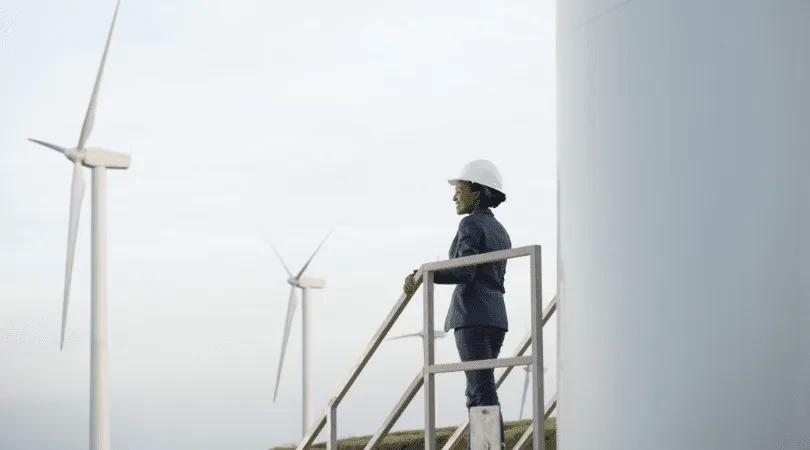
Wind energy uses moving air to generate electricity.
Wind turbines contain blades that rotate when the wind blows.
The rotating blades drive machinery connected to a generator, which converts mechanical movement into electrical energy.
Wind farms can be located on land or offshore.
Offshore wind farms can take advantage of stronger and more consistent winds, although they can be more expensive and technically difficult to construct.
Wind power produces electricity without burning fossil fuels during normal operation.
However, like solar energy, it is variable.
Electricity production depends on wind conditions.
Wind farms can also create debates about landscape, wildlife, noise and where turbines should be located.
3. Hydroelectric Power
Hydroelectric power generates electricity using moving water.
In many hydroelectric systems, water stored behind a dam is released through turbines.
The movement of the water rotates the turbines, which drive generators.
Hydropower can produce large quantities of electricity and has been used for many decades.
One advantage is that some hydroelectric plants can respond relatively quickly to changes in electricity demand.
Reservoirs can also act as forms of energy storage because water can be retained until electricity is required.
However, large dams can significantly alter rivers and surrounding environments.
They may affect fish populations, ecosystems, sediment movement and communities living in areas that become flooded.
Hydroelectric power is renewable, but that does not mean every hydroelectric project has a small environmental impact.
4. Tidal Energy
Tidal energy uses the movement of seawater caused by tides.
Tides are highly predictable because they are influenced by the gravitational interactions between the Earth, Moon and Sun.
Some tidal systems use underwater turbines placed in areas with strong tidal currents.
Others involve larger structures that control the movement of water through estuaries or coastal areas.
The predictability of tides can be an advantage compared with wind or sunlight.
However, tidal energy remains less widely used than solar, wind or hydroelectric power.
Suitable locations are limited, construction can be expensive and equipment needs to operate reliably in demanding marine environments.
Tidal projects can also affect coastal ecosystems.
5. Wave Energy
Wave energy attempts to capture energy from waves moving across the surface of the sea.
Different technologies have been developed.
Some systems use floating devices.
Others use chambers in which waves move air through turbines.
The oceans contain enormous amounts of energy, making wave power potentially attractive.
However, converting that energy reliably and economically is difficult.
Equipment must survive storms, saltwater corrosion and constant movement.
Wave energy is therefore less commercially developed than wind and solar power.
Its future role will depend partly on whether technologies can become cheaper and more durable.
6. Geothermal Energy
Geothermal energy uses heat from inside the Earth.
The Earth's interior contains enormous amounts of thermal energy.
In some regions, underground heat is close enough to the surface that hot water or steam can be accessed relatively easily.
That heat can be used directly for buildings or used to generate electricity.
Geothermal plants can provide steady power because they do not depend on sunlight or wind.
This makes geothermal energy particularly useful as a continuous source of electricity in suitable locations.
However, geothermal resources are geographically uneven.
Countries located near areas of volcanic or tectonic activity may have particularly good opportunities.
Drilling can also be expensive, and geothermal projects need to manage underground water and geological conditions carefully.
7. Biomass Energy
Biomass energy comes from organic material.
This can include wood, agricultural waste, crops and other biological materials.
Biomass can be burned to produce heat or electricity.
It can also be processed into fuels.
Because plants absorb carbon dioxide while growing, biomass is sometimes described as renewable.
However, its environmental impact depends heavily on how the material is produced and used.
Burning biomass releases carbon dioxide.
If forests are cut down faster than they regrow, the process may create substantial environmental damage.
Land used to grow energy crops can also compete with food production or natural habitats.
Biomass therefore demonstrates an important principle: renewable does not automatically mean carbon-free or environmentally harmless.
8. Biofuels
Biofuels are fuels made from biological material.
Examples include ethanol and biodiesel.
Ethanol can be produced from crops containing sugars or starches.
Biodiesel can be made from vegetable oils, animal fats or waste oils.
Biofuels can sometimes be used in vehicles instead of, or mixed with, conventional fossil fuels.
Their potential advantage is that the biological material used to produce them can be grown again.
However, biofuels can create significant trade-offs.
Growing crops for fuel requires land, water and fertiliser.
If forests or other ecosystems are cleared to grow energy crops, the environmental damage can outweigh some of the climate benefits.
Researchers are therefore developing advanced biofuels made from waste or materials that do not compete as directly with food production.
9. Renewable Hydrogen
Hydrogen is not itself a primary energy source in the same way as sunlight or wind.
It is an energy carrier.
Hydrogen can store energy and later release it through fuel cells or combustion.
The environmental impact depends on how the hydrogen is produced.
If electricity from renewable sources is used to split water through electrolysis, the result is sometimes called green hydrogen.
Hydrogen could potentially help decarbonise areas that are difficult to electrify directly, including some industrial processes, shipping or long-duration energy storage.
However, producing renewable hydrogen requires substantial electricity.
Hydrogen is also difficult to store and transport because of its physical properties.
It therefore represents a promising technology rather than a universal solution.
10. Solar Thermal Energy
Not all solar energy involves photovoltaic panels.
Solar thermal systems use sunlight to produce heat.
At a small scale, solar thermal collectors can heat water for homes and buildings.
At a larger scale, concentrated solar power systems use mirrors to focus sunlight onto a particular point or receiver.
The concentrated heat can then produce steam that drives a turbine.
Some concentrated solar plants can store heat, allowing electricity generation to continue after sunset.
However, these systems generally work best in regions with strong and consistent sunlight.
They can also require significant land and, depending on the design, water.
11. Ground-Source and Air-Source Heat Pumps
Heat pumps are increasingly important in discussions about renewable heating.
A heat pump does not create heat in the same way as a gas boiler.
Instead, it moves heat from one place to another.
An air-source heat pump extracts heat from outside air.
A ground-source heat pump uses heat stored in the ground.
Even when outdoor air feels cold, it still contains thermal energy that can be transferred into a building.
Heat pumps use electricity, so their overall environmental impact depends partly on how that electricity is generated.
When powered by low-carbon electricity, they can substantially reduce emissions from heating.
They can also be highly efficient because they move heat rather than producing all of it directly from electricity.
12. Renewable Energy Storage
Energy storage is not a renewable energy source, but it is becoming increasingly important to renewable electricity systems.
Solar and wind generation vary.
Electricity demand also changes throughout the day.
Storage can help balance the difference.
Batteries are one increasingly common option.
They can store electricity when supply is high and release it when needed.
Pumped-storage hydropower works differently.
Electricity is used to pump water uphill into a reservoir.
When electricity is needed later, the water flows back downhill through turbines.
Researchers are also developing other technologies, including thermal storage, compressed air and hydrogen.
The ability to store energy can make variable renewable sources much easier to integrate into electricity grids.
13. Renewable Energy and Electricity Grids
Electricity grids need supply and demand to remain balanced.
This becomes more complicated when a large share of electricity comes from weather-dependent sources.
If millions of solar panels suddenly produce less electricity because clouds move across a region, other resources may need to respond.
The solution is not necessarily one enormous battery.
Modern electricity systems can combine several approaches.
Energy can be stored.
Electricity can be moved between regions.
Consumers can shift some demand to different times.
Different renewable technologies can complement one another.
Forecasting can also help grid operators predict wind and solar output.
Renewable energy therefore depends not only on generating technologies but also on increasingly sophisticated electricity networks.
14. Energy Efficiency
One of the easiest ways to reduce the environmental impact of energy is simply to use less of it.
Energy efficiency means achieving the same result with less energy.
Better insulation can reduce the amount of heat needed in a building.
LED bulbs use less electricity than older lighting technologies.
More efficient appliances can reduce household electricity demand.
Factories can redesign processes to reduce wasted heat and power.
Energy efficiency is not technically a renewable energy source.
However, it is closely connected with the transition towards renewable systems.
The less energy society wastes, the easier it becomes to supply a greater proportion of demand from low-carbon sources.
15. A Mix of Renewable Technologies
There is unlikely to be one renewable technology that powers everything.
Different countries have different resources.
A country with strong winds and a long coastline may invest heavily in offshore wind.
A sunny country may develop large solar projects.
Mountainous regions with significant rivers may use more hydropower.
Volcanically active areas may have strong geothermal resources.
Future energy systems are therefore likely to combine several technologies.
Solar, wind, hydro, geothermal, storage, electricity networks and energy efficiency can all play different roles.
The question is not usually which one renewable source should replace all fossil fuels?
It is which combination works most effectively in a particular location and energy system?
Why Is Renewable Energy Important?
Renewable energy is important for several reasons.
The first is climate change.
Burning coal, oil and natural gas releases carbon dioxide and other greenhouse gases.
These gases trap additional heat within the atmosphere and contribute to global warming.
Renewable electricity sources such as wind and solar can generate power with much lower operational greenhouse gas emissions.
Energy security is another factor.
Countries that import large quantities of fossil fuels can become vulnerable to international price changes and supply disruptions.
Domestic renewable energy can reduce some of that dependence.
Renewable technologies can also create new industries, employment and opportunities for technological innovation.
Is Renewable Energy Really Renewable?
The energy source may be renewable, but the equipment used to capture it is not unlimited.
Solar panels require materials.
Wind turbines require steel, concrete and other resources.
Batteries use minerals that need to be mined and processed.
Dams require enormous quantities of construction material.
These technologies also eventually need to be repaired, replaced or recycled.
So renewable energy does not mean an absence of resource use.
The distinction is that the primary energy source—sunlight, wind, flowing water or geothermal heat—is naturally replenished.
A more sustainable energy system therefore requires thinking about both the source of energy and the materials used to capture it.
Is Renewable Energy the Same as Clean Energy?
Not exactly.
The terms overlap but are not identical.
Renewable energy generally refers to energy from sources that naturally replenish.
Clean energy is usually used more broadly for energy sources with relatively low environmental or greenhouse gas impacts.
This creates debates about technologies such as nuclear power.
Nuclear energy is low-carbon during operation, but uranium is not generally classified as a renewable resource.
Nuclear power can therefore be described as low-carbon energy without necessarily being renewable energy.
Similarly, biomass may be renewable but can still create significant air pollution or carbon emissions depending on how it is produced.
Is Renewable Energy Carbon-Free?
Not completely.
Solar panels do not emit carbon dioxide while generating electricity from sunlight.
Wind turbines do not burn fuel while generating electricity.
But manufacturing, transporting, installing and eventually replacing equipment requires energy and materials.
This creates what is known as life-cycle emissions.
Renewables generally have much lower life-cycle greenhouse gas emissions than fossil fuel generation, but they are not literally zero-impact.
This distinction is important because environmental decisions should compare entire systems rather than only what happens while a device is operating.
How Does Solar Power Work?
Solar photovoltaic cells contain semiconductor materials.
When sunlight reaches the cell, energy from the light can cause electrons within the material to move.
This creates a flow of electrical current.
Individual cells produce relatively small amounts of electricity.
Many cells are connected together to form a solar panel.
Multiple panels can then form larger arrays.
The electricity produced initially has characteristics that need to be converted before being used by most household appliances or supplied to the grid.
An inverter performs this function.
Solar power therefore combines physics, electronics and engineering.
How Do Wind Turbines Generate Electricity?
Wind contains kinetic energy because air is moving.
When wind passes across turbine blades, it causes them to rotate.
That rotational movement is transferred through the turbine's machinery to an electrical generator.
The generator converts mechanical energy into electrical energy.
Turbines are designed to operate effectively across particular ranges of wind speed.
Too little wind produces limited electricity.
Extremely strong winds can also require turbines to shut down for safety.
Engineers therefore need to understand aerodynamics, weather conditions, structural forces and electrical systems when designing wind farms.
What Happens When There Is No Wind or Sun?
This is one of the most important challenges facing renewable electricity systems.
Wind and solar are variable renewable energy sources.
Their output changes with environmental conditions.
Several solutions can be combined.
Batteries can store surplus electricity.
Hydropower can sometimes respond quickly.
Electricity can be transmitted from regions where renewable generation is stronger.
Demand can be shifted to different times.
Other low-carbon electricity sources can provide additional power.
Large energy systems therefore need flexibility.
The challenge is not that wind or solar must produce exactly the same amount of electricity every hour.
It is ensuring that the overall system can provide reliable electricity at all times.
Can Renewable Energy Power an Entire Country?
Countries can obtain very high proportions of their electricity from renewable sources, particularly when they have strong hydro, wind or geothermal resources.
However, supplying an entire energy system is more complicated than supplying electricity alone.
Energy is also used for transport, heating, aviation, shipping and industrial processes.
Some of these activities can be electrified directly.
Electric cars and heat pumps are examples.
Others may require alternative fuels, hydrogen or other solutions.
The transition towards renewable energy therefore involves much more than building additional wind turbines and solar farms.
It requires changes across transport, buildings, industry and infrastructure.
Why Is Energy Storage Important?
Electricity is unusual because supply and demand traditionally need to be balanced almost instantly.
If solar panels generate more electricity in the middle of the day than people need, some of that energy could be stored.
It can then be released after sunset.
This is where batteries become useful.
However, different storage technologies work best over different time periods.
A battery may be excellent for storing electricity for several hours.
Longer periods of low renewable generation could require other technologies.
Energy storage therefore involves trade-offs between cost, capacity, efficiency and how quickly energy needs to be released.
Are Batteries Renewable?
No.
Batteries are energy storage devices rather than sources of renewable energy.
They store energy produced elsewhere.
A battery charged using solar electricity can store renewable electricity.
The same battery charged entirely from coal-generated electricity would be storing fossil-fuel-generated electricity.
Batteries also require materials including metals and other minerals.
Mining and manufacturing these materials have environmental consequences.
Improving battery recycling and developing alternative chemistries are therefore important areas of research.
Is Hydropower Environmentally Friendly?
Hydropower can generate electricity with relatively low operational carbon emissions, but large projects can create serious environmental impacts.
Dams change the movement of rivers.
They can prevent fish from migrating.
Reservoirs can flood forests, farmland or settlements.
Sediment that would naturally travel downstream can become trapped.
Some reservoirs can also produce greenhouse gases as submerged organic material decomposes.
The overall impact therefore depends heavily on the location and design of the project.
Renewable energy technologies should not be evaluated simply by asking whether they burn fossil fuels.
Their wider environmental effects matter too.
Is Biomass Good for the Environment?
Sometimes, but not automatically.
Using genuine waste material that would otherwise be discarded can potentially provide useful energy.
However, cutting down forests specifically for fuel creates much more complicated questions.
Trees absorb carbon dioxide while growing.
Burning wood releases carbon dioxide quickly.
A replacement forest may require decades to absorb an equivalent amount again.
Biomass production can also affect biodiversity and land use.
The environmental performance of bioenergy therefore depends heavily on where the material comes from, how quickly it regrows and what would have happened to the land otherwise.
What Is Green Hydrogen?
Green hydrogen is hydrogen produced using renewable electricity.
Electricity is used in a device called an electrolyser to split water into hydrogen and oxygen.
The hydrogen can then be stored and used later.
When hydrogen is used in a fuel cell, the main direct product is water.
However, producing, compressing, transporting and converting hydrogen all require energy.
This means it is usually more efficient to use renewable electricity directly where possible.
Hydrogen may be particularly valuable where direct electrification is difficult, such as certain industrial processes or forms of heavy transport.
Why Is Renewable Energy Sometimes Expensive?
The economics of renewable energy have changed dramatically.
Solar panels and wind turbines have become much cheaper over recent decades.
However, the total cost of an energy system includes more than the generator itself.
Electricity networks may need upgrading.
Storage may be required.
New transmission lines may need to connect windy or sunny regions with cities.
Projects also involve planning, construction and financing costs.
The relevant comparison is therefore not simply the price of one solar panel against the price of one gas turbine.
Economists and engineers need to consider the cost of supplying reliable energy across the entire system.
Why Are Solar and Wind Costs Falling?
Technology often becomes cheaper as production expands.
Manufacturers learn how to build equipment more efficiently.
Supply chains develop.
Competition increases.
Designs improve.
This process can reduce costs considerably.
Solar photovoltaic technology provides a striking example.
Mass manufacturing and technological improvement have dramatically reduced the cost of solar electricity.
Wind turbines have also become larger and more efficient.
A modern offshore wind turbine can produce far more electricity than earlier designs.
Technological progress therefore means the economics of renewable energy are not fixed.
What was prohibitively expensive several decades ago may become commercially competitive later.
What Is Net Zero?
Net zero refers to balancing greenhouse gas emissions released into the atmosphere with greenhouse gases removed from it.
The goal does not necessarily require eliminating absolutely every emission.
Some activities may remain difficult to decarbonise.
Those remaining emissions would need to be balanced through removal.
Renewable energy is important to net-zero strategies because electricity generation is a major source of greenhouse gas emissions in many countries.
Replacing fossil-fuel electricity with low-carbon generation can reduce emissions directly.
Clean electricity can then also be used to electrify vehicles, heating and parts of industry.
Is Nuclear Energy Renewable?
Nuclear energy is usually not classified as renewable because nuclear reactors generally use fuels such as uranium, which are finite mineral resources.
However, nuclear power generates electricity with low operational carbon emissions.
This makes it relevant to discussions about low-carbon energy systems.
Supporters argue that nuclear power can provide reliable electricity regardless of weather.
Critics raise concerns involving cost, radioactive waste, construction time and safety.
The renewable-versus-nuclear debate can therefore become misleading.
If the main objective is reducing carbon emissions while maintaining reliable electricity, policymakers may consider several low-carbon technologies rather than only those technically classified as renewable.
How Does Renewable Energy Help Climate Change?
Renewable energy can reduce the amount of fossil fuel burned for electricity and heat.
This lowers greenhouse gas emissions.
Electricity is particularly important because other parts of the economy can increasingly be electrified.
Imagine a car powered by petrol.
It burns fossil fuel directly.
An electric vehicle can instead be charged using electricity.
If that electricity increasingly comes from wind, solar, hydro or other low-carbon sources, transport emissions can fall.
The same principle applies to heat pumps replacing fossil-fuel boilers.
A cleaner electricity system can therefore help decarbonise several sectors simultaneously.
Does Renewable Energy Create Jobs?
Yes, renewable energy industries require workers across many areas.
Engineers design equipment.
Construction teams install projects.
Technicians maintain wind turbines.
Electricians connect systems.
Scientists improve solar cells and battery technology.
Software specialists help manage electricity networks.
Economists and policy specialists analyse markets and investment.
The transition can also reduce employment in certain fossil-fuel industries.
This creates an important policy challenge.
A successful energy transition needs to consider not only how many jobs are created overall, but where those jobs are located and whether workers can access the skills and training required.
What Is Energy Security?
Energy security means having reliable access to sufficient energy at manageable prices.
Countries heavily dependent on imported fossil fuels can be exposed to international disruptions.
Wars, political conflicts or changes in global markets can affect supply and prices.
Domestic renewable resources can reduce some of this exposure.
A country cannot easily run out of its own wind or sunlight.
However, renewable technologies can introduce different dependencies.
Solar panels, batteries and wind turbines require international supply chains and raw materials.
Energy security therefore involves balancing resources, technologies, infrastructure and trade relationships.
Renewable Energy and Developing Countries
Renewable energy could play an important role in expanding energy access.
In regions without extensive electricity grids, distributed solar systems can sometimes provide electricity without waiting for large centralised infrastructure.
Small solar installations can power lighting, communications, refrigeration or water pumps.
However, technology alone does not solve energy poverty.
Financing, maintenance, governance and affordability matter.
A solar system that nobody can repair when it fails provides limited long-term benefit.
Development therefore requires thinking about institutions and skills alongside equipment.
Renewable Energy and Wildlife
Renewable technologies can affect wildlife.
Wind turbines may pose risks to birds and bats.
Hydroelectric dams can disrupt fish migration.
Solar farms can alter habitats if built on environmentally sensitive land.
Bioenergy can create pressure on forests and agricultural land.
These impacts need to be compared with the environmental consequences of fossil fuels, including climate change and air pollution.
Good planning can reduce some renewable-energy impacts.
For example, wind turbines can be located away from particularly sensitive migration routes.
Environmental assessment is therefore an important part of renewable development.
Renewable Energy and Land Use
Some renewable technologies require substantial areas of land.
Large solar farms occupy space.
Wind farms spread turbines across large areas, although land between turbines can often still be used for agriculture.
Hydroelectric reservoirs can cover very large areas.
Land-use questions can create conflict.
Should productive farmland be used for solar panels?
Should wind farms be built near communities?
Should previously undeveloped landscapes contain energy infrastructure?
There is rarely a perfect answer.
Energy planning involves balancing climate goals, biodiversity, food production, local concerns and economic development.
Can Solar Panels Be Recycled?
Many components of solar panels can potentially be recovered and recycled.
Panels contain materials including glass, aluminium and semiconductor materials.
As the number of solar installations grows, recycling will become increasingly important because millions of panels will eventually reach the end of their useful lives.
The same challenge applies to wind turbine components and batteries.
A genuinely sustainable energy transition should not simply replace one disposable technology with another.
Designing equipment for longer lifetimes, repair and material recovery can reduce environmental impacts.
This is part of the wider idea of a circular economy.
How Long Do Renewable Energy Technologies Last?
Different technologies have different operating lifetimes.
Solar panels can continue producing electricity for decades, although output may gradually decline.
Wind turbines also operate for many years but require maintenance and eventually replacement.
Hydroelectric facilities can operate for very long periods when properly maintained.
Batteries generally have shorter lifetimes and gradually lose storage capacity.
Lifetime matters when evaluating environmental impacts.
A technology requiring significant energy and materials to manufacture may still provide substantial environmental benefits if it generates low-carbon energy reliably for decades.
What Are the Disadvantages of Renewable Energy?
Renewable energy has many advantages, but it also has limitations.
Some sources are variable.
Infrastructure can require large areas of land.
Projects can affect wildlife and landscapes.
Storage and grid upgrades can add costs.
Manufacturing equipment requires mining and industrial processes.
Hydroelectric dams can transform ecosystems.
Bioenergy can create land-use conflicts.
Acknowledging these disadvantages does not mean renewable energy is ineffective.
It means energy policy should compare realistic options rather than treating any technology as perfect.
Every large-scale energy system has environmental, economic and social consequences.
What Are the Advantages of Renewable Energy?
Renewable energy offers several major advantages.
The underlying resources are naturally replenished.
Many technologies can generate electricity with very low operational greenhouse gas emissions.
Renewables can reduce dependence on imported fossil fuels.
Solar and wind systems can be deployed at different scales, from individual buildings to enormous energy projects.
Technological development has also reduced costs significantly.
Perhaps most importantly, renewable energy provides one of the main available routes for reducing greenhouse gas emissions from electricity production.
That makes it central to efforts to address climate change.
Is Renewable Energy the Future?
Renewable energy is already an important part of the present.
Solar and wind installations continue to expand around the world.
Electricity systems are becoming increasingly digital and flexible.
Battery storage is growing.
Electric vehicles and heat pumps are increasing electricity demand while potentially reducing direct fossil-fuel use elsewhere.
However, future energy systems will probably involve a combination of technologies rather than one complete solution.
Renewables will need to interact with storage, electricity networks, efficiency measures and other low-carbon technologies.
The transition will also occur at different speeds in different countries.
What Subjects Connect With Renewable Energy?
Renewable energy sits at the intersection of several academic disciplines.
Physics explains electricity, energy and forces.
Chemistry is important for batteries, fuels and materials.
Engineering turns scientific principles into turbines, solar panels and electricity networks.
Environmental science examines ecosystems and climate impacts.
Economics investigates costs, markets and investment.
Politics influences energy regulation and international climate agreements.
Geography helps explain where resources are available.
Computer science is increasingly important for managing smart electricity systems.
Students interested in renewable energy therefore have many possible academic pathways.
What Careers Are Available in Renewable Energy?
Renewable energy creates career opportunities across technical and non-technical fields.
Engineers can work in solar, wind, electrical systems or energy storage.
Scientists can research materials, batteries and new technologies.
Environmental specialists can assess ecological impacts.
Data scientists can analyse electricity demand and generation.
Economists can work on energy markets and investment.
Lawyers can specialise in environmental and energy regulation.
Project managers coordinate large infrastructure developments.
Policy specialists work with governments and international organisations.
The sector demonstrates how a major global challenge can require expertise from many different disciplines.
How Can Students Learn More About Renewable Energy?
One of the best ways to begin is to understand the basic science.
How is electricity generated?
What is the difference between energy and power?
How does a battery store energy?
Why does carbon dioxide affect climate?
Students can then investigate individual technologies.
Compare solar and wind.
Look at how your own country's electricity is generated.
Examine why one region has more renewable energy than another.
Students can also follow energy debates critically.
When someone claims one technology is the perfect solution, ask what trade-offs have been ignored.
When someone says renewable energy cannot work, ask what evidence supports that claim.
Energy is a subject where critical thinking matters enormously.
Renewable Energy and Academic Study
Students interested in renewable energy can explore the subject through science, engineering, economics and environmental studies.
The topic naturally encourages interdisciplinary thinking.
Designing a wind turbine requires physics and engineering.
Deciding where to build it involves geography and environmental science.
Financing the project involves economics.
Obtaining permission may involve law and politics.
Integrating the electricity into the grid involves electrical engineering, computing and data analysis.
This combination makes renewable energy particularly useful for students who enjoy applying academic ideas to practical problems.
Atlas Summer Courses and Renewable Energy
Students interested in renewable energy may benefit from exploring related academic subjects such as engineering, physics, chemistry, environmental science, economics or technology.
At Atlas Summer Courses, students can study their chosen academic subject as part of an independent summer education programme and consider how ideas from that discipline connect with wider real-world challenges.
A student studying engineering might explore how technologies are designed and evaluated.
Someone interested in economics could consider how governments and markets influence investment.
A science student might investigate energy, materials or environmental systems.
The purpose is not to reproduce a university degree programme but to give students opportunities to explore academic questions and develop their own interests.
Atlas Summer Courses is an independent summer education provider and is not part of the University of Oxford or the University of Cambridge.
Students attending programmes in Oxford or Cambridge are staying and studying in those cities as part of their own Atlas Summer Courses programme.
Conclusion
Renewable energy is energy produced from naturally replenished sources such as sunlight, wind, water, geothermal heat and biological material.
Solar panels convert sunlight into electricity.
Wind turbines capture the movement of air.
Hydroelectric systems use flowing water.
Geothermal plants use heat from inside the Earth.
Bioenergy uses organic material, while newer technologies such as green hydrogen may help store and transport renewable energy.
None of these technologies is perfect.
Solar and wind are variable.
Hydroelectric dams can transform ecosystems.
Biomass can create land-use and carbon problems.
Batteries require minerals and eventually need replacing.
The transition towards renewable energy therefore involves solving technical, environmental and economic challenges rather than simply replacing one fuel with another.
What makes renewable energy so important is its potential to reduce reliance on fossil fuels while providing the energy modern societies need.
For students, it is also a particularly interesting subject because it connects physics, chemistry, engineering, economics, geography, politics and environmental science.
Understanding renewable energy is therefore about more than learning how a solar panel or wind turbine works.
It is about understanding one of the central questions facing modern society: how can billions of people continue to use energy while reducing the environmental consequences of producing it?
About the author
Rhys Mackenzie is responsible for creating and maintaining educational content at Atlas Summer Courses, helping students and families access clear, accurate information about studying in Oxford. With several years of experience in digital content and student-focused resources, Rhys specialises in presenting academic programmes in a way that reflects the quality and integrity of Atlas Summer Courses' academic offering. Learn more about Rhys here.
Summary
Explore key sustainable engineering concepts, from renewable energy to eco-friendly design, and see how studying with Atlas Summer Courses can open doors to exciting careers.