
My Experience Working for Atlas Summer Courses

Key takeaways:
- Bethan’s marketing internship gave her a behind-the-scenes view of the Atlas Summer Courses student experience.
- Having grown up in Oxford, working with Atlas helped her rediscover the city through the eyes of students experiencing it for the first time.
- She observed how small-group, discussion-based teaching encourages students to participate, question ideas and explain their reasoning.
- Students aged 16+ also experience focused 2:1 tutorials, supported by independent academic preparation and personalised feedback.
- Many memorable parts of the summer happen outside formal teaching, through conversations, friendships, activities and exploring a new environment.
- Atlas brings together an international student community, allowing students to encounter different perspectives and experiences.
- Bethan saw students gradually become more comfortable and independent as they adapted to their surroundings and routines.
- The experience showed her that a summer course is made up of both academic learning and the smaller everyday experiences that happen around it.
- Atlas is an independent education provider and is not part of or endorsed by the University of Oxford.
My Experience Working for Atlas Summer Courses
After a busy summer spent following students around Oxford, sitting in on parts of the programme and capturing life at Atlas Summer Courses, we asked one of our marketing interns, Bethan, what it was like to experience the courses from behind the scenes.
Having lived in Oxford all my life, I thought I knew the city pretty well.
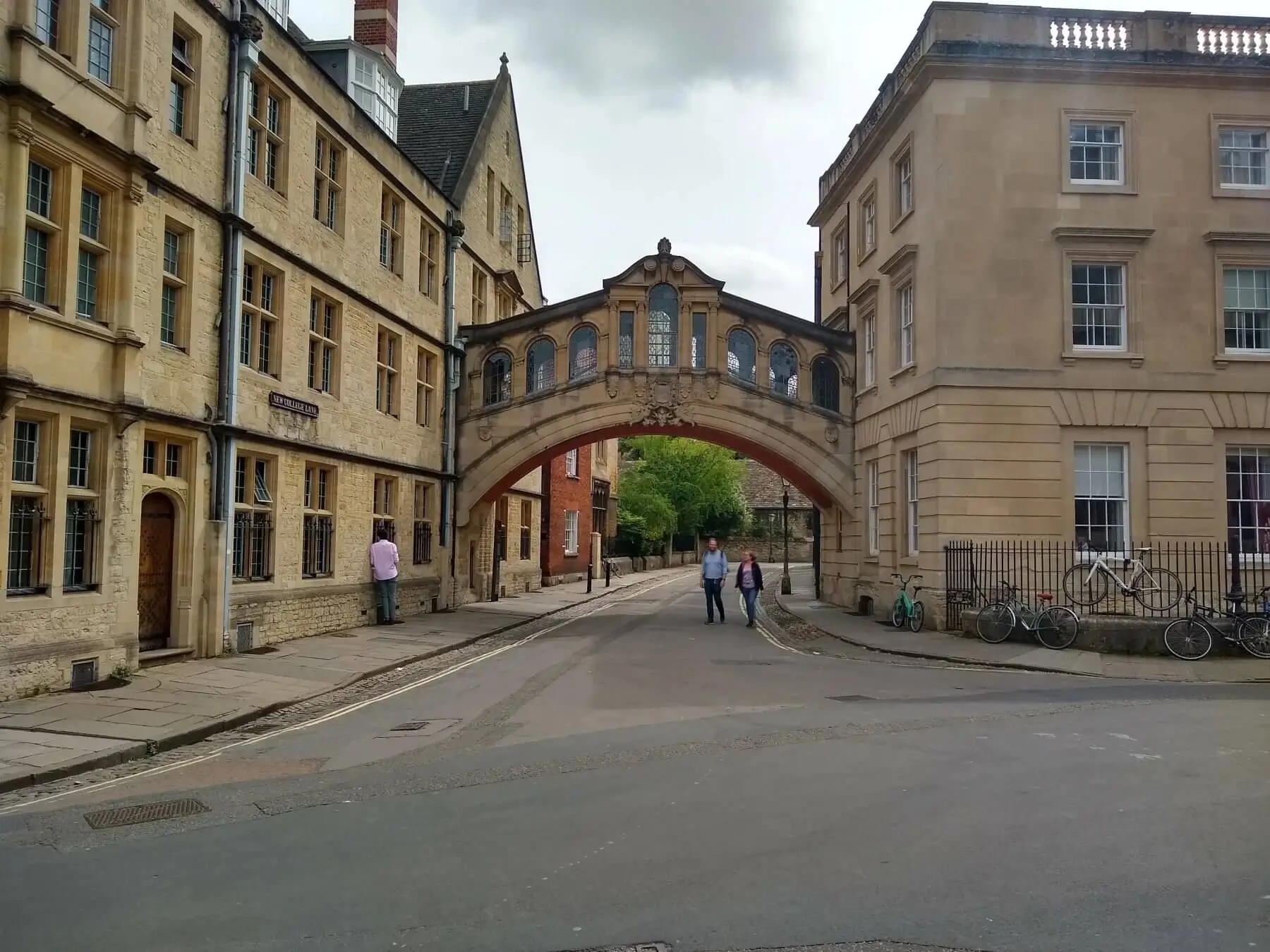
I knew the streets, the shortcuts and the places that become so familiar you barely notice them anymore. I had heard Oxford described as the “City of Dreaming Spires” countless times, but it wasn't something I stopped to think about.
Then I started working for Atlas Summer Courses.
Suddenly, I was spending my days alongside students who were seeing Oxford for the first time. I watched them stop to look at buildings I had walked past hundreds of times, discover streets I took for granted and become fascinated by details that had long since become part of the background for me.
It made me realise that sometimes you need to see a familiar place through somebody else's eyes before you really appreciate it.
Seeing Oxford Through the Eyes of Students
Oxford is an unusual city.
Historic buildings, libraries, museums, bookshops and college architecture sit alongside cafés, shops, buses, bicycles and everything else that comes with a busy modern city.
When you live here, that combination quickly becomes normal.
For students arriving from other parts of the UK and countries around the world, it isn't normal at all.
One of the best parts of my role was seeing those first reactions.
As a marketing intern, I spent a lot of time moving between different parts of the programme, taking photographs and capturing what was happening throughout the summer.
That meant I often found myself slightly outside the experience — close enough to see what was happening, but not directly involved in it.
And that gave me a surprisingly good view of what an Atlas summer actually looks like.
The Moments You Don't Put on a Timetable
Before working at Atlas, I probably would have described a summer course by listing what was scheduled.
Classes.
Activities.
Excursions.
Meals.
Residential life.
But when you spend time around the students, you realise that some of the most interesting parts of the experience happen between those things.
It's the conversation that carries on after an academic session has finished.
It's two students from completely different countries discovering they are interested in the same subject.
It's somebody confidently finding their way around Oxford after spending the first couple of days checking where they are going.
It's a group laughing over dinner who had never met before arriving that summer.
Those moments are difficult to communicate through a timetable because they aren't really scheduled.
They happen because students are spending an extended period of time studying, living and experiencing a new place together.
Seeing the Academic Side of Atlas
Working around the programmes also gave me a much clearer understanding of the academic experience.
Atlas uses small-group, discussion-based teaching, with academic structures adapted according to students' ages and programmes.
The difference between that and a much larger classroom becomes obvious when you watch it happening.
Students aren't simply sitting at the back taking notes while somebody speaks at them. They're expected to participate.
They ask questions.
They explain what they think.
They hear different interpretations from other students.
And sometimes they have to defend an idea when somebody disagrees with them.
That creates a very different atmosphere.
There is space for students to be heard, but being heard also means being willing to contribute.
What Tutorial Teaching Looks Like
For students aged 16+, Atlas also uses 2:1 tutorials, with two students working with one tutor in a focused academic session.
Students prepare academic work independently beforehand and then use the tutorial to discuss that work, explain their reasoning and receive personalised feedback.
What struck me about this approach was that the tutor wasn't simply there to provide the “correct” answer.
A question could lead to another question.
A student might be asked why they had reached a particular conclusion or whether they had considered another interpretation.
The second student could bring a completely different perspective to the same problem.
The focus was on making students think about their own thinking.
That seems like a small distinction, but it changes the student's role considerably. They aren't simply receiving information. They have responsibility for what they bring to the conversation.
Students Taking Their Ideas Seriously
One thing I noticed throughout the summer was what happened when students realised their ideas were genuinely going to be discussed.
It can be intimidating at first.
If you are accustomed to being one person in a large class, it is possible to spend a lesson listening without saying very much.
Small-group teaching doesn't work like that.
Students are encouraged to contribute, and their ideas can become part of the direction of the discussion.
That doesn't mean everything they say is automatically right.
Quite the opposite.
An idea might be challenged. An argument might need more evidence. A student might begin a discussion convinced of one position and leave thinking differently.
But that is part of the experience.
The important thing is that students are given room to develop their own reasoning rather than simply being told what to think.
Watching an International Community Form
Another part of Atlas that is difficult to understand until you see it happening is the international student community.
At the beginning of a programme, students arrive from different places, often knowing nobody else.
For some, that is exciting.
For others, it is understandably nerve-racking.
Then things begin to change surprisingly quickly.
Students sit together in classes. They eat together. They join activities. They explore their surroundings. They start talking about their subjects, their schools, their countries, music, sport and all the ordinary things people talk about when they are getting to know each other.
Gradually, a collection of strangers begins to feel like a community.
That international mix can also make academic conversations more interesting.
People who have grown up in different countries may approach the same question with very different assumptions and experiences. Hearing those perspectives can make students reconsider ideas they might previously have taken for granted.
Learning Outside Academic Sessions
Atlas is an academic summer programme, but the experience obviously doesn't stop when teaching finishes.
Students also have time to socialise and take part in the wider programme of activities and excursions, with the exact schedule varying according to age group, location, dates and itinerary.
Those experiences matter for a different reason.
Academic sessions might challenge a student intellectually, while the rest of residential life can challenge them in smaller, more practical ways.
Can you introduce yourself to somebody you've never met?
Can you adapt to a new routine?
Can you manage your time?
Can you become comfortable somewhere unfamiliar?
Can you spend time with people whose lives at home might look very different from yours?
For many students, those experiences are an important part of spending the summer away from their usual environment.
Watching Students Become More Independent
Independence is something we often talk about as though it happens all at once.
From what I saw, it usually doesn't.
It happens gradually.
At first, a student might be unsure where they need to go or reluctant to start a conversation.
A few days later, they know the route, they know the people around them and they are much more comfortable with the routine.
The level of independence students receive at Atlas varies according to their age and programme. Younger students naturally have greater structure and supervision, while older students are given more age-appropriate responsibility.
What remains interesting across age groups is watching students become increasingly comfortable in an environment that was completely unfamiliar when they arrived.
Becoming a Tourist in My Own City
Working for Atlas also changed my relationship with Oxford.
I started noticing things again.
I looked upwards at buildings instead of walking straight past them.
I paid more attention to the architecture.
I remembered how many museums, bookshops, historic streets and unusual details are packed into a relatively small city centre.
I began to understand why somebody visiting Oxford for the first time might find it so striking.
In a strange way, I became a tourist in my own city.
That was one of the most unexpected things I took from the summer.
Oxford as a Place to Spend the Summer
There is something distinctive about spending an extended period in Oxford rather than simply visiting for a day.
Students gradually become familiar with the city.
The landmarks stop being isolated attractions and become part of their surroundings. Streets that seemed confusing when they arrived become familiar routes. Students discover places they like and begin building their own experience of Oxford.
That is very different from claiming to be a student of the University of Oxford, however, and the distinction is important.
Atlas Summer Courses is an independent education provider. It is not part of, affiliated with, authorised, approved or endorsed by the University of Oxford or any of its colleges. Where Atlas uses college facilities, these are hired independently for its summer programmes.
Students attending Atlas in Oxford are participating in an Atlas Summer Courses programme in the city of Oxford. They are not enrolled at or members of the University of Oxford.
That doesn't make the setting less interesting.
Oxford's architecture, history and atmosphere are there to experience regardless.
What Working at Atlas Taught Me
Before the summer, I thought working as a marketing intern would primarily involve capturing what happened on the programme.
By the end, I realised I had spent just as much time observing how students changed as they became comfortable with it.
Not every student has the same experience, and it would be wrong to suggest that everybody leaves transformed in exactly the same way.
Some students may discover a subject they want to pursue further.
Some become more comfortable expressing an opinion.
Some enjoy meeting people they would never otherwise have encountered.
Some simply prove to themselves that they can live away from home, navigate somewhere unfamiliar and settle into a completely new environment.
Often, the changes are small.
But small changes can still matter.
Seeing the “Dreaming Spires” Differently
By the end of the summer, I understood the “City of Dreaming Spires” description differently.
It wasn't because Oxford had suddenly changed.
I had.
Working around students experiencing the city for the first time made me pay attention to somewhere I thought I already knew.
It also reminded me that a summer course is not defined by one classroom, one excursion or one impressive building.
It is made up of hundreds of smaller experiences: a difficult question, a new friendship, a conversation over dinner, finding your way around an unfamiliar city or discovering that you're capable of something you hadn't previously tried.
As somebody who had lived in Oxford all my life, I didn't expect working for Atlas Summer Courses to change the way I looked at my own city.
But sometimes seeing a place through somebody else's eyes is exactly what makes you notice it again.
About the author
Rhys Mackenzie is responsible for creating and maintaining educational content at Atlas Summer Courses, helping students and families access clear, accurate information about studying in Oxford. With several years of experience in digital content and student-focused resources, Rhys specialises in presenting academic programmes in a way that reflects the quality and integrity of Atlas Summer Courses' academic offering. Learn more about Rhys here.
Summary
Working as a marketing intern for Atlas Summer Courses gave Bethan the opportunity to experience the programme from behind the scenes while rediscovering Oxford, the city she had lived in all her life. By observing academic sessions, 2:1 tutorials, activities and everyday student life, she saw how students engage with their subjects, form friendships with people from around the world and gradually become more confident in an unfamiliar environment. Her summer with Atlas also showed her that some of the most memorable parts of the experience happen between scheduled activities, from conversations after class to discovering new places and becoming increasingly independent.