
The Best Parks and Green Spaces to Visit in Cambridge

Key takeaways:
- Cambridge combines historic architecture with extensive parks, commons, gardens and riverside spaces.
- Jesus Green offers open space beside the River Cam close to the city centre.
- Parker’s Piece combines recreational space with sporting history, including connections to the development of modern football.
- Midsummer Common provides riverside grassland and views of activity along the River Cam.
- The Backs is one of Cambridge’s most distinctive green areas, bringing together college architecture, lawns, trees and the river.
- Coe Fen offers a more natural landscape, with meadows and grazing land close to the city centre.
- Grantchester Meadows provides an opportunity for a longer riverside walk towards the countryside.
- Christ’s Pieces is a convenient central green space for relaxing, meeting friends or taking a break while exploring Cambridge.
- Cambridge University Botanic Garden offers a more structured garden experience and opportunities to explore plants, biodiversity and conservation.
- Cambridge’s green spaces give students places to walk, relax, socialise and experience a quieter side of the city.
- Exploring these areas can help students see Cambridge as more than its famous academic landmarks.
- For Atlas students, parks and green spaces can form part of the wider experience of spending a summer in Cambridge, although specific activities and visits vary by programme and itinerary.
- Atlas Summer Courses is an independent education provider and is not part of or endorsed by the University of Cambridge.
The Best Parks and Green Spaces to Visit in Cambridge
Cambridge may be famous for its historic architecture, colleges and academic traditions, but some of the city's most enjoyable places are its green spaces.
Riverside meadows, commons, gardens and parks run throughout Cambridge, often only a short walk from its busiest streets. The River Cam also helps bring the countryside surprisingly close to the centre, creating places where students and visitors can walk, relax, meet friends or simply take a break from sightseeing.
For students spending part of their summer in Cambridge, exploring these spaces can offer a different perspective on the city. Here are some of the best parks and green spaces to discover.
1. Jesus Green
Close to the centre of Cambridge, Jesus Green is one of the city's best-known public spaces.
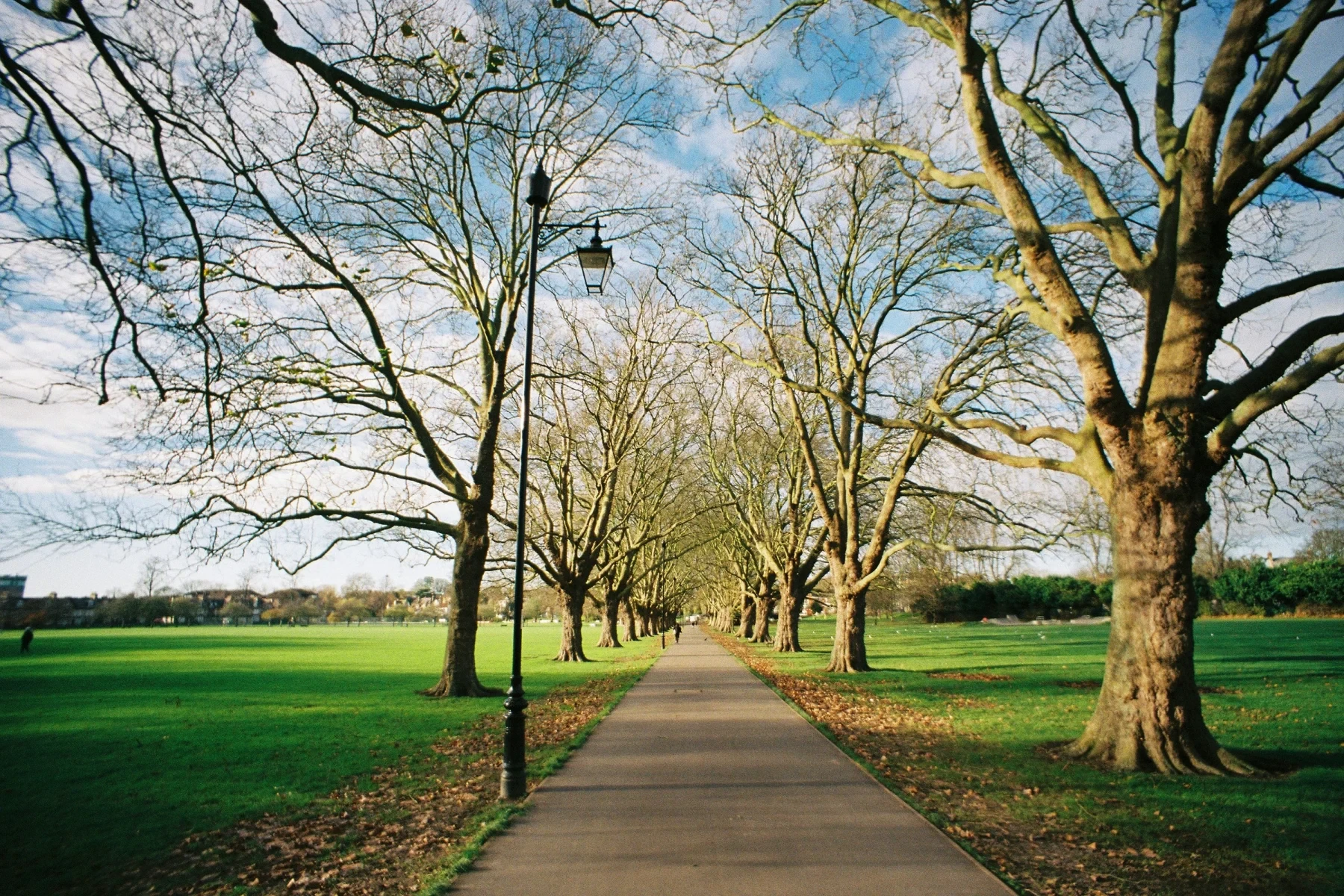
The River Cam runs along its northern edge, while an avenue of London plane trees creates a distinctive tree-lined route through the green.
Its central location makes Jesus Green an easy place to visit while exploring Cambridge. Students might pass through while walking alongside the river, spend time there with friends or simply find somewhere outdoors to relax.
During the summer, it becomes particularly lively as people make the most of the open space and riverside setting.
Jesus Green is also home to an outdoor lido, adding another feature to an area already closely connected with summer life in Cambridge.
2. Parker's Piece
Parker's Piece is another large open space close to Cambridge city centre.
Today, its grass is used for everything from picnics to informal games of football and cricket. But the space also has an interesting connection with sporting history.
In 1848, university students playing football on Parker's Piece published a set of rules for the game. Known as the Cambridge Rules, they would later influence the development of the Football Association's rules. A sculpture on the edge of the park commemorates this history.
That makes Parker's Piece more than somewhere to sit in the sunshine.
It is a good example of how Cambridge's history can appear in unexpected places. Even an ordinary-looking patch of grass can have a story behind it.
3. Midsummer Common
For a green space that feels closely connected to the River Cam, Midsummer Common is well worth exploring.
This ancient area of grassland sits beside the river, with views towards university boathouses and rowers passing along the water.
One of the distinctive things about Cambridge is the way open common land remains woven into the city.
You can move from busy streets to riverside grassland remarkably quickly, which helps make Cambridge feel very different from a much larger city such as London.
Midsummer Common is a particularly good place to experience that contrast.
4. The Backs
Few green spaces are as closely associated with the classic image of Cambridge as The Backs.
The name refers to the stretch of green land running behind several of the colleges on the western bank of the River Cam. Cambridge City Council describes The Backs as a Grade I listed historic park.
It is one of the places where Cambridge's architecture and natural environment come together particularly well.
College buildings rise beyond lawns, trees and the river, while punts travel along the Cam below.
For students exploring Cambridge, The Backs can provide some of the city's most memorable views. It is also a reminder that Cambridge's character comes not only from its buildings but from the relationship between those buildings, the river and the surrounding landscape.
Access to individual college grounds varies, so visitors should not assume that every lawn, garden or section of college property is publicly accessible.
5. Coe Fen
A few minutes south of Cambridge city centre is Coe Fen, part of the Sheep's Green and Coe Fen Local Nature Reserve.
Compared with some of the city's more formal parks, Coe Fen has a much more natural character.
Cambridge City Council describes it as a tranquil open area, and cattle graze there during the summer. The River Cam also runs nearby, with punting routes towards both Grantchester and The Backs.
This is a good place to visit if you want to see how quickly Cambridge can change from an urban environment into something that feels much closer to the countryside.
It can also be a useful reminder that green spaces do not need to be carefully landscaped gardens to be valuable.
Meadows, wetlands and grazing land all contribute to the city's environment and biodiversity.
6. Grantchester Meadows
Continue southwest from Cambridge and you eventually reach Grantchester Meadows, a famous stretch of green land alongside the River Cam.
The meadows provide a very different experience from the historic streets of central Cambridge.
Here, the city gradually gives way to open countryside, with paths following the river towards the nearby village of Grantchester.
That makes the area particularly appealing for a longer walk.
Rather than moving between individual landmarks, students can simply follow the river, talk with friends and experience the landscape surrounding Cambridge.
It also demonstrates one of the city's biggest advantages: you do not have to travel particularly far before Cambridge begins to feel much more rural.
7. Christ's Pieces
If you want somewhere green without travelling away from central Cambridge, Christ's Pieces is another useful option.
Located close to the city's shops and historic centre, it provides lawns, trees and recreational facilities within an otherwise busy part of Cambridge. Facilities include tennis courts, a playground and table tennis.
Christ's Pieces demonstrates that enjoying Cambridge's green spaces does not necessarily require planning a dedicated excursion.
Sometimes they simply become part of moving around the city.
You might cross a park on your way somewhere else, stop for a few minutes or meet friends there before continuing with the day.
Those smaller moments can be just as much a part of getting to know Cambridge as visiting its major landmarks.
8. Cambridge University Botanic Garden
For something different from Cambridge's parks and commons, the Cambridge University Botanic Garden offers a more carefully cultivated environment.
The garden provides an opportunity to encounter plants from around the world and explore the relationship between plants, scientific research, conservation and the environment.
For students interested in Biology, Medicine, Environmental Science or Geography, a botanic garden can also raise interesting academic questions.
How have plants adapted to different climates?
Why is biodiversity important?
How do scientists classify plants?
What role can botanic gardens play in conservation?
But you certainly do not need to be studying science to enjoy spending time there. Gardens can simply provide somewhere quieter to walk and observe.
Unlike Cambridge's public parks and commons, the Botanic Garden normally charges for admission, so students should check current visitor information before planning a visit.
Why Does Cambridge Have So Much Green Space?
One of the interesting things about Cambridge is how closely its green spaces are connected with the city itself.
The River Cam runs through Cambridge, while commons, meadows, parks and college grounds create green corridors alongside and around it. The city's tourism organisation describes Cambridge as a place where the natural fen landscape flows into the centre along the river.
This creates an unusual contrast.
Cambridge can feel historic and urban one moment, then surprisingly open and green the next.
You might walk past shops and cafés, turn onto another path and suddenly find yourself beside the river watching rowers or looking across grazing land.
That variety is part of what makes exploring Cambridge on foot so rewarding.
Green Spaces and Student Life
Parks also serve an important everyday purpose.
When you are spending your summer somewhere new, not every moment needs to involve sightseeing or organised activities.
Sometimes you want somewhere to sit with friends.
Somewhere to read.
Somewhere to talk after class.
Somewhere to eat outside when the weather cooperates.
Or simply somewhere to have a little space after a busy day.
Cambridge's parks and commons provide plenty of opportunities for those quieter moments.
They can help students begin to experience Cambridge as somewhere they are actually spending time rather than simply a destination they are visiting.
Seeing Another Side of Cambridge
It is easy to arrive in Cambridge with a list of famous buildings you want to see.
And there is nothing wrong with that.
But exploring its green spaces reveals another side of the city.
Parker's Piece introduces you to an unexpected piece of football history.
The Backs brings architecture and landscape together.
Jesus Green and Midsummer Common show how closely Cambridge is connected to the River Cam.
Coe Fen and Grantchester Meadows demonstrate how quickly the city gives way to open countryside.
And the Botanic Garden provides a completely different opportunity to explore the natural world.
Together, these spaces help explain why Cambridge feels the way it does.
Exploring Cambridge With Atlas Summer Courses
For students attending Atlas Summer Courses in Cambridge, spending time in the city provides opportunities to discover more than its famous academic landmarks.
Depending on a student's age, programme and itinerary, there may be opportunities to experience parks, riverside areas and other parts of Cambridge as part of their wider summer.
However, we should not suggest that visits to any of the specific parks or gardens in this article are automatically included in an Atlas Summer Courses. Activities, excursions and free-time arrangements vary according to programme, age group, dates and current itinerary.
It is also important to distinguish between attending an Atlas Summer Courses programme in Cambridge and studying at the University of Cambridge.
Atlas Summer Courses is an independent education provider. It is not part of, affiliated with, authorised, approved or endorsed by the University of Cambridge or any of its colleges. Where Atlas uses college facilities, these are hired independently for its summer programmes.
Finding Your Favourite Green Space
There isn't really one “best” green space in Cambridge.
It depends on what you want.
For riverside views, you might prefer The Backs or Midsummer Common.
For an open space close to the city centre, Jesus Green or Parker's Piece could be ideal.
For a longer walk, Grantchester Meadows offers the chance to follow the River Cam towards the countryside.
And for plants, gardens and a more structured visitor experience, there is the Cambridge University Botanic Garden.
The best approach may simply be to explore.
Because while Cambridge's historic buildings might be what first attracts your attention, its parks, meadows, gardens and riverside spaces can become some of the places you most enjoy spending time in once you're there.
About the author
Rhys Mackenzie is responsible for creating and maintaining educational content at Atlas Summer Courses, helping students and families access clear, accurate information about studying in Oxford. With several years of experience in digital content and student-focused resources, Rhys specialises in presenting academic programmes in a way that reflects the quality and integrity of Atlas Summer Courses' academic offering. Learn more about Rhys here.
Summary
Cambridge is known for its historic buildings and academic heritage, but its parks, commons, gardens and riverside landscapes reveal another side of the city. From Jesus Green and Parker’s Piece to The Backs, Coe Fen, Grantchester Meadows and the Cambridge University Botanic Garden, students can discover places to walk, relax, spend time with friends and enjoy the outdoors. For Atlas Summer Courses students based in Cambridge, exploring the city’s green spaces can be part of getting to know their surroundings beyond the classroom, with specific activities and visits depending on each programme’s itinerary.