My Experience Studying Politics & International Relations at Atlas Summer Courses

.webp)
Key takeaways:
- Alumna Andreina studied Politics and International Relations with Atlas Summer Courses while pursuing International Relations and Journalism in Madrid.
- The programme helped her explore interests in politics, democracy, human rights and social justice in greater depth.
- She developed practical academic skills, including critical reading, structured essay writing and reasoned argument.
- Studying alongside students from countries including India, Ukraine, China and Indonesia introduced her to different perspectives on global issues.
- Discussions encouraged her to recognise the complexity of political decision-making and consider competing viewpoints.
- Tutors challenged students to explain, question and defend their ideas, rather than simply find the expected answer.
- Exploring Politics helped Andreina realise that a career as a politician was not the right path for her.
- Instead, she discovered a stronger interest in working with NGOs and think tanks.
- The international community became an important part of her experience, leading to meaningful friendships and a strong sense of belonging.
- Her time with Atlas helped her develop greater confidence, independence and clarity about her future.
- Andreina’s experience shows how exploring a subject can be valuable even when it leads you towards a different academic or career direction.
My Experience Studying Politics & International Relations at Atlas Summer Courses
For students interested in Politics and International Relations, studying the subjects beyond the school or university curriculum can provide an opportunity to question assumptions, encounter different perspectives and think more deeply about how decisions affect people around the world.
Atlas Summer Courses alumna Andreina, who was studying International Relations and Journalism in Madrid, joined the programme with a strong interest in politics, democracy, human rights and social justice. Her experience ultimately did something she had not necessarily expected: it helped her reconsider the career she thought she wanted and develop a clearer idea of where her interests might take her instead.
Why I Chose Politics and International Relations
Studying International Relations and Journalism had already made Andreina curious about people's stories and the forces shaping societies around the world.
Politics seemed like a natural direction. Governments make decisions that influence everything from individual rights and public services to international relationships, conflict and economic policy. Understanding how those decisions are made offered a way to explore many of the questions she already cared about.
That curiosity led her to study Politics and International Relations with Atlas Summer Courses.
For Andreina, the objective was not simply to learn more facts about political systems. She wanted to understand how the world worked and consider how she might eventually contribute to changing it.
Discovering How Complex Politics Really Is
One of Andreina's biggest discoveries during the programme was just how complicated political decision-making can be.
Political questions rarely have simple answers. Decisions can involve competing interests, limited resources, different values and consequences that affect groups of people in very different ways.
Exploring those questions gave her a greater appreciation for the complexity involved in politics.
It also encouraged her to look beyond her initial reaction to an issue and consider why somebody else might reach a completely different conclusion.
That ability to examine competing perspectives became an important part of her experience.
Learning to Think and Write More Critically
Andreina also developed practical academic skills during her time with Atlas.
She learned how to organise her ideas into structured essays, read more critically and examine different sides of an argument.
These are particularly valuable skills in Politics and International Relations, where students regularly encounter competing interpretations of the same events.
Rather than simply deciding whether she agreed or disagreed with an argument, Andreina was encouraged to consider the evidence behind it, question its assumptions and develop a reasoned response of her own.
As she explained:
“I learned how to organise my ideas and turn them into structured essays. I learned how to read critically.”
Those skills would remain useful well beyond a single summer.
Discussing Global Issues With International Students
International Relations becomes particularly interesting when the people discussing it bring genuinely different experiences to the conversation.
During her programme, Andreina studied alongside students from countries including India, Ukraine, China and Indonesia.
That international environment gave her opportunities to discuss news and real-world issues with people whose perspectives had been shaped by different countries, cultures and political systems.
For Andreina, this reinforced an important lesson: there is rarely only one perspective from which to understand an international issue.
A textbook can explain another country's political system. A news article can describe an international event. But discussing those subjects with somebody who brings a different lived experience can introduce questions and perspectives that are much harder to encounter through reading alone.
Discovering That Politics Wasn't Her Career Path
Perhaps the most valuable outcome of Andreina's experience was discovering what she didn't want to do.
She had initially considered a career in politics because she saw policymaking as a way to create meaningful change.
After exploring the subject more deeply, however, she realised that becoming a politician did not suit her as well as she had imagined.
Instead, she became more interested in NGOs and think tanks, which she felt were better aligned with her personality and the kind of contribution she wanted to make.
That might sound like an unexpected outcome from studying Politics, but discovering that a particular career is not right for you can be extremely useful.
Academic exploration does not always confirm an existing plan. Sometimes it gives students enough experience and perspective to change it.
Learning From Challenging Questions
Andreina particularly valued learning from tutors who expected students to engage seriously with difficult questions.
Rather than simply providing answers, tutors challenged her to explain what she thought and why.
She described enjoying learning from tutors who:
“asked me hard questions and expected a youthful (but serious) answer.”
Being taken seriously as a young student can change the way you participate in academic discussions.
Instead of trying to identify the answer a teacher wants to hear, students can begin thinking more carefully about what they themselves believe, what evidence supports that position and whether their argument survives being challenged.
For subjects such as Politics and International Relations, that process can be just as important as acquiring knowledge.
Finding an International Community
Andreina's experience was not purely academic.
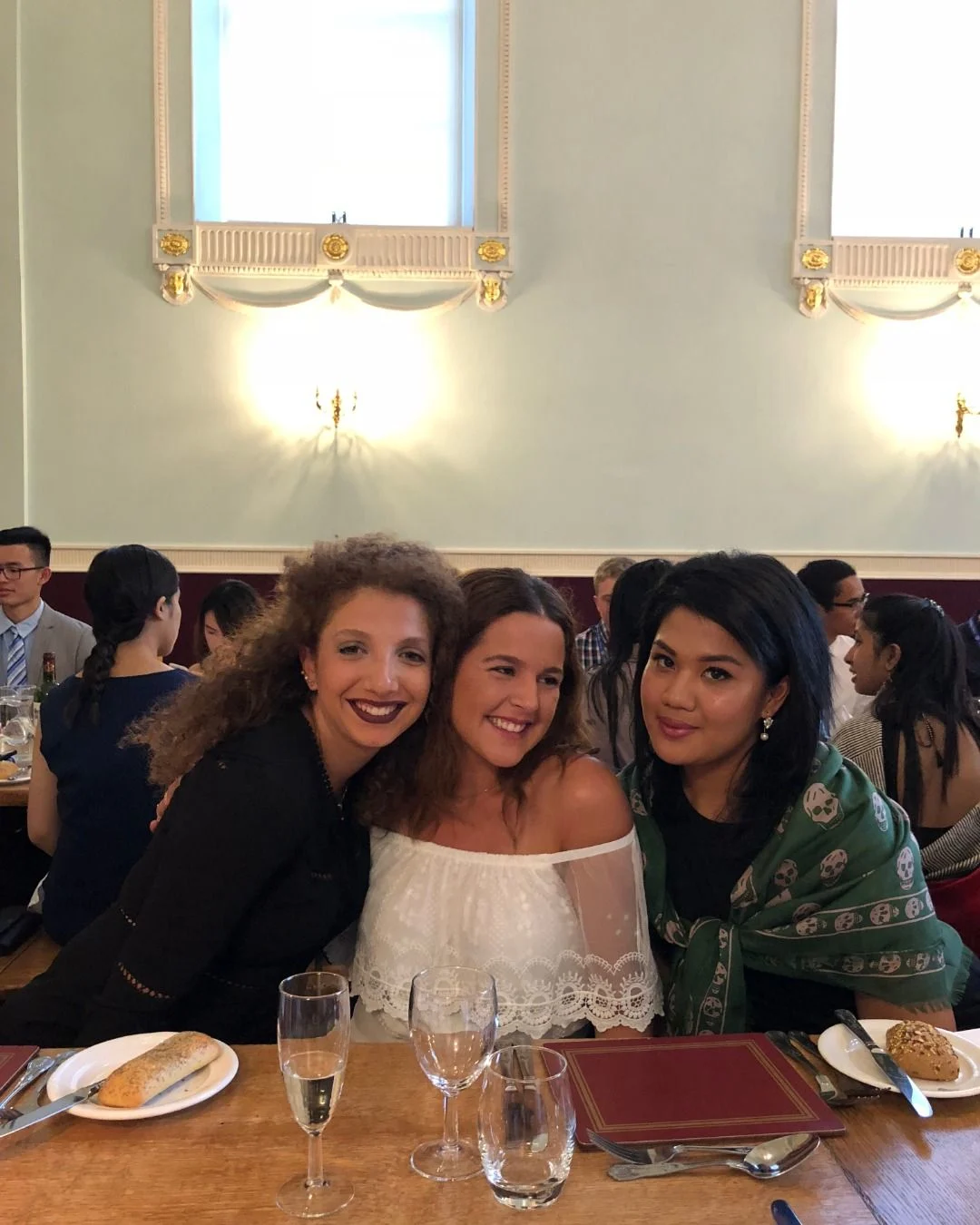
Living and studying alongside students from different countries gave her a strong sense of belonging to an international community.
She arrived interested in questions about society, human rights and the world around her and discovered other young people asking many of the same questions.
As she put it:
“I discovered that my longings were universal, that I was not lonely and isolated from anyone. I belonged.”
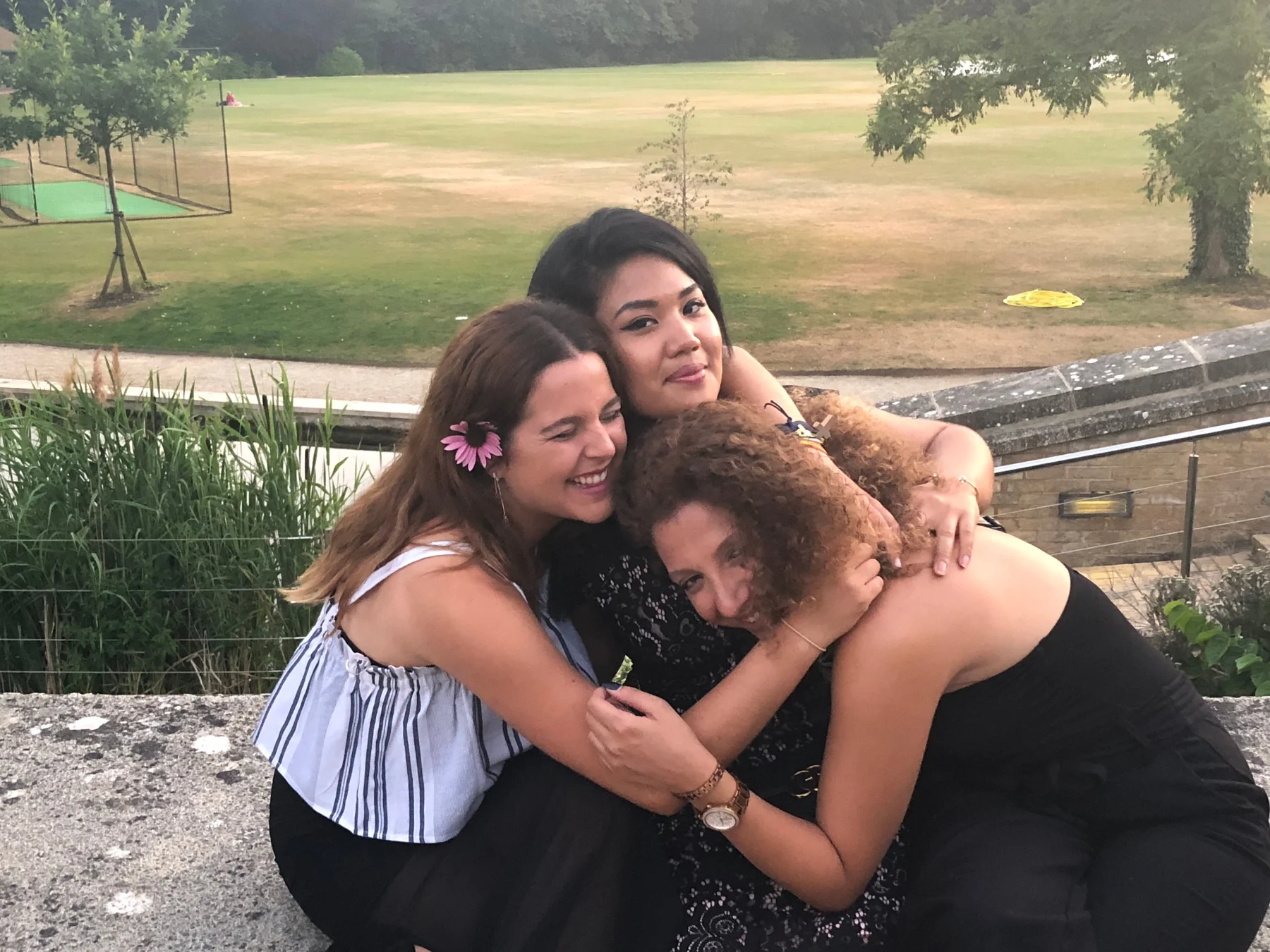
The friendships she formed became one of the most important parts of her experience.
For an international summer programme, that social dimension matters. Students do not only encounter different perspectives during formal lessons; they continue talking over meals, during activities and throughout everyday life on the programme.
Developing Confidence and Independence
Spending several weeks away from home also gave Andreina opportunities to become more independent.
She was navigating a different environment, meeting new people and participating in academic discussions with students she had only recently met.
Over time, experiences like these can encourage students to speak more confidently, become more comfortable expressing their opinions and take greater responsibility for themselves.
Andreina felt that the experience changed the way she approached her future and strengthened qualities including ambition, attention to detail and empathy.
For her, the impact of the programme therefore extended beyond what she learned about Politics and International Relations.
What Can You Learn on a Politics and International Relations Summer Course?
Politics and International Relations cover an enormous range of questions.
Why do countries cooperate?
Why do conflicts happen?
How should governments balance individual freedoms with collective interests?
What makes political institutions effective?
How do international organisations influence global affairs?
Why do people living in different societies sometimes understand the same event completely differently?
Exploring questions like these requires students to combine knowledge with critical thinking, discussion, analysis and argument.
A summer course can provide space to investigate these ideas beyond the constraints of an examination syllabus, particularly when students are learning alongside peers with different backgrounds and perspectives.
Is Politics and International Relations Right for You?
Students interested in Politics and International Relations are often curious about more than politicians and elections.
The subjects connect with History, Economics, Law, Philosophy, Geography, Journalism and Sociology, as well as contemporary issues such as international conflict, human rights, migration, climate policy and global inequality.
They can therefore appeal to students who enjoy asking why societies work as they do and debating how they could work differently.
But Andreina's experience demonstrates another reason to explore a subject before committing to it.
You may discover that it is exactly what you want to pursue.
Or, like Andreina, you might realise that one aspect of the field interests you much more than the career you originally imagined.
Both are valuable outcomes.
Studying Politics and International Relations With Atlas Summer Courses
At Atlas Summer Courses, students studying Politics and International Relations have opportunities to explore challenging questions through small-group, discussion-based learning.
The emphasis is on participating actively: questioning arguments, considering evidence, listening to different perspectives and developing reasoned conclusions.
An international student community can make those discussions particularly valuable. Political and global issues do not look identical from every country, and learning alongside students with different experiences can encourage participants to examine assumptions they might otherwise take for granted.
The objective is not to tell students what to think about political issues.
It is to help them become more confident thinking critically about those issues for themselves.
More Than an Academic Experience
Looking back, Andreina remembered much more than what happened during lessons.
She remembered the people she met, the friendships she formed, the difficult questions tutors asked and the sense that the interests she cared deeply about were shared by young people from around the world.
Most importantly, studying Politics and International Relations helped her reconsider what she wanted from her future.
She arrived thinking politics might provide the route through which she could make a difference. She left with a stronger interest in NGOs and think tanks and a different understanding of how meaningful change might happen.
That is one of the most useful things academic exploration can offer.
Sometimes learning more about a subject does not simply tell you what you want to study. It helps you understand what you want to do with it.
About the author
Rhys Mackenzie is responsible for creating and maintaining educational content at Atlas Summer Courses, helping students and families access clear, accurate information about studying in Oxford. With several years of experience in digital content and student-focused resources, Rhys specialises in presenting academic programmes in a way that reflects the quality and integrity of Atlas Summer Courses' academic offering. Learn more about Rhys here.
Summary
Atlas Summer Courses alumna Andreina reflects on studying Politics and International Relations, from developing her critical thinking and essay-writing skills to discussing global issues with students from around the world. The experience ultimately helped her reconsider a career in politics, discover a stronger interest in NGOs and think tanks, and gain greater confidence and clarity about her future.