
Genomics, Entrepreneurship and Capture the Flag

Key takeaways:
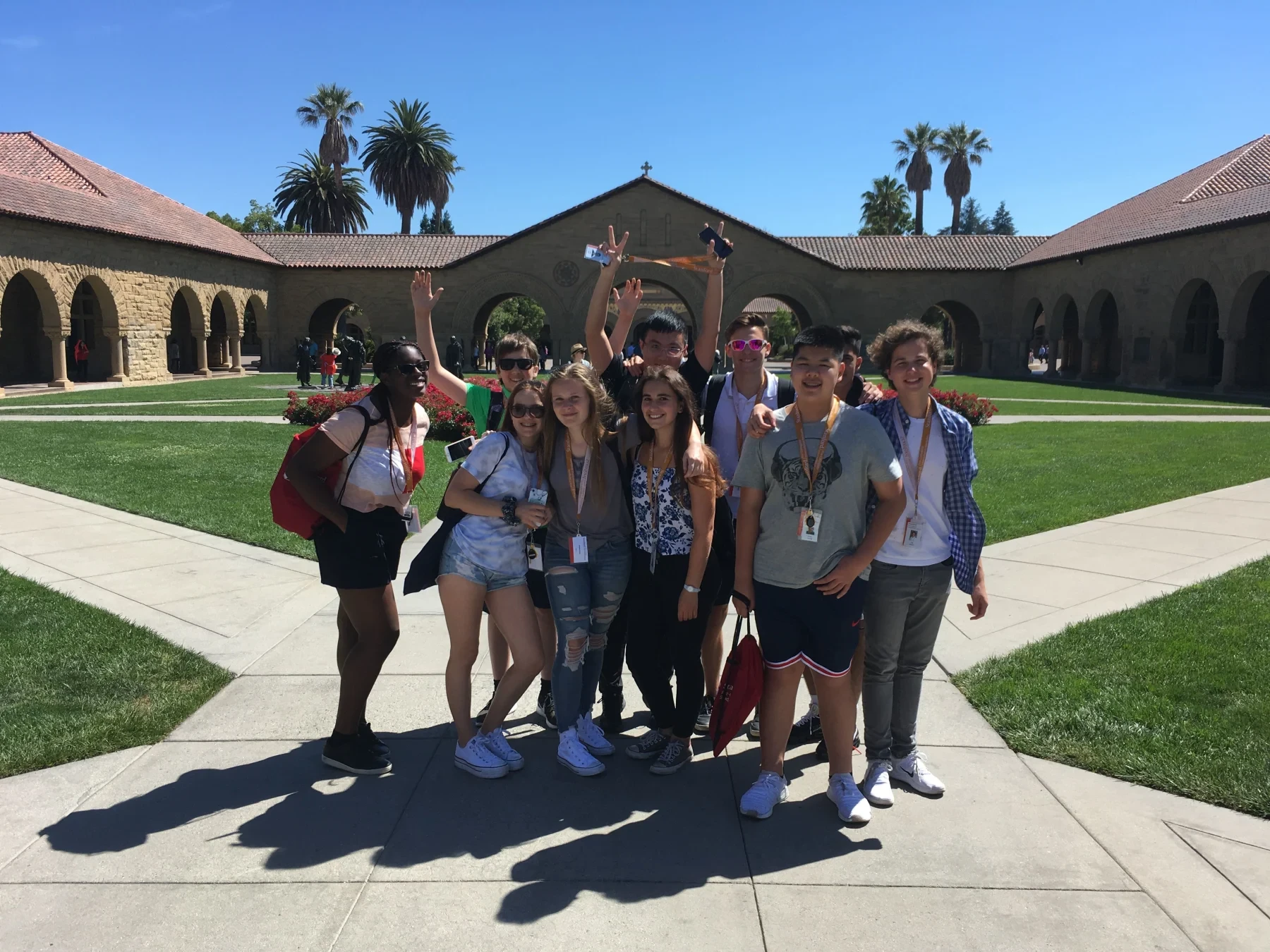
Check out what our Stanford students were up to in 2018:
"We were all up bright and early this morning for the group’s first class of the day, Cancer Genomics with Lauren Sanders, a current PhD candidate on the subject. The workshop was really interactive, with students researching particular cancer genes pathways on a worldwide database and searching for the relevant inhibitor medicines. After our workshop on DNA and methylation with Sebastian at the beginning of the course, this was a perfect next step to offer real world context to the subject.
After a tasty lunch in the canteen we headed to Business and Entrepreneurship taught by Raj Bhargava, an industry professional and Stanford academic. This session focused on the theory of design thinking and the lean business model, with each team practising their learned techniques with their own business pitch — a unique design for a backpack, developed with their real-life customers in mind, their classmates.
Straight after the lesson we headed to an Admission Panel where we got to hear current Stanford students discuss each of their experiences with the application process and their academic career so far. Each speaker, all at different stages of the college education, offered an insight and lots of advice the students on how to put together the best possible application. Our group asked lots of great questions, really making the most of the opportunity to find out everything there is to know about getting into Stanford.
This evening, in the warm Autumn sun we walked down to one of the college fields to play a big game of Capture the Flag — this lasted almost two hours, with Residential Counsellors and even the Head Counsellor getting involved to bring the team to victory. The evenings activities were great way to let off steam and make the most of the wonderful weather here on campus."
What connects the three activities?
The 2018 diary gives readers three different ways to think about learning. A genomics workshop starts with a question that students can investigate. An entrepreneurship session asks whether an idea addresses a problem worth solving. A team game gives everyone a shared goal and a chance to adapt as circumstances change.
Try connecting those ideas in a small project. Pick a question that interests you, decide what evidence would help answer it and explain your findings to someone who hasn’t studied the topic. Then ask what they found clear and what they still want to know. If you’re looking for a starting point, browse these research project ideas. This diary records a particular programme week in 2018.
What students can learn from a genomics workshop
Genomics looks at genetic information across an organism or a group of samples. In an introductory workshop, a useful lesson is the difference between an observation and an explanation. Finding a pattern gives you something to investigate. It takes more work to establish what the pattern means, how reliably it appears and whether another explanation fits the evidence.
Try the same reasoning with a simple classroom example. Imagine two groups have answered the same set of questions and one group gave a particular answer more often. Before drawing a conclusion, ask how many people were in each group, whether the questions were asked in the same way and whether a third factor might explain the difference.
What makes a student business idea worth testing?
Start by describing the problem in one sentence and identifying who has it. Ask how they deal with it now. Their answer may point to a better idea than the one you started with. Sketch the smallest version you could show them and ask what they would change. These are useful first steps even if the project is only a short classroom exercise.
Capture the flag adds a different kind of practice. A team has to share roles and decide when to change its plan. After a group task, ask what information each person had, what the team missed and how you would coordinate differently next time.
Ready to Join Atlas Summer Courses?
After submitting your application, we'll be in touch very soon to inform you of the outcome. Apply now to begin your journey with Atlas Summer Courses.
About the author
Rhys Mackenzie is responsible for creating and maintaining educational content at Atlas Summer Courses, helping students and families access clear, accurate information about studying in Oxford. With several years of experience in digital content and student-focused resources, Rhys specialises in presenting academic programmes in a way that reflects the quality and integrity of Atlas Summer Courses' academic offering. Learn more about Rhys here.
Summary
This diary recalls a Stanford programme day in 2018. Students explored cancer genomics and applied business ideas through design-thinking exercises. The account illustrates how academic workshops and group activities were combined on that past programme.