
Cheltenham Ladies College: A Brief History

Key takeaways:
Why the school’s history matters
The story of Cheltenham Ladies’ College offers a way to explore how access to subjects changed over time. Start with one question: which subjects did families and educators think girls should study, and who had the power to decide? Then look at the role that teachers, pupils and school leaders played in changing those expectations.
This article records Cheltenham Ladies’ College in the context of Atlas’s 2019 programmes. For current options, check the Atlas FAQ on courses and locations. The historical material below reflects the original account.
A Brief History of CLC
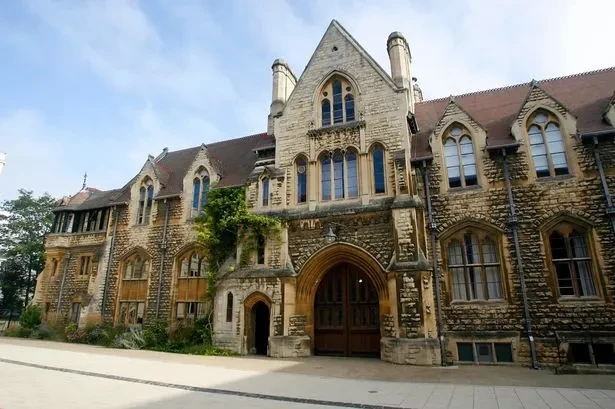
Founded in 1853, Cheltenham Ladies’ College began with just 82 pupils- all of whom were day girls (non-boarding students). From 1858, Dorothea Beale served for almost 50 years at the college and was responsible for its flourishing during those years. She was instrumental in the introduction of maths and science at the college, despite parental opposition that these were not suitable or necessary for girls. In 1873, the College moved its location to the site of the original Cheltenham Spa (and this is where it remains to the present day). This new site contained only a boarding house, a few classrooms and the Lower Hall initially, but it soon grew in coming years to include music rooms, a library and laboratories. For those who wished to study further, Miss Beale also founded St Hilda’s College, Oxford, in 1893.
By 1900, college had become a thriving community of over 1,000 pupils, with boarders, day girls and part-time students, studying from Kindergarten to Degree level.
The Second World War had a major impact on the college, and in September 1939, all College buildings were requisitioned by the War Office and lessons were relocated to army huts.
Structure and Academic Results
For CLC, academic excellence forms the basis of College life, but the college considers the formation of character in their students just as important. The school is committed to preparing its students for life well beyond their college years, encouraging flexibility and resourcefulness in their students so that they can flourish in our rapidly changing world.
The school is divided into three divisions, Lower College (KS3), Upper College (KS4), and Sixth Form College (KS5).
The school’s academic results are high, both compared to the national average and within the independent sector. From 2014 to 2017, the school reported that over two thirds of A Level results and approximately 90% of GCSE results were A* or A grades. The school also highlighted its International Baccalaureate results in reporting from that period.
Notable Alumni
- Kristin Scott Thomas, actress
- Cheryl Gillan, Conservative Member of Parliament and former Secretary of State for Wales
- Sally Keeble, Labour Member of Parliament
- Rachel Lomax, the first woman Deputy Governor of the Bank of England
- Cicely Mayhew, UK’s first female diplomat
- Amber Rudd, Home Secretary (2016-2018)
- Clare Marx, first female President of the Royal College of Surgeons (2014-2017), Chair of the General Medical Council (January 2019)
- Beatrice Harraden, writer and suffragette
- Nina Clarkin, World number one female polo player
- Muriel Robb, Wimbledon Champion and only person to win all national UK tennis singles titles
- Mary Russell, Duchess of Bedford, 11th Duchess of Bedford
- Dame Helen Gwynne-Vaughan, Commandant of the Women’s Royal Air Force and Chief Controller of the Auxiliary Territorial Service
- HRH Princess Raja Zarith Sofiah —
You can read more about CLC, the school’s news, and view the photo and video gallery on their website: https://www.cheltladiescollege.org/
You might also be interested in watching this video: https://www.youtube.com/watch?v=Mi8HUwoX2z4 , which shows the class of 2018 reminiscing about what made CLC so great, and what they will miss once they graduate.
Cheltenham Ladies’ College and the history of girls’ education
The school’s history offers a starting point for comparing what girls were taught at different times. Look at the subjects available, how pupils could progress to further study and the role of leaders such as Dorothea Beale. This gives the school’s story a wider context while keeping the original account of the 2019 programme separate from current Atlas course information.
Ready to Join Atlas Summer Courses?
After submitting your application, we will be in touch very soon to let you know the outcome. Apply now to begin your journey with Atlas Summer Courses.
About the author
Rhys Mackenzie is responsible for creating and maintaining educational content at Atlas Summer Courses, helping students and families access clear, accurate information about studying in Oxford. With several years of experience in digital content and student-focused resources, Rhys specialises in presenting academic programmes in a way that reflects the quality and integrity of Atlas Summer Courses' academic offering. Learn more about Rhys here.
Summary
This historical article introduces Cheltenham Ladies’ College in the context of summer courses in 2019. It traces the school’s beginnings and the influence of Dorothea Beale on its development.