
A Guide to May Morning in Oxford

.webp)
May Morning in Oxford: A Guide to One of the City’s Oldest Traditions
Every year on 1 May, thousands of people gather around Magdalen Bridge and the High Street in Oxford before most of the city is normally awake.
At 6am, the Choir of Magdalen College sings from the top of the college's Great Tower, beginning a celebration of spring that has existed in Oxford for more than 500 years. In 2026, around 18,500 people attended, following 16,500 the previous year.
The morning continues with bells, Morris dancing, folk music, food and other celebrations across the city.
For students spending time in Oxford, May Morning is an interesting example of how traditions, university history and the wider local community overlap.
Here is what actually happens, where the tradition comes from and what visitors should know.
What Is May Morning in Oxford?
May Morning is Oxford's annual celebration marking the arrival of spring.
The central event takes place at 6am on 1 May, when the Choir of Magdalen College sings from the top of Magdalen College's Great Tower.
Thousands of spectators gather below along the High Street, Magdalen Bridge and surrounding streets to listen.
Afterwards, celebrations continue elsewhere in central Oxford with traditional dancing, folk singing, food and entertainment.
It is one of the city's most distinctive annual traditions.
How Old Is Oxford's May Morning Tradition?
The exact origins are uncertain.
Magdalen College says the tradition is thought to date back to at least 1509, the year the Great Tower was completed. That gives May Morning a history stretching back more than five centuries.
However, the ceremony has not remained unchanged throughout that period.
Over the centuries, May Morning has taken several forms.
At different points it has involved solemn religious observance, musicians and other celebrations before evolving into something closer to the ceremony Oxford recognises today.
So it is safer to say that the tradition has roots extending back more than 500 years, rather than claiming that the exact modern ceremony began in 1509.
How Did May Morning Develop?
One historical form of the event involved a Requiem connected with King Henry VII.
At other times, the celebrations involved larger groups of musicians.
The modern tradition developed more clearly during the mid-19th century, particularly through the work of John Bloxam, who served Magdalen College in roles including Bursar, Dean and Librarian.
Bloxam introduced the singing of the piece now closely associated with May Morning, Hymnus Eucharisticus.
That means today's ceremony combines elements from different periods of Oxford history rather than representing one unchanged 500-year-old ritual.
What Happens at 6am?
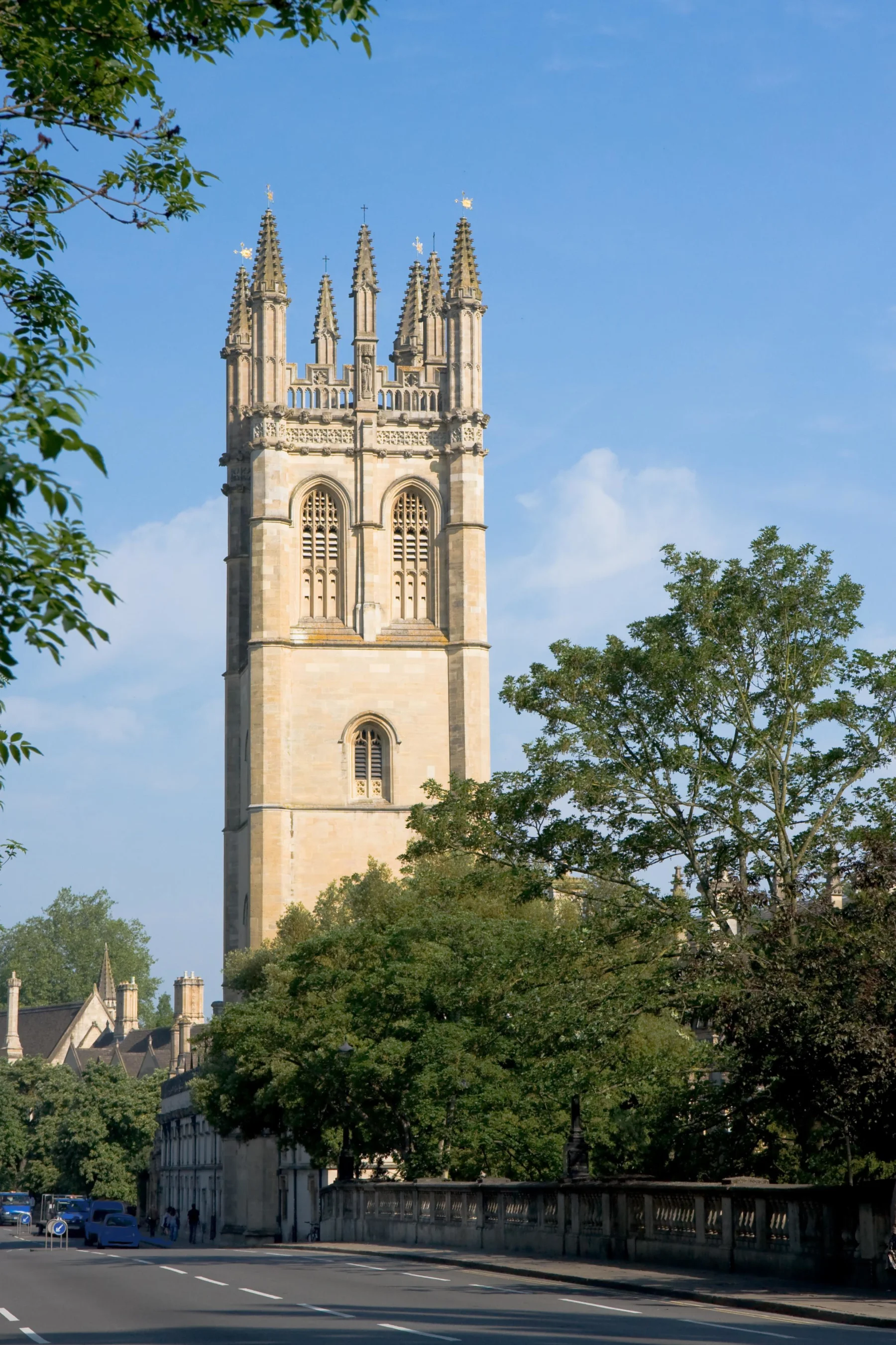
At 6am, the crowd outside Magdalen College falls quiet as the College Choir sings from the top of the Great Tower.
The traditional programme includes Hymnus Eucharisticus, along with other pieces.
After the singing finishes, the bells of the Great Tower ring out over Oxford for around 20 minutes.
For many people, that combination of choral music, bells and thousands of people standing together at dawn is the defining May Morning experience.
What Is Hymnus Eucharisticus?
Hymnus Eucharisticus is the piece most closely associated with Oxford's May Morning ceremony.
It was composed in the 17th century by Benjamin Rogers, who was a Fellow of Magdalen College and served as its Informator Choristarum, or director of music.
The College Choir continues to sing it from the Great Tower each May Morning.
It is worth correcting one detail from older versions of this article: while Rogers composed the music, the authorship and history of the text are more complicated than simply saying that Rogers “wrote the hymn.” Magdalen's historical material associates the surviving words with Fellow Thomas Smith.
Who Sings on May Morning?
The performance is given by the Choir of Magdalen College Chapel.
The choir includes Choristers from Magdalen College School alongside Academical Clerks and Organ Scholars from Magdalen College.
Each year, the singers ascend the Great Tower for the early-morning performance.
That is no small start to the day: historical Magdalen material notes that reaching the top involves climbing 172 steps.
How Many People Attend May Morning?
Attendance varies depending on the year, weather and calendar.
Recent figures give a sense of the scale.
Around 16,000 people attended in 2023.
Oxford City Council reported approximately 16,500 attendees in 2025 and 18,500 in 2026.
So while it begins at 6am, May Morning is certainly not a quiet local gathering.
It is one of Oxford's largest recurring public traditions.
When Should You Arrive?
The choir begins singing at 6am, but spectators arrive earlier.
Oxford City Council advises that crowds typically start gathering around Magdalen College Tower from approximately 5:30am.
For such an early event, the surrounding streets can become very busy surprisingly quickly.
Anyone attending should therefore leave enough time to reach the area safely and follow directions from event stewards.
Where Is the Best Place to See May Morning?
The main crowds gather around Magdalen Bridge, High Street and the area surrounding Magdalen College's Great Tower.
The City Council operates crowd-management arrangements and provides designated viewing areas, including areas for wheelchair users and families with young children.
Because thousands of people attend, visibility will naturally depend on where you are standing and how early you arrive.
The experience is as much about hearing the choir and joining the atmosphere as getting a perfect view of the singers themselves.
What Happens After the Choir Sings?
May Morning does not end when the music from Magdalen Tower finishes.
As the bells ring, celebrations continue across the city.
Recent official programmes have included:
- Morris dancing;
- folk singing;
- live entertainment;
- food; and
- other events around central Oxford.
Some cafés and pubs open unusually early to serve people who have been outside since before dawn.
This gives central Oxford a very different atmosphere from an ordinary weekday morning.
Morris Dancing on May Morning
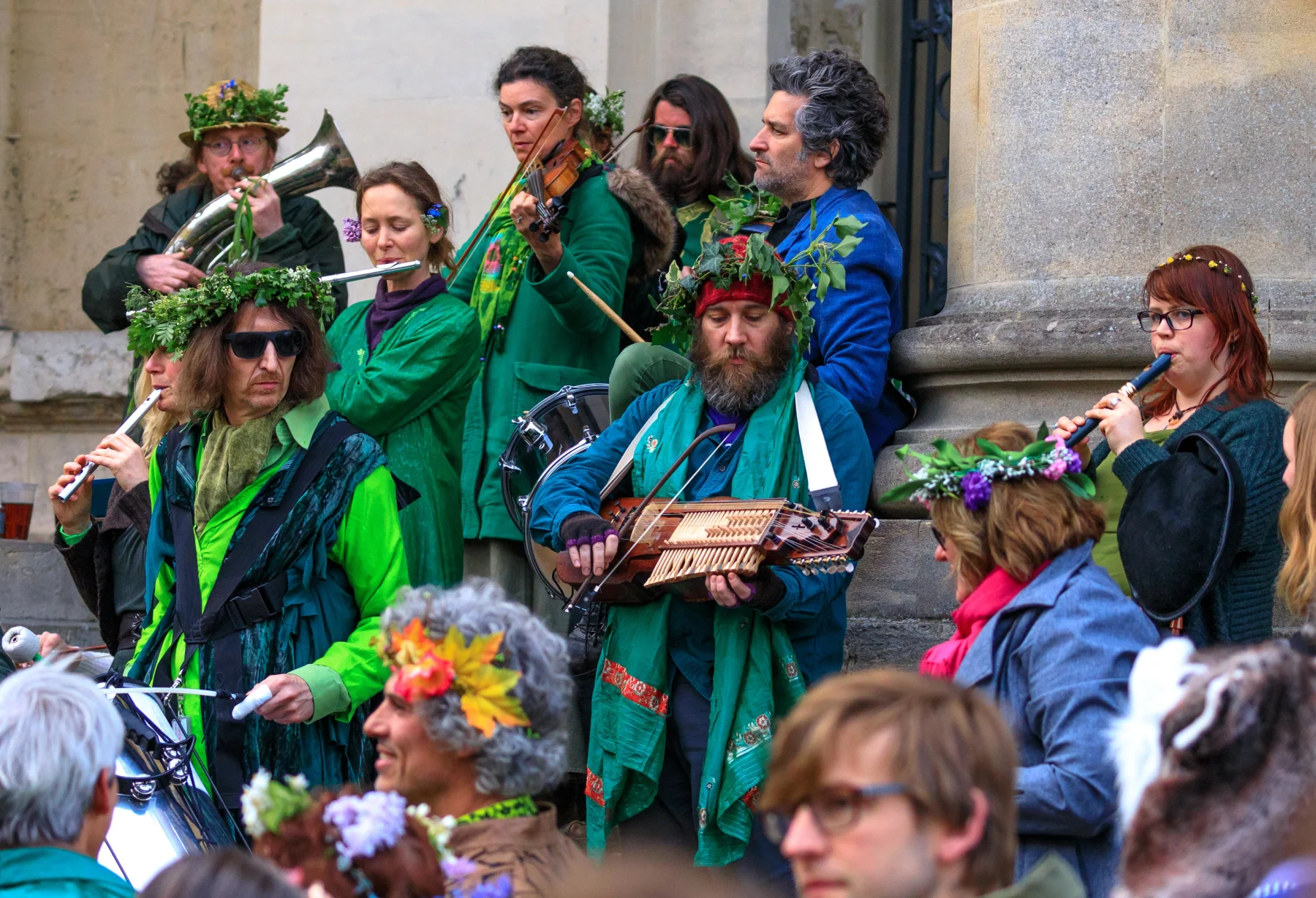
Morris dancing is one of the traditions visitors may encounter after the choir performance.
It is a form of English folk dance with a long history and a variety of regional styles.
On May Morning, dancers perform at locations around Oxford as crowds disperse from Magdalen Bridge and begin moving through the city.
Together with folk singing and music, it helps turn the occasion from one formal ceremony into a wider community celebration.
Do Oxford Students Celebrate the Night Before?
For many students and residents, May Morning can begin long before 6am.
People sometimes stay awake through the night before joining the crowds at dawn.
That student tradition is part of the wider atmosphere surrounding May Morning, but it is separate from the official Magdalen College ceremony itself.
Visitors do not need to stay out overnight to participate.
Arriving in time for the early-morning singing is enough to experience the central tradition.
Are Roads Closed for May Morning?
Yes.
Because of the size of the crowds, central Oxford road closures are normally introduced during the event.
For the current arrangements published by Oxford City Council, closures run from approximately 2am until 9am and can affect roads including High Street, Longwall Street, Rose Lane, Merton Street and Queen's Lane.
Anyone travelling into Oxford for May Morning should check the current year's information rather than relying on previous arrangements.
Bus routes, cycling access and other transport can also be affected.
Why Is Magdalen Tower Important?
Magdalen College's Great Tower is one of Oxford's most recognisable landmarks.
Its completion around 1509 is closely associated with the origins traditionally attributed to May Morning.
From the top of the tower, the Choir performs to a crowd gathered far below.
That physical setting is a major part of the ceremony.
Rather than holding a normal concert inside a building, the singers perform above the city while thousands listen from the streets.
Is May Morning a University of Oxford Event?
The central choral ceremony is closely connected with Magdalen College, which is a constituent college of the University of Oxford.
However, modern May Morning is also a much wider city event.
Oxford City Council helps organise the public celebrations around Magdalen Bridge in collaboration with partners including Magdalen College and local emergency and public services.
Residents, visitors, students and families all attend.
You do not need to be a member of the University to experience May Morning.
May Morning and May Day
May Morning takes place on 1 May, the same date as May Day.
Spring celebrations around the beginning of May have existed in many forms across Europe for centuries.
However, Oxford's May Morning should not simply be described as a surviving Roman or pagan festival.
Its particular history is tied to Magdalen College, its Great Tower and the development of the College's own ceremony over several centuries.
That makes it a distinctive Oxford tradition even though it takes place at a time of year associated with many other spring celebrations.
Is May Morning the Same as May Day?
Not exactly.
“May Day” is a broad name used for celebrations and observances taking place on or around 1 May in many countries.
“May Morning” usually refers specifically to Oxford's dawn celebration centred on Magdalen College.
The two share the date and both have associations with spring, but Oxford's tradition has its own history and customs.
Has May Morning Always Looked the Same?
No.
This is one of the most interesting things about the tradition.
Magdalen College records that its form has changed considerably over time.
It has included solemn observances, larger musical celebrations and eventually the choral ceremony recognised today.
Traditions often work this way.
They can remain recognisable across centuries while individual practices change.
Today's May Morning is therefore both old and continuously evolving.
How Did the Modern Ceremony Emerge?
The ceremony familiar today developed substantially in the 19th century.
Magdalen historian John Bloxam played an important role in shaping it and introduced the singing of Hymnus Eucharisticus into the May Morning tradition.
This is a useful correction to the idea that every feature of today's celebration has been performed identically since the early 1500s.
The tradition is ancient.
The precise modern format is younger.
Was May Morning Ever Cancelled?
Yes.
Perhaps the most striking recent interruption came in 2020, when the normal gathering could not take place during the COVID-19 pandemic.
Instead, members of the Magdalen College Choir recorded a virtual May Morning from their homes.
The resulting online performance reached far more people than could normally fit around Magdalen Bridge, with Magdalen College reporting more than 180,000 views shortly afterwards.
It was an unusual example of an old tradition adapting to extraordinary circumstances.
What About Jumping From Magdalen Bridge?
Older accounts of May Morning often mention people jumping from Magdalen Bridge into the River Cherwell.
This is not something visitors should imitate.
The practice became notorious because people were seriously injured jumping into shallow water.
It is not part of the official May Morning ceremony, and modern event management around the bridge is designed around keeping large crowds safe.
The central tradition is listening to the choir—not jumping into the river.
Is May Morning Safe for Visitors?
Large public events always require sensible planning.
Oxford City Council uses stewards, signage, crowd-management measures and designated viewing areas around the event.
Visitors should:
follow steward instructions;
remain aware of large crowds;
plan their journey;
check road closures;
and use official viewing areas where relevant.
Families bringing younger children should also consider how early the event begins and how busy central Oxford becomes.
Can Families Attend May Morning?
Yes.
May Morning attracts people of many ages rather than being solely a student event.
Oxford City Council specifically provides viewing areas intended for families with young children and buggies, alongside accessible viewing arrangements.
Parents should still consider the early start and crowd sizes before deciding whether the experience suits their family.
Is May Morning Worth Waking Up For?
That depends on you.
If you enjoy music, history, traditions or unusual community events, it offers something difficult to experience elsewhere.
There are few occasions when thousands of people voluntarily gather in a city centre before sunrise to stand quietly while a choir sings from the top of a five-century-old tower.
The event is short.
Getting up for it is not.
But that contrast is part of what makes the tradition memorable.
What Should You Wear?
Oxford weather in early May is unpredictable, particularly before sunrise.
Even when the afternoon is expected to be warm, 5am can feel cold.
Layers are therefore sensible.
Comfortable shoes are also useful because road closures and crowds may mean walking further than expected.
And because this is Britain, having something suitable for rain is rarely a bad idea.
What Should You Bring?
You do not need much.
A phone or camera can be useful, although the experience is probably better if you occasionally look at the tower rather than only at your screen.
Water and an extra layer may also be sensible.
The surrounding area becomes crowded, so carrying as little as practical generally makes things easier.
Can You Hear the Choir From the Crowd?
Yes.
Thousands gather specifically to listen to the performance from the streets below.
At 6am, the crowd traditionally quietens for the singing before the atmosphere becomes livelier once the choir has finished and the bells begin.
You should not expect the acoustics of an indoor concert hall.
The setting is part of the experience.
Why Does May Morning Matter to Oxford?
May Morning connects several parts of the city at once.
There is the history of Magdalen College.
There is choral music.
There is local folk tradition.
There is student culture.
And there is a wider community event involving thousands of residents and visitors.
That combination explains why the tradition has persisted.
It does not belong only to one group.
Over time, it has become part of Oxford's wider cultural identity.
Experiencing Traditions While Studying in Oxford
Students spending time in Oxford often become interested in the traditions and history surrounding them.
May Morning is a particularly striking example because it combines an old academic setting with a public community celebration.
However, timing matters.
Atlas Summer Courses programmes take place during the summer, while May Morning always takes place on 1 May, so it should not be presented as an activity students can expect to experience during an Atlas summer programme.
It is instead part of the wider history and culture of Oxford that students may enjoy learning about before or after their summer experience.
Atlas Summer Courses in Oxford
Atlas Summer Courses operates independent academic summer programmes in Oxford.
Students attending Atlas Summer Courses can experience the city as the setting for their academic and wider summer experience.
Atlas Summer Courses is not affiliated with the University of Oxford.
Attending an Atlas Summer Courses in Oxford therefore does not make a student a University of Oxford student, just as visiting public events or historic sites connected with the University does not create University membership.
The distinction between studying in Oxford and studying at the University of Oxford should always remain clear.
Frequently Asked Questions About Oxford May Morning
When is May Morning in Oxford?
May Morning takes place every year on 1 May.
What time does it begin?
The central ceremony begins at 6am.
Where does May Morning take place?
The main crowd gathers around Magdalen College, High Street and Magdalen Bridge.
What happens at 6am?
The Choir of Magdalen College sings from the top of the Great Tower.
What do they sing?
The traditional programme includes Hymnus Eucharisticus, composed in the 17th century by Benjamin Rogers, alongside other pieces.
What happens after the singing?
The Great Tower bells ring for around 20 minutes and celebrations continue across Oxford with activities including Morris dancing and folk music.
How old is the tradition?
Its precise origins are uncertain, but it is thought to date back to at least 1509 and has been celebrated in different forms for more than 500 years.
How many people attend?
Attendance varies. Oxford City Council estimated approximately 18,500 people attended in 2026.
Do I need to be an Oxford University student?
No. May Morning is attended by members of the wider community and visitors as well as students.
Are roads closed?
Yes. Central Oxford road closures are normally introduced around the event. Check the current City Council guidance before travelling.
Should I jump from Magdalen Bridge?
No. Bridge jumping is dangerous and is not part of the official celebration.
Will Atlas Summer Courses students experience May Morning?
Atlas Summer Courses take place during the summer, whereas May Morning occurs on 1 May, so it should not be advertised as part of an Atlas summer itinerary.
Final Thoughts: May Morning in Oxford
Few traditions capture Oxford quite like May Morning.
Before sunrise on 1 May, thousands of people make their way towards Magdalen Bridge.
Then, at 6am, the streets become quiet.
The Magdalen College Choir sings from the Great Tower.
The bells ring.
And the city gradually fills with Morris dancing, folk music, food and celebrations welcoming the beginning of May.
The precise origins of the tradition may be uncertain, but its history stretches back more than 500 years, with today's ceremony developing through centuries of change.
In 2026, around 18,500 people joined the celebrations, showing that May Morning remains much more than an obscure historical custom.
It is a living Oxford tradition.
And perhaps that is what makes it interesting.
The setting is historic.
The music is centuries old.
But every year a new crowd gets up far too early, walks towards Magdalen Tower and keeps the tradition going.
Interested in Spending Your Summer in Oxford?
May Morning happens before the summer-course season, but it is just one example of the history and traditions that make Oxford such a distinctive city.
If you are interested in spending part of your summer exploring a subject you care about while experiencing Oxford, discover the current Atlas Summer Courses programmes in Oxford.
Atlas Summer Courses is an independent summer education provider and is not affiliated with the University of Oxford.
Apply now to begin your application.
About the author
Rhys Mackenzie is responsible for creating and maintaining educational content at Atlas Summer Courses, helping students and families access clear, accurate information about studying in Oxford. With several years of experience in digital content and student-focused resources, Rhys specialises in presenting academic programmes in a way that reflects the quality and integrity of Atlas Summer Courses' academic offering. Learn more about Rhys here.
Summary
Join the vibrant May Morning celebrations in Oxford, a centuries-old tradition celebrating the arrival of Spring. Festivities include singing, dancing, and revelry. Discover the history behind this unique event and its connection to May Day.