Biotechnology and Genetics
.avif)
Biotechnology and Genetics Summer Courses
Explore how our understanding of genes and living systems can be used to address scientific and medical challenges with Atlas Summer Courses. Our two-week Biotechnology and Genetics summer courses, available for students aged 13–15, 16–17 and 18–24, introduce you to two rapidly developing areas of modern science.
Through academic teaching and independent study, you'll explore ideas spanning DNA, inheritance and genetic technologies while considering how advances in biotechnology are changing medicine, research and our understanding of life.
What's Included?
Your residential Biotechnology and Genetics summer course includes academic teaching, accommodation, meals, a certificate on completion, airport transfer from Heathrow and insurance.
Choose from Plus, Superior and Premier packages, with accommodation and additional benefits varying by package.
What Are Biotechnology and Genetics?
Genetics explores genes, DNA, inheritance and how biological information is passed between generations. Biotechnology applies our understanding of biology to develop technologies, processes and products that can be used in areas ranging from medicine to agriculture.
Together, the subjects allow you to consider both how living systems work and how scientific knowledge can be applied. Advances in genetics, for example, have helped scientists better understand inherited conditions, while biotechnology provides tools that can be used to analyse or modify biological systems.
Studying Biotechnology and Genetics also raises wider questions about what new technologies make possible, how they should be used and where their limits should lie.
What Will You Study on a Biotechnology and Genetics Summer Course?
There is no prescribed syllabus that every student follows. Atlas Summer Courses tutors create their own syllabi, drawing on their expertise while taking the interests, abilities and learning needs of their students into account.
Depending on your course and age group, you could explore areas such as DNA, genes and inheritance, genetic variation, gene expression, genetic engineering, biotechnology or applications of genetics in medicine and research.
You might consider questions such as:
- How does DNA store and transmit biological information?
- Why do individuals inherit particular characteristics?
- How can scientists study and manipulate genes?
- How can genetic technologies be used in medicine?
- What possibilities could developments in biotechnology create?
- What ethical questions arise when we alter living systems?
The depth and approach will reflect the age group you're studying with. Tutors can also develop the course around their own areas of expertise and the interests of their students.
Any syllabus shown on our website is an example from a previous course rather than a guarantee of the exact topics you'll study.
How You'll Learn on a Biotechnology and Genetics Summer Course
How you'll study Biotechnology and Genetics depends on your age group, with each programme designed to provide an appropriate level of academic challenge and independence.
Ages 13–15
24 hours of small-group seminars
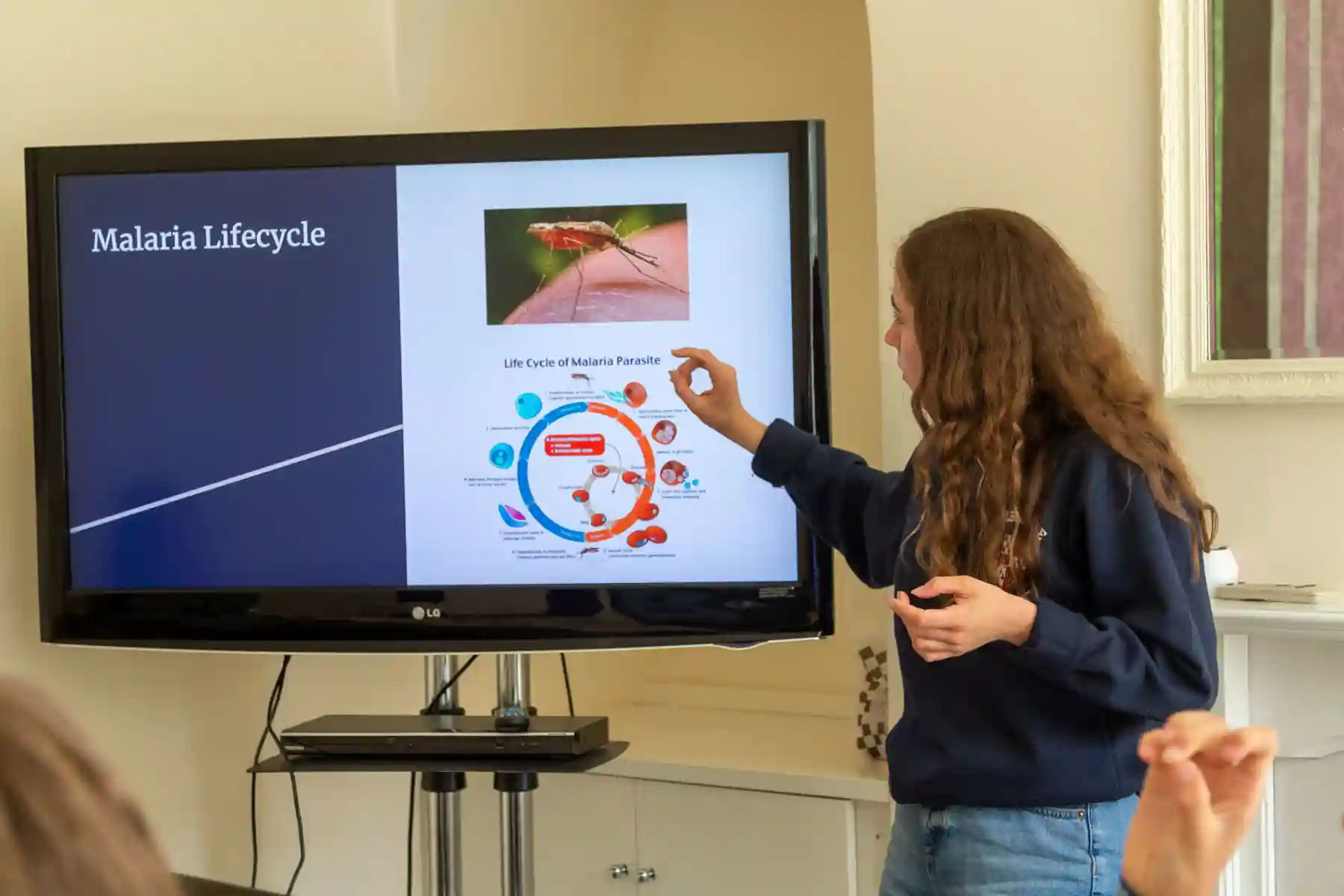
You'll take part in eight seminars where you'll explore scientific ideas through interactive discussion, case studies and activities. You'll be encouraged to ask questions, examine evidence, work through problems and develop your own explanations.
12 hours of private study
Between seminars, you'll complete independent work that could involve reading, researching a scientific question, working through problems or preparing a presentation.
Ages 16–17 and 18–24
18 hours of small-group seminars
You'll take part in six three-hour seminars, exploring Biotechnology and Genetics through discussion, case studies and activities.
2 hours of tutorials
You'll have one tutorial each week, providing a focused environment in which to discuss an essay or problem sheet you've been working on and receive detailed feedback.
Around 20 hours of private study
You'll complete reading in preparation for seminars and work independently on an essay or problem sheet for each tutorial.
Across all age groups, you'll be encouraged to participate actively, engage with scientific evidence and develop the confidence to approach increasingly complex ideas independently.
Who Are Our Biotechnology and Genetics Summer Courses For?
Our Biotechnology and Genetics summer courses are designed for students who are curious about DNA, inheritance and the ways biological science can be used to address real-world problems.
You don't need to have studied Biotechnology or Genetics as standalone subjects before. The courses may particularly appeal to you if you enjoy biology and chemistry, are interested in developments in medicine and scientific research, or are considering genetics, biotechnology, biochemistry, medicine or another life science in the future.
You'll develop skills including scientific reasoning, critical thinking, analysing evidence, problem-solving, independent study and communicating complex ideas clearly.
Learn from Expert Tutors
Atlas Summer Courses tutors are experienced educators and subject specialists active across academia, industry and education.
They bring their own academic expertise and interests into their teaching and have the freedom to shape their syllabus around both their specialism and the students in their group. This allows each Biotechnology and Genetics summer course to explore different areas of these fast-developing fields while maintaining an appropriate level of academic challenge.
Tutors are confirmed closer to the summer, so profiles on our website are examples of tutors who have previously taught with us rather than confirmation of who will teach your course.
Where Can Biotechnology and Genetics Take You?
Biotechnology and Genetics connect with a wide range of subjects across the biological and medical sciences.
Students interested in these fields may go on to study genetics, biotechnology or related subjects such as biology, biochemistry, biomedical sciences, medicine, pharmacology or bioengineering.
The scientific, analytical and problem-solving skills associated with Biotechnology and Genetics can also support future paths in areas such as scientific and medical research, healthcare, pharmaceuticals, biotechnology and the wider life sciences.
A Biotechnology and Genetics summer course gives you the opportunity to explore these fields before making longer-term academic decisions and discover which areas of modern biological science interest you most.
Don’t see the course you’re looking for?
Explore our full range of courses by subject, age, and location using our course finder. With over 40 subjects available across top locations, there’s something for everyone.


.webp)
%2520(1).webp)
FAQs about Our Summer Courses
No. You don't usually need to have studied your chosen subject before joining an Atlas Summer Courses summer course. Courses are designed for the relevant age group, and tutors can adapt their approach to the abilities, interests and experience of the students in their group.
There is no fixed curriculum that every student follows. Our tutors create their own syllabi based on their academic expertise and the interests and learning needs of their students.
This means the exact topics can vary between courses and years. Any syllabus or topics shown on our website are examples from previous courses and shouldn't be taken as a guarantee of exactly what you'll study.
Teaching depends on your age group. Students aged 9–12 and Scholars aged 12–14 learn through structured, interactive small-group classes. Students aged 13–15 combine small-group seminars with private study, while students aged 16–17 and 18–24 experience seminars, tutorials and independent study.
Across our programmes, teaching is designed to encourage active participation, questioning and independent thinking rather than simply listening to lectures.
Your course includes your academic programme, accommodation, meals and a certificate on completion, alongside the activities and experiences included within your programme.
What's included can vary depending on the programme, age group and package you choose, so we recommend checking the individual course details for the full inclusions before applying.
Explore Our
Summer Courses
Choose from over 40 subjects taught through flexible, age-appropriate programmes. Our tutors adapt their teaching methodologies to different age groups and shape course content around students’ interests, rather than following a fixed curriculum.
View all courses