
Windsor Castle Day Trip

Key takeaways:
- Windsor Castle is one of Britain’s most significant historic royal sites — it is the oldest and largest inhabited castle in the world and remains a working royal residence.
- The Changing of the Guard is one of Windsor’s best-known traditions, marking the handover between the old and new guards.
- Do not imply the Changing of the Guard happens every day — schedules vary and can change due to weather or ceremonial requirements.
- The State Apartments are a major highlight, allowing visitors to explore impressive ceremonial rooms that continue to be used for official royal occasions.
- St George’s Hall is one of the Castle’s most impressive spaces and was extensively reconstructed following the 1992 Windsor Castle fire.
- Queen Mary’s Dolls’ House was created between 1921 and 1924 and is described by the Royal Collection Trust as the largest and most famous dolls’ house in the world.
- The Dolls’ House contains extraordinary working details, including electricity, running water and lifts.
- St George’s Chapel is an important example of Gothic architecture, with construction of the present chapel beginning in 1475 during the reign of Edward IV.
- St George’s Chapel contains the tombs of 11 monarchs, including Henry VIII, Charles I, George VI and Queen Elizabeth II. This updates the original article’s outdated reference to ten monarchs.
- The Chapel remains an active place of worship, rather than functioning solely as a historic visitor attraction.
- Visitors can also explore Windsor itself, with restaurants, cafés, shops and riverside areas surrounding the Castle.
- Eton is located across the River Thames from Windsor, making it possible to explore the wider area during a visit.
- Eton College was founded by Henry VI in 1440 and remains an independent boys’ boarding school.
- Do not imply visitors automatically have access to Eton College — access depends on current visitor arrangements.
- A Windsor visit can connect with several academic interests, including History, Politics, Architecture and Art, without needing to turn the excursion into a formal lesson.
- Tie-in to Atlas Summer Courses: excursions and cultural activities can form part of the wider residential summer experience, giving students opportunities to spend time together and experience more of the UK outside academic sessions.
- Do not promise Windsor Castle as part of every Atlas programme. Excursions vary according to programme, age group, dates and availability.
- Remove the old claim that students necessarily return from Windsor for punting, karaoke, ghost tours or debates, unless those activities are confirmed on the current programme itinerary.
- Visitors should check current arrangements before travelling because Windsor Castle is a working royal residence and opening times, access, ceremonies and individual attractions can change.
- Main takeaway: Windsor provides an opportunity to experience royal history, architecture, ceremony and modern British life in the same destination, making it an interesting cultural day trip alongside a wider summer experience.
Windsor Castle Day Trip: History, Royal Traditions and Things to See
Few places bring British royal history to life quite like Windsor Castle. With almost 1,000 years of history, impressive State Apartments, St George’s Chapel and Queen Mary’s Dolls’ House, there is plenty to discover within the Castle walls.
Windsor itself adds another dimension to a visit. The town sits beside the River Thames, while Eton is just across Windsor Bridge, making the area particularly interesting for anyone curious about British history, architecture and education.
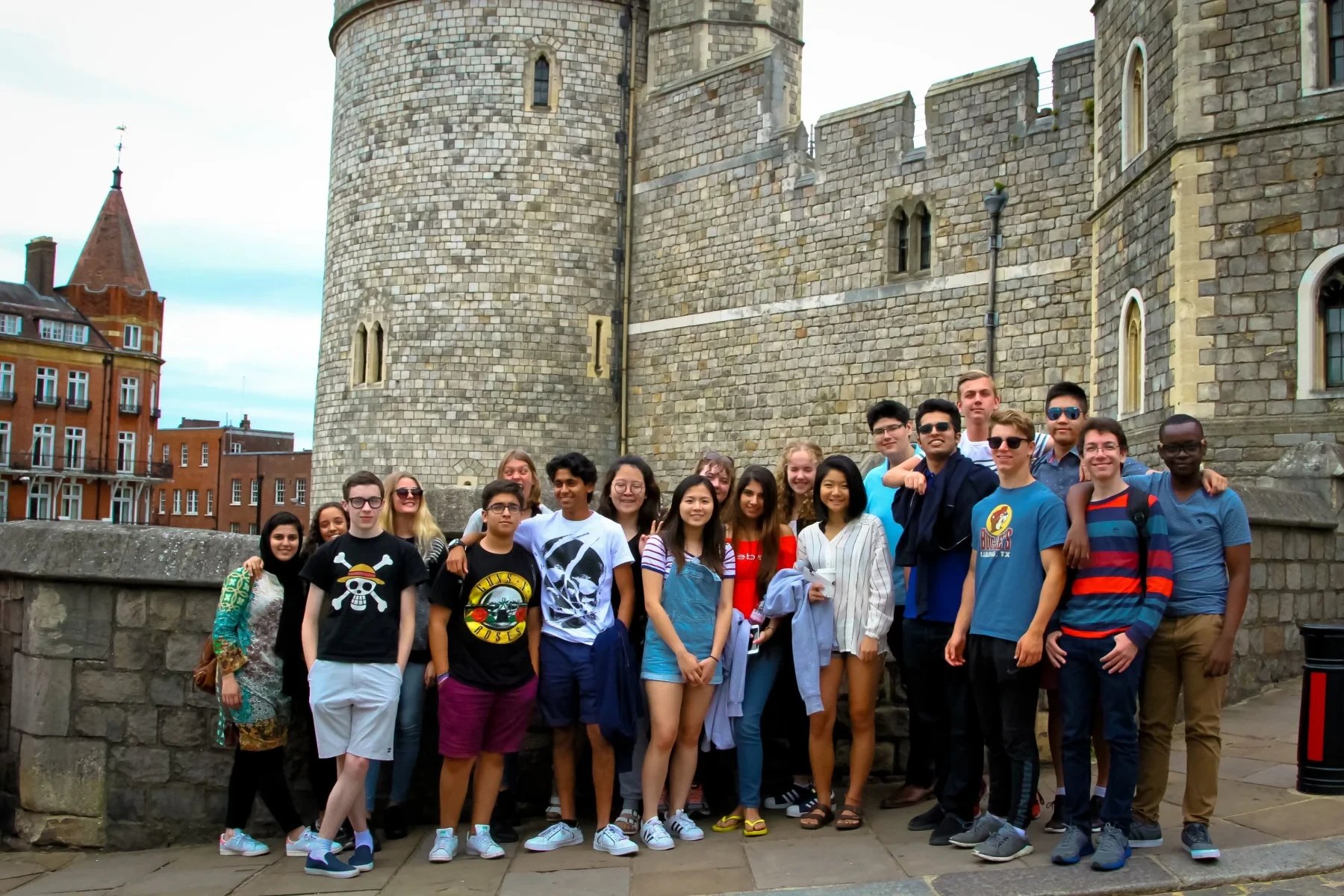
For students visiting as part of a summer programme, a day trip like this can also provide a welcome change of pace from academic sessions: an opportunity to spend time with friends while experiencing somewhere they may previously have encountered only in books, photographs or films.
Here is what makes Windsor such an interesting place to explore.
Visiting Windsor Castle
Windsor Castle is the oldest and largest inhabited castle in the world and remains a working royal residence.
Its long history means a visit is not centred around a single attraction. The visitor route can include the State Apartments, Queen Mary’s Dolls’ House, St George’s Chapel and the Castle precincts, although access can vary according to the date and royal or ceremonial events.
For students, this provides an opportunity to see how a historic building continues to have a modern ceremonial role rather than functioning purely as a museum.
1. Watch the Changing of the Guard
One of the most recognisable traditions associated with Windsor Castle is the Changing of the Guard.
Despite its ceremonial appearance, there is a practical purpose behind it: the ceremony marks the handover of responsibility between the old and new guards.
On current schedules, the full guard change can usually be seen by Castle visitors on Thursdays and Saturdays, weather permitting, with guards marching through Windsor before entering the Castle. Smaller Captain’s Inspection ceremonies take place on some other opening days. Schedules can change, however, so visitors should always check before planning a trip around the ceremony.
That is worth correcting from the original article: the Changing of the Guard should not be presented as something every Windsor Castle visit will automatically include.
2. Explore the State Apartments
Inside the Castle, the State Apartments contain some of its most impressive ceremonial spaces.
These rooms continue to be used by the monarch and members of the Royal Family for official occasions and entertaining guests.
Among the highlights is St George’s Hall, a vast ceremonial room with a striking vaulted ceiling. The hall was extensively reconstructed following the Windsor Castle fire of 1992.
Walking through these rooms gives visitors an opportunity to see how Windsor functions simultaneously as a historic site and working royal residence.
3. See Queen Mary’s Dolls’ House
One of Windsor Castle’s most unusual attractions is Queen Mary’s Dolls’ House.
Built between 1921 and 1924, the Dolls’ House was designed by architect Sir Edwin Lutyens and involved contributions from large numbers of artists, craftspeople, manufacturers and writers. The Royal Collection Trust describes it as the largest and most famous dolls’ house in the world.
Its extraordinary level of detail is what makes it particularly interesting.
Rather than being designed simply as a child's toy, it was created as a miniature representation of an aristocratic home of the period, complete with functioning electricity, running water and working lifts.
It was originally displayed at the British Empire Exhibition at Wembley in 1924 before being moved to Windsor Castle in 1925, where visitors can still see it today.
4. Visit St George’s Chapel
Within the Castle grounds stands St George's Chapel, one of the finest examples of Gothic architecture in England.
Construction of the present chapel began in 1475 during the reign of Edward IV, and its remarkable stone ceiling was added under Henry VII.
The Chapel is also the spiritual home of the Order of the Garter, the senior British order of chivalry, established by Edward III in 1348.
It has played an important role in royal history for centuries and contains the tombs of 11 monarchs, including Henry VIII, Charles I, George VI and Queen Elizabeth II.
This corrects another outdated detail in the original article, which referred to ten monarchs.
5. Experience a Living Place of Worship
St George’s Chapel is not simply a historic attraction.
It remains an active place of worship, with services open to members of the public. The current schedule includes services throughout the week, although the Chapel's availability to ordinary Castle visitors varies according to the day and scheduled services or events.
On Sundays, for example, the Chapel is open for worship rather than general sightseeing as part of the Windsor Castle visitor route.
This continuing religious role is part of what makes the Chapel different from visiting a preserved historic building whose original purpose has disappeared.
6. Explore Windsor
There is plenty to see beyond the Castle itself.
Windsor is a historic town with restaurants, cafés, shops and riverside areas, so time outside the Castle provides an opportunity to experience the wider destination.
Students might have time to stop for lunch or explore part of the town depending on the itinerary for their particular visit.
Rather than treating Windsor Castle as an isolated attraction, spending some time in the surrounding town helps put the Castle in context. Its enormous walls and towers remain part of everyday Windsor, rising directly beside streets filled with shops, restaurants, visitors and local residents.
7. Walk Across Windsor Bridge to Eton
Cross the River Thames from Windsor and you reach Eton.
The town is best known as the home of Eton College, which was founded by King Henry VI in 1440.
The College remains an independent boys’ boarding school today.
It is important, however, not to imply that walking to Eton means visitors automatically have access to the school itself. A walk through Eton can provide views of the historic area and College buildings from public spaces, while access to College property depends on its current visitor arrangements.
For students interested in British educational history, even seeing Windsor and Eton within the same day demonstrates how closely some of the country's royal and educational institutions have developed alongside one another.
What Can Students Learn From a Windsor Castle Visit?
A visit to Windsor can connect with several academic interests.
History students can consider the changing role of the monarchy across different periods.
Architecture students can compare medieval, Gothic and later architectural styles.
Politics students might think about the constitutional and ceremonial role of the modern monarchy.
Art students can explore the interiors and collections.
Even the Changing of the Guard demonstrates how traditions can survive while their wider political and social context changes around them.
This does not mean an excursion needs to become another classroom lesson.
Part of the value of visiting somewhere historic is simply having the opportunity to see things for yourself and follow whatever catches your attention.
Windsor Castle and Atlas Summer Courses
Excursions and activities form part of the wider residential experience at Atlas Summer Courses, giving students opportunities to spend time together outside their academic sessions and experience more of the UK during their stay.
However, we should be careful with the original article here.
Windsor Castle should only be described as an Atlas excursion if it is actually included in the current programme being promoted. Activity and excursion schedules can vary according to age group, location, course dates and availability.
Students and families should therefore check their current programme information rather than assuming that Windsor Castle, or any particular attraction mentioned in previous Atlas articles, will automatically be included.
The same applies to evening activities. The old article lists punting, ghost tours, karaoke and debates as though they necessarily follow a Windsor excursion. Unless that reflects the current timetable, we shouldn't make that claim.
Planning a Visit to Windsor Castle
Because Windsor Castle remains a working royal residence, opening arrangements can change.
The Castle is currently closed to visitors on Tuesdays and Wednesdays, while individual areas can sometimes close or have restricted access because of ceremonies, services or other events. St George’s Chapel also has its own visiting arrangements.
Changing the Guard does not happen every day either.
Anyone planning an independent visit should therefore check the latest information through the official Windsor Castle visitor website before travelling.
Why Visit Windsor?
Windsor works particularly well as a day-trip destination because several different aspects of British history exist within a relatively small area.
You can explore a working royal castle, see extraordinary historic interiors, visit a Gothic chapel containing the tombs of British monarchs, learn about royal traditions and then cross the Thames into a town associated with one of Britain's oldest schools.
But the most interesting part is not simply ticking famous landmarks off a list.
Places like Windsor allow students to see how history, architecture, monarchy, religion and modern life continue to overlap.
A building begun centuries ago can still host a state occasion.
A chapel built under medieval monarchs can still hold services today.
A ceremony rooted in centuries of military tradition can still draw crowds onto Windsor's streets.
That makes Windsor more than somewhere to take photographs. It is a place where the past remains unusually visible in the present.
Ready to Explore More During Your Summer?
At Atlas Summer Courses, academic learning forms part of a wider residential experience that can include activities, cultural experiences and excursions appropriate to each programme.
Current schedules vary, so students should check the itinerary for their particular course to see which destinations and activities are included.
Apply now to explore the current Atlas Summer Courses programmes.
About the author
Rhys Mackenzie is responsible for creating and maintaining educational content at Atlas Summer Courses, helping students and families access clear, accurate information about studying in Oxford. With several years of experience in digital content and student-focused resources, Rhys specialises in presenting academic programmes in a way that reflects the quality and integrity of Atlas Summer Courses' academic offering. Learn more about Rhys here.
Summary
Windsor Castle, the oldest and largest occupied castle globally, has housed British monarchs for over 1000 years. Explore the Changing of the Guard, St George's Chapel, and the historic town.