
Tutorial-style teaching at Atlas Summer Courses

Key takeaways:
- Tutorial-style teaching is a central part of the Atlas academic experience for students aged 16+.
- Atlas tutorials are taught 2:1, with two students working closely with one tutor.
- Tutorials are focused one-hour academic sessions designed around discussion, questioning and personalised feedback.
- Students complete independent academic work before their tutorials, giving them ideas, arguments or solutions to bring to the discussion.
- Tutorial work varies by subject, with arts and humanities students completing written work and science-based subjects using problem sheets or other appropriate tasks.
- Students are expected to participate actively, explaining their reasoning rather than simply listening to a tutor.
- Tutors use questions to challenge students' thinking, encouraging them to justify conclusions, examine assumptions and consider alternative perspectives.
- The 2:1 structure allows both students to contribute, giving them the opportunity to learn from each other's approaches as well as from their tutor.
- Personalised feedback focuses directly on each student's work, helping them understand both strengths and areas for development.
- Tutorials encourage critical thinking, including evaluating evidence, questioning assumptions and reconsidering conclusions.
- Students learn the difference between having an opinion and constructing a well-supported argument.
- Making mistakes is treated as part of the learning process, with students encouraged to correct errors and develop their thinking in response to feedback.
- Tutorials complement seminars and independent study, rather than replacing other forms of academic teaching.
- The methodology encourages greater academic independence, with students taking responsibility for preparation and participating actively in their learning.
- Skills developed can include critical analysis, problem-solving, academic communication, independent thinking and responding constructively to feedback.
- Atlas tutorial teaching should not be presented as University of Oxford or University of Cambridge teaching. Atlas operates its own independent academic programmes and is not part of or endorsed by either university.
- Main takeaway: Atlas tutorials are designed not simply to provide students with answers, but to help them develop, explain, question and improve their own thinking through preparation, discussion and personalised feedback.
The Atlas Summer Courses Tutorial Teaching Methodology
At Atlas Summer Courses, students aged 16+ experience tutorial-style teaching as part of their academic programme. Tutorials are designed to give students something that can be difficult to achieve in a larger classroom: focused time to discuss their own work, explain their reasoning and receive personalised feedback from a tutor.
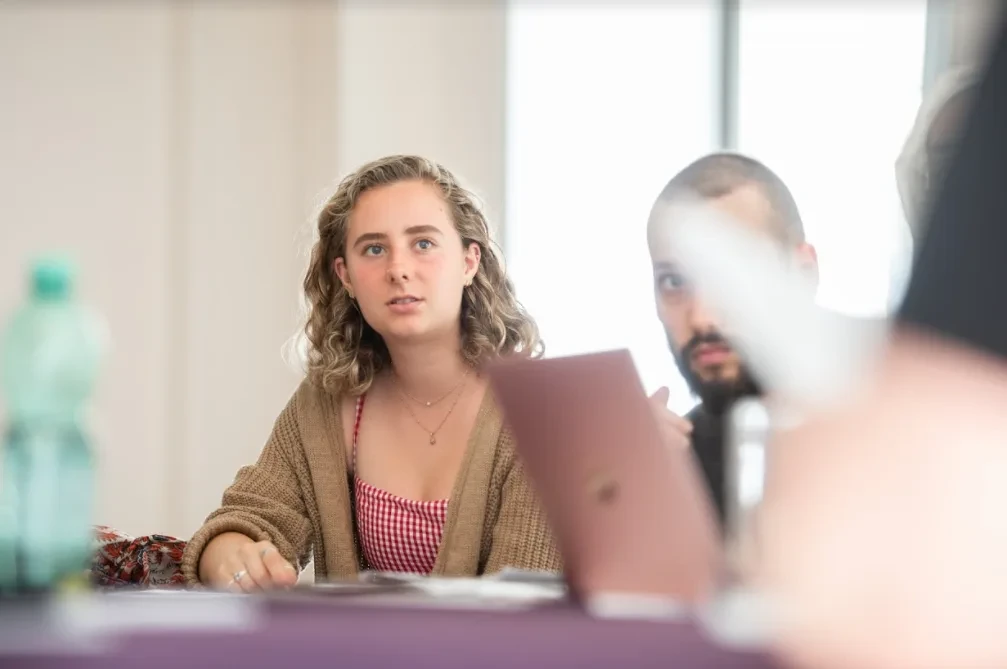
For students aged 16–17 and 18–24, Atlas tutorials are taught 2:1, with two students working with one tutor. Rather than simply listening to another lesson, students arrive having completed independent academic work and use the tutorial to examine that work in greater depth.
The result is a demanding but highly interactive form of learning in which students are expected to participate, question, explain and reconsider their ideas.
What Is Tutorial-Style Teaching?
Tutorial teaching is based around academic discussion rather than one-way instruction.
A tutor does not simply provide information while students take notes. Instead, students are expected to contribute actively to the session.
The tutor can ask questions, challenge assumptions, identify gaps in an argument and encourage students to explain why they have reached a particular conclusion.
That changes the student's role.
It is no longer enough to know an answer. Students need to consider how they reached it, whether they can justify it and how their thinking might change when challenged.
How Do Tutorials Work at Atlas Summer Courses?
For Atlas students aged 16+, tutorials follow independent academic preparation.
Students studying arts and humanities subjects complete written tutorial work, while students in science-based subjects may work on problem sheets or other subject-appropriate academic tasks.
They then bring that work into a focused one-hour, 2:1 tutorial with their tutor.
With only two students and one tutor in the session, there is considerable opportunity to examine each student's thinking closely.
A tutor might question an argument, ask a student to clarify an idea or explore why they chose one approach rather than another. The other student can also contribute, introducing another interpretation or way of approaching the problem.
The tutorial therefore becomes a conversation about the work rather than simply a correction exercise.
Why Does Atlas Use 2:1 Tutorials?
There are advantages to keeping tutorials very small.
In a larger class, a student might contribute once or twice during a session — or not at all. In a 2:1 tutorial, participation is fundamental to the format.
Students have space to explain their own ideas while also hearing how another student approached the same or related questions.
That second perspective matters.
The aim is not to have the two students compete for the tutor's attention. Instead, each student's contribution can create another opportunity for discussion.
One student might make an argument the other had not considered. They may disagree about an interpretation or reach the same conclusion through completely different reasoning.
These differences can make the tutorial richer.
Independent Preparation Comes First
A tutorial begins before students enter the room.
Independent preparation is an important part of the methodology because students need something of their own to bring to the discussion.
Rather than encountering every idea for the first time during teaching, students have already spent time researching, reading, writing or solving problems independently.
This requires them to make decisions.
Which evidence is important?
How should an argument be structured?
Which method should be used to solve a problem?
What conclusion does the available information support?
Students may not arrive with perfect answers — and they are not expected to.
The purpose of the tutorial is partly to discover where their thinking can go next.
Learning Through Questions
A strong tutorial does not depend on the tutor immediately providing the answer.
Questions can be more useful.
Why do you think that?
What evidence supports your conclusion?
What would happen if this assumption changed?
Is there another interpretation?
How would you respond to the opposite argument?
Questions like these require students to examine their reasoning rather than simply repeat information they have learned.
Sometimes a student will defend their original position successfully.
Sometimes they will realise that an argument needs more evidence.
And sometimes a question will completely change how they think about the problem.
All three can be valuable outcomes.
Personalised Feedback
One of the main advantages of tutorial teaching is the opportunity for feedback to address the student's own work.
General classroom feedback can explain common mistakes or introduce principles that apply to everybody. A tutorial can go further.
A tutor can focus on the particular argument a student has made, the method they have chosen or an area where their reasoning could be developed.
That makes feedback more specific.
Students can also respond immediately. If they do not understand a comment, they can ask about it. If they disagree, they can explain why. If a tutor identifies a weakness, they can discuss how the work might be improved.
Feedback becomes part of a conversation rather than simply something written at the bottom of a page.
Developing Critical Thinking
Tutorials are particularly well suited to developing critical thinking because students cannot rely entirely on prepared answers.
A tutor can follow an interesting point with another question.
A student's tutorial partner can offer a different perspective.
An argument that initially appeared convincing may become more complicated once its assumptions are examined.
Students therefore need to think while the conversation is happening.
Over time, this can encourage habits such as questioning evidence, considering alternatives, recognising assumptions and becoming more comfortable changing a conclusion when there is a good reason to do so.
Learning to Defend an Argument
Being challenged academically does not mean being told that you are wrong.
Often, it means being asked to explain yourself more clearly.
If a student makes a claim, the tutor may ask for evidence. If they reach a conclusion, they may be asked how they arrived there. If they dismiss an alternative interpretation, they may need to explain why.
This process encourages students to distinguish between having an opinion and constructing an argument.
An argument needs reasoning behind it.
Learning to provide that reasoning can help students become clearer thinkers, writers and communicators.
Becoming Comfortable With Being Wrong
Not every idea survives a tutorial.
That is part of the point.
Academic learning involves testing ideas and discovering where they do not work. A mistake in a calculation, an unsupported assumption or a weakness in an essay argument can all become starting points for discussion.
Students can learn that changing their mind is not a failure.
Recognising that another explanation is stronger, correcting an error or improving an argument in response to evidence are all important parts of intellectual development.
A productive tutorial creates room for students to take ideas seriously without expecting every first attempt to be correct.
Tutorials and Seminars: What's the Difference?
Tutorials are one part of the wider Atlas academic experience for older students.
Seminars provide opportunities to explore ideas within a small group. Students can encounter different perspectives, participate in discussion and learn alongside others studying the same subject.
Tutorials are more focused.
With two students and one tutor, they provide greater opportunity to concentrate on the students' own academic work and reasoning.
The two formats complement each other.
Seminars introduce and develop ideas through group discussion. Independent study gives students time to investigate and formulate their own thinking. Tutorials then create space to test that thinking through focused dialogue and feedback.
Preparing Students for More Independent Study
As students move towards university and higher-level study, they are increasingly expected to take responsibility for their own learning.
They need to manage reading, research questions independently, prepare work and arrive at classes ready to discuss what they have found.
Tutorial-style learning can help students practise those habits.
The tutor remains an important source of expertise and guidance, but the student has responsibility too.
They need to arrive prepared.
They need to participate.
And they need to think for themselves.
That shift from simply receiving information to taking responsibility for understanding it is an important part of the Atlas academic approach.
Is Tutorial Teaching the Same as Studying at Oxford or Cambridge?
No.
Tutorials and other forms of small-group teaching are associated with university education, particularly at Oxford and Cambridge, but Atlas Summer Courses operates its own independent academic programmes and teaching model.
Attending an Atlas tutorial in Oxford or Cambridge does not mean a student is receiving teaching from, studying at or enrolled in the University of Oxford or University of Cambridge.
Atlas Summer Courses is an independent organisation and is not part of, authorised, approved or endorsed by either university or any of their colleges.
Our tutorial methodology should therefore be understood on its own terms: as a way of providing Atlas students with focused academic discussion and personalised feedback.
What Can Students Gain From Tutorial-Style Learning?
Different students will take different things from the experience, but tutorial teaching can provide opportunities to develop:
- independent thinking;
- critical analysis;
- academic communication;
- confidence discussing complex ideas;
- the ability to construct and defend arguments;
- problem-solving;
- responsiveness to feedback; and
- greater responsibility for academic preparation.
These skills are not limited to one subject.
A Law student defending an interpretation, a Literature student analysing a text and a science student explaining how they approached a problem are doing very different academic work.
But all of them need to understand their reasoning well enough to discuss it.
Tutorial Teaching at Atlas Summer Courses
Tutorials are not designed to make students reproduce a tutor's opinions.
Their purpose is to make students engage more seriously with their own.
Independent preparation gives students time to develop an argument or approach. The 2:1 tutorial then gives them a focused environment in which that thinking can be questioned, clarified and developed through discussion and personalised feedback.
Students may leave with a stronger version of their original argument.
They may leave with an entirely different conclusion.
Or they may leave with several new questions they had never considered before.
That is what makes tutorial-style teaching valuable.
The aim is not simply to give students answers. It is to help them become better at reaching, explaining and questioning answers for themselves.
About the author
Rhys Mackenzie is responsible for creating and maintaining educational content at Atlas Summer Courses, helping students and families access clear, accurate information about studying in Oxford. With several years of experience in digital content and student-focused resources, Rhys specialises in presenting academic programmes in a way that reflects the quality and integrity of Atlas Summer Courses' academic offering. Learn more about Rhys here.
Summary
Tutorial-style teaching at Atlas Summer Courses gives students aged 16+ the opportunity to explore their academic work through focused one-hour, 2:1 sessions with a tutor. Students prepare work independently before using tutorials to explain their reasoning, respond to questions, consider different perspectives and receive personalised feedback. Alongside seminars and independent study, this approach encourages students to become more active and independent learners while developing skills in critical thinking, problem-solving, academic communication and constructing well-supported arguments.