
15 Top Things to Do in Cambridge this Summer

Key takeaways:
15 Top Things to Do in Cambridge This Summer
Cambridge is particularly enjoyable during the summer. Longer days make it easier to explore on foot, the city's parks and riverside spaces become places to spend an afternoon, and activities such as punting, cycling and outdoor performances give visitors plenty of reasons to stay outside.
The city is internationally associated with the University of Cambridge, but a summer in Cambridge does not need to revolve entirely around the University. Museums, gardens, markets, independent shops, green spaces and the River Cam all form part of the experience.
For teenagers and young people spending several weeks in Cambridge, this variety is especially useful. A morning exploring a museum can be followed by an afternoon outdoors, while quieter days can be spent discovering cafés, bookshops and less familiar parts of the city.
From punting on the River Cam and exploring museums to picnics, cycling and discovering Grantchester, here are 15 of the top things to do in Cambridge this summer.
1. Go Punting on the River Cam
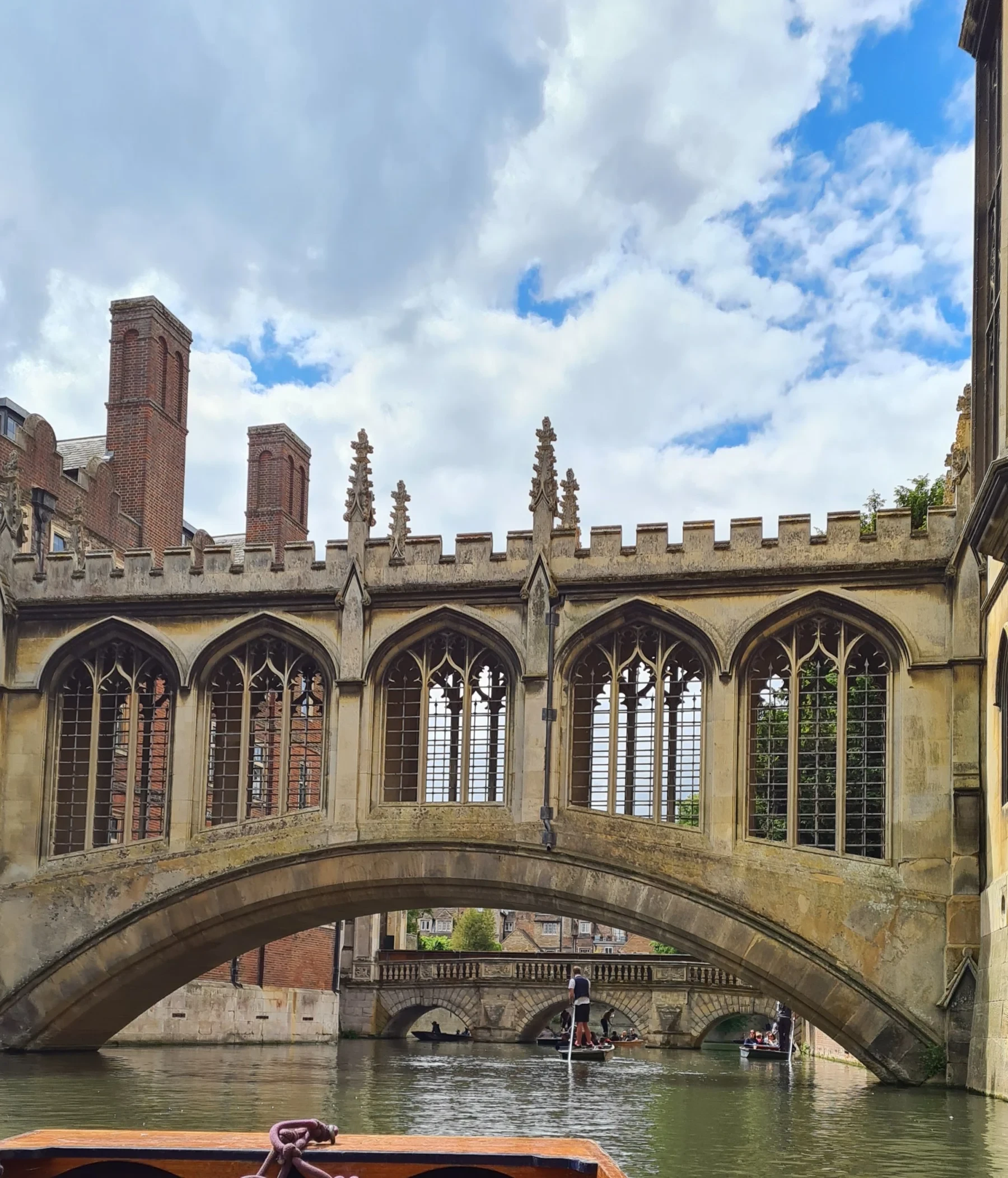
Few activities are as closely associated with Cambridge as punting.
A punt is a long, flat-bottomed boat propelled using a pole pushed against the riverbed. Visitors can either take a chauffeured tour or, where available, hire a punt and attempt it themselves.
The River Cam runs through the city, and the traditional route gives passengers views of the famous Cambridge Backs from the water. (Visit Cambridge)
Summer is an obvious time to try it.
On a warm afternoon, punting provides a completely different perspective from exploring Cambridge on foot.
It can also be entertaining to try for yourself. Steering a punt looks considerably easier from the riverbank than it feels once you are holding the pole.
For students spending a summer in Cambridge, a punting trip can be an enjoyable group activity and a memorable introduction to the city.
2. Explore the Historic Centre on Foot
Cambridge is a city that rewards walking.
The centre is relatively compact, meaning visitors can move between historic streets, riverside paths, museums, shops and green spaces without constantly needing transport.
Walking also allows you to notice details that are easy to miss when travelling quickly.
Look upwards.
Old façades, towers, gateways and unusual architectural details appear throughout the centre.
Then look down the smaller streets.
Some of Cambridge's most interesting corners are found away from the busiest routes.
A self-guided walk also costs nothing, making it one of the easiest activities to repeat throughout the summer.
Rather than trying to see everything in one afternoon, students staying in Cambridge can gradually learn the city over several weeks.
3. Visit the Fitzwilliam Museum
The Fitzwilliam Museum is one of Cambridge's major cultural attractions.
Its collections contain more than half a million objects, ranging from Ancient Egyptian material and manuscripts to paintings, coins and sculpture. General museum admission is free, although particular exhibitions may have separate arrangements. (Visit Cambridge)
That variety makes the museum useful even for people who do not normally think of themselves as museum enthusiasts.
Students interested in history can explore objects from earlier civilisations.
Art students can examine painting, sculpture and decorative arts.
Someone interested in classics might encounter Greek and Roman material.
The museum is also useful on those summer days when Cambridge's weather refuses to cooperate.
Instead of losing an afternoon to rain, spend a few hours exploring indoors.
4. Spend an Afternoon in the Cambridge University Botanic Garden
Cambridge University Botanic Garden provides around 40 acres of green space close to central Cambridge and is especially appealing during summer. (Cambridge University Botanic Garden)
The garden contains plants from around the world, giving visitors an opportunity to explore different landscapes and plant collections without leaving the city.
You do not need to be studying biology to enjoy it.
The attraction is partly scientific and partly simply the opportunity to slow down.
After several busy days of classes, activities or sightseeing, spending an afternoon walking through gardens can provide a welcome change of pace.
It is also an obvious choice for students interested in biology, ecology, environmental science or photography.
5. Have a Picnic on Parker's Piece
Summer in Cambridge does not need to involve filling every hour with organised attractions.
Sometimes the best plan is simply to buy some food and find somewhere outside.
Parker's Piece is one of the city's best-known open spaces and sits close to the centre.
Its large grassy areas make it suitable for meeting friends, relaxing, playing games or having a picnic.
This kind of unstructured time can become an important part of spending a longer period in Cambridge.
A visitor staying for one day might rush between attractions.
Someone staying for several weeks has the opportunity to experience the city more naturally.
Grab some food, take a football or a book and spend an afternoon outside.
6. Discover Cambridge's Museums
The Fitzwilliam may be the best-known museum in Cambridge, but it is far from the only one.
The city contains museums covering archaeology, anthropology, zoology, geology, science and other subjects.
Museum of Archaeology and Anthropology explores human history and cultures from around the world. (Visit Cambridge)
The Museum of Zoology provides another very different experience, with collections examining animal diversity, evolution and extinction. Its enormous fin whale skeleton is particularly difficult to miss. (Visit Cambridge)
Students interested in science can also investigate Cambridge's other specialist collections.
Instead of trying to visit several museums in a single day, choose one that connects with something you genuinely find interesting.
Museums become far more enjoyable when they are treated as places to investigate rather than attractions that need to be completed.
7. Cycle Around Cambridge
Cambridge and bicycles are difficult to separate.
Cycling is a common way of getting around the city, and there is an extensive network of cycling routes in and around Cambridge. (Visit Cambridge)
For visitors staying long enough to become comfortable with the city, cycling can make it much easier to explore beyond the immediate centre.
You can reach green spaces, residential neighbourhoods and surrounding countryside more quickly than on foot.
Cycling also provides a different sense of the city's geography.
After several journeys, places that initially seemed disconnected begin to fit together.
However, Cambridge can be extremely busy with cyclists and pedestrians, particularly around central streets.
Students unfamiliar with cycling in Britain should understand local road rules and use appropriate routes rather than assuming that every pedestrian area is suitable for bicycles.
8. Walk Along the River Cam
You do not need to get into a punt to enjoy the river.
Walking beside the Cam provides a quieter way to experience Cambridge.
The character of the river changes as you move through and beyond the centre.
Some areas are busy with punts and visitors.
Others feel considerably calmer.
A riverside walk is particularly enjoyable on long summer evenings when there is no need to rush back indoors.
It is also one of the simplest activities on this list.
There are no exhibits to understand, tickets to organise or schedules to follow.
Walk, talk with friends and see where the route takes you.
For students spending several weeks in Cambridge, these ordinary evenings can become just as memorable as the major excursions.
9. Visit Kettle's Yard
Kettle's Yard offers a very different experience from a conventional large museum.
It is known for its distinctive combination of art and domestic space and has become an important centre for modern and contemporary art in Cambridge. (Visit Cambridge)
Part of its appeal comes from the relationship between artworks and their surroundings.
Instead of encountering everything in huge galleries, visitors can think about how art interacts with rooms, furniture, light and everyday objects.
This makes Kettle's Yard particularly interesting for students interested in art, architecture, design or photography.
It can also encourage a useful question:
Why do museums display art in the way they do?
Changing the environment around an artwork can completely change how we experience it.
10. Explore Cambridge Market
A summer in Cambridge should include time simply exploring the city centre.
The market area provides an easy place to begin.
Markets have existed in central Cambridge for centuries, and the area remains part of everyday city life.
Depending on the day and traders present, visitors can find food and various goods and browse while exploring the surrounding streets.
It is particularly useful when you are spending time with a group because nobody needs to agree on exactly the same thing.
One person might be looking for lunch.
Someone else wants to browse.
Another is mainly interested in finding something sweet.
Afterwards, continue exploring the surrounding streets rather than immediately moving to another major attraction.
11. Spend Time on Jesus Green and Midsummer Common
Cambridge has several large green spaces within easy reach of the centre.
Jesus Green and Midsummer Common provide plenty of room to walk, sit outside or meet friends.
During summer, these spaces become particularly valuable.
Students can take a book, organise a casual game or simply spend an hour outside after a busy day.
Jesus Green is also home to a notable outdoor swimming facility. The city's tourism information highlights Jesus Green Lido as one of the longest outdoor pools in Europe.
For students spending several weeks in Cambridge rather than visiting for a weekend, parks can become part of everyday life.
You do not need a sightseeing itinerary every afternoon.
Sometimes sitting outside with friends is exactly what summer should involve.
12. Take a Trip Towards Grantchester
Cambridge's surrounding countryside is close enough that you can move surprisingly quickly from busy streets to much quieter landscapes.
Grantchester is one of the best-known destinations for doing this.
The village lies outside central Cambridge and has long been associated with writers, academics and Cambridge cultural life.
The journey can be part of the experience.
Depending on your plans and circumstances, the area can be explored through walking or cycling routes.
A trip towards Grantchester offers a useful contrast with central Cambridge.
One moment you are surrounded by shops, traffic and historic buildings.
Later, the landscape can feel much more rural.
For students spending an extended period in Cambridge, exploring beyond the centre helps prevent the city from becoming simply a small collection of familiar streets.
13. Browse Cambridge's Bookshops
Cambridge is an excellent city for browsing books.
That does not mean you need to spend the afternoon searching for difficult academic textbooks.
Look through fiction, history, science, poetry, philosophy, art or whatever happens to interest you.
Independent and second-hand bookshops can be particularly enjoyable because you rarely know what you are going to find.
Bookshops can also become surprisingly social places.
Two people can enter interested in completely different subjects and still spend an hour exploring together.
For students, there is another advantage.
Summer programmes can introduce you to ideas you had never considered before.
If a discussion suddenly makes you interested in philosophy, economics or neuroscience, exploring a bookshop provides an opportunity to follow that curiosity further.
14. Watch a Summer Performance
Cambridge has a lively cultural scene that extends beyond museums.
Theatre, music and outdoor performances can all form part of the city's summer calendar.
Visit Cambridge specifically highlights summer outdoor music and performances in parks and green spaces as part of the city's seasonal programme. (Visit Cambridge)
What is available will depend on the dates of your visit, so this is one activity where checking current listings is worthwhile.
A performance can also make a good evening activity after spending the day exploring.
Students interested in theatre, music or creative writing may find these experiences particularly valuable.
Watching how performers communicate a story or idea to a live audience can provide a very different perspective from studying the same subject in a classroom.
15. Spend Time Simply Living in Cambridge
This may sound strange on a list of things to do, but it is particularly important for anyone spending several weeks in the city.
Do not turn every day into tourism.
Find a favourite café.
Discover a quiet place to read.
Walk a route without checking a map.
Sit beside the river with friends.
Return to a museum because one room interested you rather than because you feel you should see everything.
Notice how the city changes between a busy afternoon and a quiet summer evening.
There is an important difference between visiting Cambridge and staying in Cambridge.
Visitors often concentrate on landmarks.
Students staying in the city have more time to develop routines, friendships and favourite places.
That can make the experience feel considerably more personal.
Why Visit Cambridge in Summer?
Summer changes the way Cambridge can be explored.
Longer daylight hours create more opportunities to spend time outside.
Parks become places for picnics and games.
The river becomes particularly active.
Walking and cycling become easier ways to explore beyond the immediate centre.
Cambridge's official tourism information highlights punting, picnics, walking, cycling, museums and outdoor summer performances among the activities available in the city.
The variety is particularly useful for younger visitors.
Not everyone wants to spend every day visiting historic buildings.
A good summer can combine culture and history with outdoor activities, social time and opportunities simply to explore independently where appropriate.
What Can Teenagers Do in Cambridge?
Teenagers have plenty of options that do not require every activity to feel educational.
Punting can be social.
Parks provide space for games and picnics.
Cycling allows students to explore further.
Markets, shops and cafés provide easy places to spend free time.
Museums can then become an option when students want to explore a particular interest.
The key is variety.
A student interested in art might spend hours at the Fitzwilliam or Kettle's Yard.
Someone interested in biology might prefer the Botanic Garden or Museum of Zoology.
Others may simply enjoy being outdoors.
Cambridge works particularly well when students are able to combine these different experiences rather than following exactly the same type of activity every day.
What Can You Do in Cambridge for Free?
A summer in Cambridge does not need to involve spending money every day.
Walking through the city costs nothing.
So does spending time in many parks and open spaces.
The Fitzwilliam Museum has free general admission, and Cambridge has other museum collections that can also be explored without turning every afternoon into an expensive excursion.
You can also create your own activities.
Choose a photography challenge.
Find the most unusual building you can.
Sketch somewhere beside the river.
Take a book to a park.
Walk somewhere you have not explored before.
For students staying several weeks, mixing paid attractions with free activities makes much more sense than treating every day like a holiday itinerary.
What Should You Do on a Rainy Day in Cambridge?
British summer weather is not famous for predictability.
Fortunately, Cambridge has enough indoor attractions that rain does not need to ruin the day.
Museums are the obvious choice.
The Fitzwilliam can easily occupy several hours.
Specialist museums offer alternatives for students interested in archaeology, zoology, geology or other subjects.
Kettle's Yard provides another option for art and design.
Bookshops and cafés can fill the gaps between attractions.
A rainy day can therefore become an opportunity to explore parts of Cambridge you might otherwise have ignored while concentrating on outdoor activities.
What Should You Do on a Sunny Day?
Save some activities specifically for good weather.
Punting is an obvious choice.
So are cycling, riverside walks, picnics and longer trips outside the centre.
The Botanic Garden is particularly suited to a warm day because visitors can take their time exploring its extensive outdoor spaces.
Parks such as Jesus Green, Midsummer Common and Parker's Piece also provide places to spend several hours without needing a complicated plan.
If you are staying in Cambridge for more than a few days, flexibility helps.
There is little point using the sunniest afternoon of the week inside a museum if rain is forecast tomorrow.
Cambridge for Students Interested in Science
Cambridge has an extraordinary scientific history, but students do not need to treat the city as a collection of famous names.
Instead, use its museums and collections to explore the subjects themselves.
Someone interested in biology can visit zoological or botanical collections.
A student interested in evolution might investigate fossils and specimens.
Those interested in anthropology can examine how researchers study human societies and material cultures.
The important distinction is between exploring subjects while staying in Cambridge and assuming that being in the city means participating in University of Cambridge academic life.
Independent visitors and summer programme students can enjoy Cambridge's publicly accessible cultural and educational attractions without being University students.
Cambridge for Students Interested in Art and Literature
Cambridge also has plenty for students whose interests lie outside science.
The Fitzwilliam provides access to substantial art collections.
Kettle's Yard offers a very different encounter with modern and contemporary art.
Bookshops provide opportunities to explore literature, poetry and criticism.
The city itself can become material for creative work.
Take photographs.
Sketch buildings.
Write about people moving through a market.
Sit beside the river and describe the scene without using the words “river”, “boat” or “water”.
Places become more interesting when students actively respond to them rather than simply photograph them and move on.
Cambridge for Students Interested in History
Cambridge contains visible layers of history.
Architecture can show how the city developed.
Museums preserve objects from societies far beyond Cambridge itself.
Street names, churches and older buildings can prompt questions about the people who lived in the city before modern tourism and student life developed.
History becomes particularly interesting when students stop treating old buildings merely as attractive backgrounds.
Ask questions.
Why was this built?
Who could enter it?
Who paid for it?
How has its purpose changed?
The city then becomes something to investigate rather than simply look at.
How to Explore Cambridge Without Rushing
One of the easiest mistakes visitors make is attempting to complete Cambridge.
You cannot.
Nor do you need to.
If you are staying for several weeks, divide the city into smaller experiences.
Visit one museum rather than three.
Spend an afternoon around the river.
Use another day for the Botanic Garden.
Walk somewhere new after dinner.
Leave some afternoons deliberately unplanned.
This approach creates space for unexpected discoveries.
You might find a shop you want to revisit, an exhibition you did not know was running or a green space that becomes a favourite meeting point.
Having more time means you can experience the city rather than simply work through a checklist.
Experiencing Cambridge as a Summer Student
For students attending an independent summer programme, Cambridge can become part of the wider residential experience.
Academic sessions may occupy part of the day, but living temporarily in another city can also encourage independence.
Students learn routes.
They become more comfortable in unfamiliar surroundings.
They meet people from different places.
They experience activities as a group and gradually develop their own favourite parts of the city.
It is important, however, to distinguish clearly between staying and studying in Cambridge and studying at the University of Cambridge.
Independent summer education providers run their own programmes in the city. Staying in Cambridge, or using facilities that may be available there, does not make students members of the University of Cambridge.
Making the Most of a Summer in Cambridge
The best way to enjoy Cambridge is to combine planned activities with unstructured time.
Try punting.
Explore a museum.
Spend an afternoon in the Botanic Garden.
Cycle somewhere new.
Have a picnic.
Watch a performance.
Then leave space for the experiences that cannot be planned.
Some of the strongest memories from spending a summer away from home may have little to do with famous attractions.
They might come from conversations during a walk, getting completely lost on a bicycle ride, discovering a favourite place to eat or spending an unexpectedly good evening with new friends.
Those experiences are part of discovering a city too.
Atlas Summer Courses in Cambridge
Students attending Atlas Summer Courses in Cambridge are staying and studying in a city with a wide range of museums, green spaces, cultural attractions and opportunities to explore.
The wider Cambridge experience can complement students' own Atlas Summer Courses programme by giving them opportunities to spend time with other students, discover new interests and become more comfortable living away from home.
It is important to distinguish this from studying at the University of Cambridge.
Atlas Summer Courses is an independent summer education provider and is not part of the University of Cambridge.
Students attending an Atlas Summer Courses programme in Cambridge participate in their own Atlas Summer Courses academic and residential programme while staying in the city.
Conclusion
Cambridge offers far more to do during summer than simply visiting its most famous buildings.
You can punt along the River Cam, explore museums, walk beside the water, cycle through the city, spend an afternoon in the Botanic Garden or head towards the surrounding countryside.
You can also do very little.
Have a picnic.
Browse a bookshop.
Sit outside with friends.
Find somewhere you want to return to.
For students staying in Cambridge for several weeks, that balance is particularly important.
The aim does not need to be seeing every attraction.
It can be getting to know the city gradually—discovering its museums and history while also enjoying its parks, river, cultural life and ordinary summer afternoons.
That is what can turn Cambridge from somewhere you have visited into somewhere you have genuinely spent part of your summer.
About the author
Rhys Mackenzie is responsible for creating and maintaining educational content at Atlas Summer Courses, helping students and families access clear, accurate information about studying in Oxford. With several years of experience in digital content and student-focused resources, Rhys specialises in presenting academic programmes in a way that reflects the quality and integrity of Atlas Summer Courses' academic offering. Learn more about Rhys here.
Summary
Don't miss Cambridge when in the UK! Explore universities, museums, gardens. Try punting, visit King's College Chapel. Enjoy fudge, tea, sports. Climb tower, spot cattle, marvel at Corpus Clock. Shop, stroll Trinity College. Immerse in Cambridge's charm!