
How to Improve Your Philosophy Skills

Key takeaways:
Philosophy for Students: How to Build Critical Thinking, Reasoning and Argument Skills
Philosophy explores some of the most fundamental questions human beings can ask. What can we know? What makes an action right or wrong? What does it mean to be free? What makes a society just? How do we know that our beliefs are reasonable? What, if anything, makes a person the same person over time?
Unlike subjects where the main goal may be learning established facts or procedures, philosophy often begins with uncertainty. Students are encouraged to examine assumptions, define concepts carefully, construct arguments and consider objections before reaching a conclusion.
That makes philosophy particularly valuable for developing critical thinking, logical reasoning, academic writing and confident discussion. These skills can support future study not only in philosophy itself, but also in subjects such as law, politics, economics, history, literature, psychology and the social sciences.
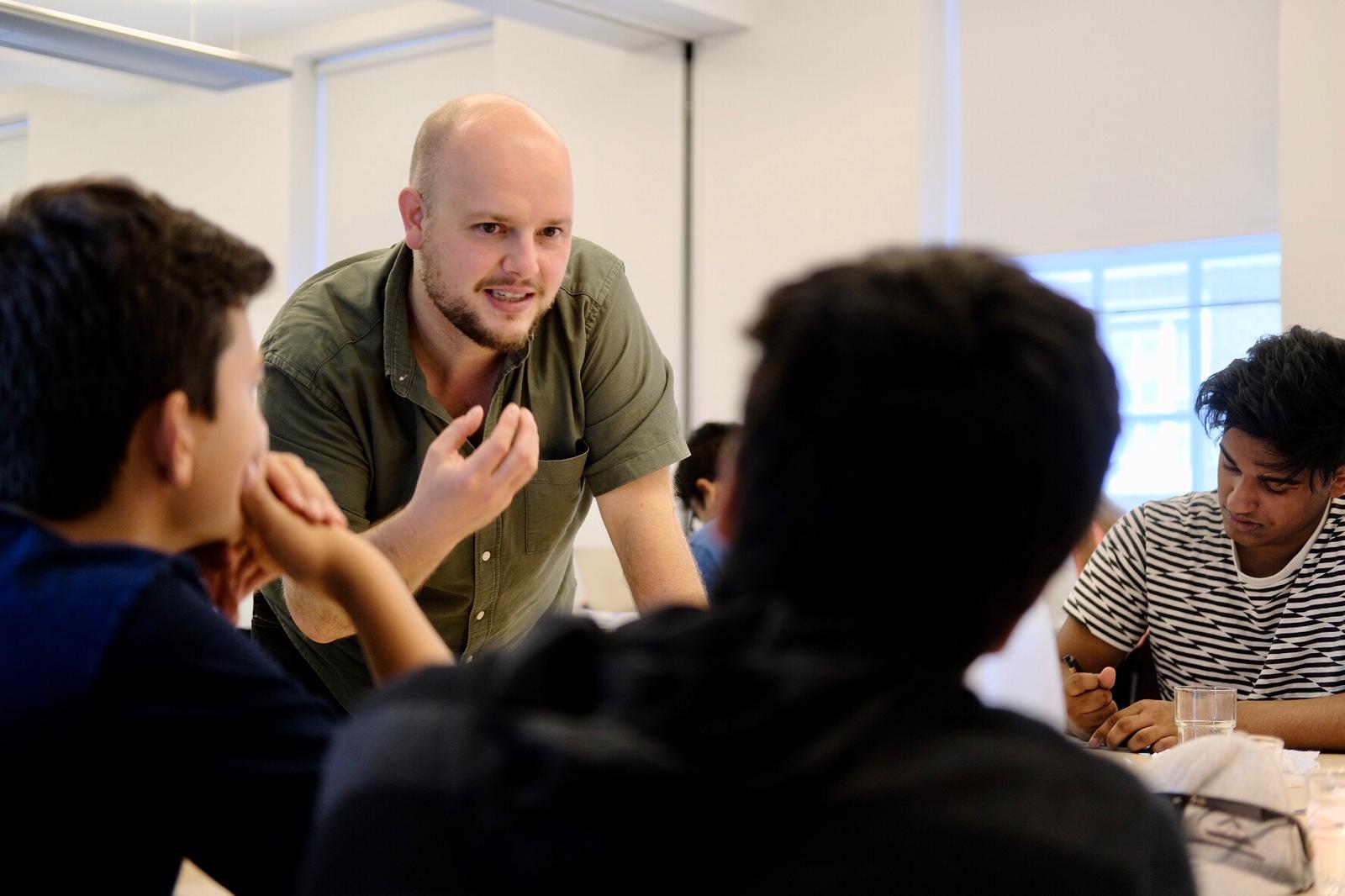
At Atlas Summer Courses, students aged 13–24 can explore Philosophy in Oxford through age-appropriate academic learning. Students aged 13–15 learn through seminars and small-group discussion, while older students aged 16–24 can experience a more tutorial-style approach designed to encourage independent thought and deeper academic engagement.
What Is Philosophy?
Philosophy is the systematic study of fundamental questions about:
- knowledge
- reality
- morality
- reason
- consciousness
- language
- society
- political authority
- human existence
Rather than accepting familiar ideas automatically, philosophers ask what those ideas actually mean and whether the arguments supporting them are convincing.
For example, a student might begin with the statement:
Everyone should be free.
Philosophy immediately creates further questions.
What does freedom mean?
Does freedom simply mean being left alone?
Can one person's freedom restrict another person's?
When, if ever, should governments limit individual freedom?
A philosophical discussion therefore moves beyond stating an opinion and towards examining the reasoning behind it.
Why Study Philosophy?
Philosophy teaches students how to work carefully with ideas.
It can help develop the ability to:
- analyse arguments
- question assumptions
- identify logical weaknesses
- consider alternative viewpoints
- distinguish evidence from assertion
- define concepts precisely
- construct reasoned conclusions
- communicate complex ideas clearly
These skills are useful across academic study and beyond.
Philosophy also encourages intellectual independence. Instead of simply asking:
What am I supposed to think?
students begin asking:
What conclusion does the reasoning actually support?
Philosophy and Critical Thinking
Critical thinking is one of the central skills developed through philosophy.
It involves examining claims rather than accepting them immediately.
Useful questions include:
- What is the argument?
- What evidence or reasoning supports it?
- What assumptions are being made?
- Does the conclusion follow?
- Could there be another explanation?
- What would someone who disagrees say?
- What evidence might change my mind?
Critical thinking does not mean automatically rejecting every claim.
It means deciding what to believe only after examining the reasons carefully.
Learning How Arguments Work
An argument in philosophy is not simply a disagreement between people.
It is a set of reasons offered in support of a conclusion.
For example:
Premise 1: All humans have a right to equal moral consideration.
Premise 2: Political rights should reflect equal moral consideration.
Conclusion: Therefore, citizens should have equal political rights.
Students can then ask whether:
- the premises are true
- the reasoning is valid
- important assumptions are missing
- an objection can be raised
Understanding argument structure is one of the foundations of philosophical thinking.
Premises and Conclusions
Most philosophical arguments contain:
Premises — the reasons being offered.
Conclusion — the claim those reasons are intended to support.
Students can practise identifying both.
For example:
People should be allowed to make their own choices because individuals generally understand their own interests better than governments do.
The conclusion is:
People should be allowed to make their own choices.
The supporting premise concerns individuals' knowledge of their own interests.
Once the structure is clear, the argument becomes easier to evaluate.
Validity and Soundness
In logic, an argument can be valid even if one of its premises is false.
Validity concerns whether the conclusion follows logically from the premises.
Soundness requires both:
- valid reasoning
- true premises
This distinction encourages students to examine not only whether an argument sounds persuasive, but whether its structure actually works.
Recognising Assumptions
Many arguments depend on assumptions that are never explicitly stated.
Imagine someone argues:
Students who achieve the highest examination results deserve the best educational opportunities.
A hidden assumption might be:
Examination performance is the fairest measure of who deserves those opportunities.
Once the assumption becomes visible, it can be questioned.
Learning to identify hidden assumptions is useful in philosophy, politics, media analysis and everyday decision-making.
Learning to Make Strong Objections
A good philosophical objection should challenge the reasoning rather than simply state disagreement.
Weak objection:
I don't agree with that.
Stronger objection:
The argument assumes that people always understand their own long-term interests, but there are situations where people make choices based on incomplete information.
The second response gives a reason.
That is what makes it philosophically useful.
Responding to Counterarguments
Strong philosophical reasoning also requires students to respond to objections.
A useful structure is:
- Present the argument.
- Identify a possible objection.
- Explain why the objection matters.
- Respond to it.
- Decide whether the original argument survives.
This produces more sophisticated reasoning than simply defending one side.
Avoiding Straw-Man Arguments
A straw-man argument occurs when someone presents an oversimplified or distorted version of another person's position and then attacks that weaker version.
Good philosophy requires the opposite.
Try to present the strongest reasonable version of the argument you disagree with.
Then respond to that.
This develops intellectual fairness as well as analytical skill.
Philosophy and Logic
Logic is the study of reasoning.
It asks whether conclusions follow from premises and how errors in reasoning can be identified.
Students may encounter ideas such as:
- deduction
- induction
- contradiction
- validity
- fallacies
Logic helps turn philosophical discussion into disciplined argument rather than a simple exchange of opinions.
Deductive Reasoning
Deductive reasoning aims to produce conclusions that must follow if the premises are true.
For example:
All mammals are warm-blooded.
Whales are mammals.
Therefore:
Whales are warm-blooded.
If the premises are true and the argument is valid, the conclusion must follow.
Inductive Reasoning
Inductive reasoning moves from observations towards a probable conclusion.
For example:
The sun has risen every morning in recorded history.
Therefore:
The sun will probably rise tomorrow.
The conclusion is extremely reasonable, but it is not logically guaranteed in the same way as a valid deductive argument.
This distinction becomes important when discussing scientific reasoning.
Logical Fallacies
Fallacies are mistakes in reasoning.
Examples may include:
- attacking the person rather than the argument
- assuming something is true because many people believe it
- presenting only two options when more exist
- treating correlation as proof of causation
Students who learn to recognise fallacies can analyse arguments more carefully.
Philosophy of Knowledge
Epistemology is the branch of philosophy concerned with knowledge.
It asks questions such as:
- What does it mean to know something?
- How is knowledge different from belief?
- Can we trust our senses?
- What makes evidence reliable?
- Can we ever be completely certain?
These questions may appear abstract, but they have very practical implications.
Whenever we decide whether a claim is trustworthy, we are dealing with questions about knowledge.
Knowledge vs Belief
A person can strongly believe something without knowing it.
Suppose someone believes that it will rain tomorrow.
If it happens to rain, were they knowledgeable or merely lucky?
Philosophers have long debated what conditions turn true belief into knowledge.
This simple question can lead towards deeper discussions about:
- evidence
- justification
- reliability
Can We Trust Our Senses?
Most of our beliefs about the world depend on perception.
But perception can sometimes mislead us.
Optical illusions demonstrate that we can see something incorrectly.
Dreams can feel real while we experience them.
Philosophers therefore ask:
How do we know when perception is reliable?
This question has influenced philosophy for centuries.
Scepticism
Philosophical scepticism asks whether our claims to knowledge are as secure as we assume.
Radical sceptical questions might include:
How do you know you are not dreaming?
or:
How do you know the external world exists independently of your mind?
The point is not necessarily to conclude that nothing can be known.
The purpose is to test the foundations of knowledge.
René Descartes and Doubt
René Descartes famously explored systematic doubt.
He attempted to question any belief that could possibly be mistaken.
His project led towards one of philosophy's most famous questions:
What can we know with absolute certainty?
Students can explore whether certainty is necessary for knowledge or whether reasonable justification is enough.
Philosophy of Mind
The philosophy of mind investigates:
- consciousness
- thought
- identity
- emotion
- perception
One major question is:
What is the relationship between the mind and the brain?
Is consciousness entirely physical?
Could mental experiences be something different from brain activity?
These questions connect philosophy with psychology, neuroscience and artificial intelligence.
The Mind-Body Problem
The mind-body problem asks how mental experiences relate to physical processes.
When you feel pain, something physical happens in the nervous system.
But you also have the subjective experience of pain.
How are these connected?
Different philosophical theories offer different answers.
Consciousness
Consciousness is one of philosophy's most difficult subjects.
Questions include:
- Why do experiences feel like anything at all?
- Could a computer become conscious?
- Can consciousness be explained completely through neuroscience?
- How could we know whether another being is conscious?
These questions are increasingly relevant to debates about artificial intelligence.
Personal Identity
What makes you the same person over time?
Is it:
- your body?
- your memories?
- your personality?
- your consciousness?
Imagine someone loses all their memories.
Are they still the same person?
Philosophical thought experiments allow students to test different theories of identity.
Ethics
Ethics asks how people should behave and what makes actions morally right or wrong.
Students may investigate questions such as:
- Is lying always wrong?
- Does intention matter?
- Should consequences determine morality?
- Are there universal moral rules?
- What obligations do we have to strangers?
Ethics is not simply about learning a list of rules.
It involves evaluating different ways of reasoning about moral problems.
Utilitarianism
Utilitarian approaches generally focus on consequences.
An action may be considered morally preferable if it produces greater overall wellbeing.
This can appear intuitive.
However, difficult questions quickly emerge:
- How should wellbeing be measured?
- Does everyone's wellbeing count equally?
- Could harming one person ever be justified if many others benefit?
These questions help students test the strengths and limitations of the theory.
Deontological Ethics
Deontological theories place greater emphasis on duties, rules or rights.
A deontologist might argue that some actions are wrong even when they produce beneficial consequences.
For example:
Should an innocent person ever be punished if doing so would prevent widespread unrest?
A purely consequential argument and a rights-based argument might produce different answers.
Virtue Ethics
Virtue ethics focuses less on individual rules and more on character.
Instead of asking only:
What should I do?
it may ask:
What kind of person should I become?
Virtues might include:
- courage
- honesty
- generosity
- wisdom
This approach has roots in ancient Greek philosophy, particularly Aristotle.
Moral Dilemmas
Moral dilemmas are useful because they force students to compare competing principles.
Suppose telling the truth would cause serious harm.
Should honesty still take priority?
Students can examine how:
- consequences
- duties
- virtues
- rights
may produce different conclusions.
Thought Experiments
Thought experiments are imagined scenarios used to test philosophical ideas.
They allow us to isolate a principle and ask whether it remains convincing under unusual conditions.
Famous philosophical thought experiments include questions involving:
- runaway trolleys
- simulated realities
- personal identity
- artificial intelligence
The purpose is not to predict what would literally happen.
It is to test the consistency of our reasoning.
The Trolley Problem
The trolley problem asks whether it can be morally acceptable to harm one person in order to save several others.
Different versions modify:
- intention
- responsibility
- directness
Students often discover that small changes in the scenario can change their intuition.
That creates an important philosophical question:
Why did my judgement change?
Political Philosophy
Political philosophy examines questions about power, government, justice and freedom.
Students may explore:
- democracy
- equality
- rights
- authority
- liberty
- justice
Political philosophy is less concerned with which political party someone supports and more concerned with the principles political institutions should follow.
What Makes Government Legitimate?
Why should citizens obey laws?
Possible answers might involve:
- consent
- democracy
- social order
- protection of rights
Philosophers have debated political authority for centuries.
Students can examine when obedience is justified and when resistance might be legitimate.
Freedom
Freedom seems like a simple concept until we try to define it.
Does freedom mean:
absence of interference?
Or does genuine freedom also require:
- education
- resources
- opportunity?
Different definitions can produce different political conclusions.
Equality
Equality can mean several things.
Students might distinguish between:
- equal rights
- equal opportunity
- equal treatment
- equal outcomes
These are not identical.
Political disagreements may partly arise because people are using different ideas of equality.
Justice
Justice asks what people deserve and how benefits and burdens should be distributed.
Questions might include:
- Should wealth be redistributed?
- What counts as a fair opportunity?
- Should people be rewarded according to effort?
- How should disadvantages outside someone's control be addressed?
These questions connect philosophy with economics and politics.
Social Contract Theory
Social contract theories explore the idea that political authority can be understood through some form of agreement between individuals and society.
Thinkers associated with social-contract traditions include:
- Thomas Hobbes
- John Locke
- Jean-Jacques Rousseau
They disagreed significantly about:
- human nature
- freedom
- political authority
Comparing them can help students see how different assumptions produce different political theories.
Philosophy of Religion
Philosophy of religion examines rational questions about:
- God
- faith
- religious experience
- morality
Students may consider arguments for and against the existence of God without assuming a particular religious position.
The emphasis is on analysing reasoning.
The Problem of Evil
One famous philosophical problem asks how the existence of suffering can be reconciled with belief in an all-powerful and perfectly good God.
Students can explore different responses and objections.
This can lead into broader questions about:
- free will
- responsibility
- suffering
Free Will
Do people genuinely choose their actions?
Or are choices determined by:
- biology
- psychology
- environment
- previous causes?
The debate over free will raises important questions about moral responsibility.
If someone's actions are entirely determined, can they still deserve praise or blame?
Determinism
Determinism broadly suggests that events arise from previous causes.
If every decision has causes outside our control, what room remains for genuine choice?
Students can examine different attempts to reconcile freedom with causation.
Existentialism
Existentialist philosophy explores themes such as:
- freedom
- responsibility
- meaning
- authenticity
Thinkers associated with existentialist traditions include Jean-Paul Sartre and Simone de Beauvoir.
One important question is:
If life does not come with a predetermined purpose, how should we choose how to live?
Meaning of Life
Philosophy has long examined questions about meaning.
Does a meaningful life require:
- happiness?
- achievement?
- relationships?
- morality?
- purpose?
Different philosophical traditions offer very different answers.
Students can use these debates to examine their assumptions about success and fulfilment.
Philosophy of Science
Philosophy of science investigates how scientific knowledge works.
Questions include:
- What makes a theory scientific?
- Can scientific theories ever be proven?
- What role does experimentation play?
- How should scientists respond when evidence changes?
This area connects philosophy with physics, biology and other sciences.
Falsifiability
One influential idea in philosophy of science is that scientific theories should be capable of being tested in ways that could potentially show them to be wrong.
Students can examine why this matters.
A theory that can explain every possible result may be difficult to test meaningfully.
Scientific Progress
Does science simply accumulate more knowledge over time?
Or do scientific revolutions sometimes change the way entire fields understand the world?
Students can explore how:
- evidence
- theory
- scientific communities
interact.
Philosophy and Artificial Intelligence
Artificial intelligence has created new philosophical questions.
For example:
- Can a machine think?
- Can AI understand language?
- Could AI become conscious?
- Who is responsible for an AI decision?
- Should AI systems have moral status?
These questions combine philosophy of mind, ethics and technology.
Can Machines Think?
The question depends partly on what we mean by thinking.
Does thinking require:
- consciousness?
- understanding?
- reasoning?
- language?
A machine may perform extremely sophisticated tasks while raising philosophical questions about whether it genuinely understands what it is doing.
AI Ethics
AI systems can influence:
- healthcare
- employment
- education
- finance
- policing
This creates ethical questions about:
- fairness
- bias
- accountability
- privacy
Philosophy gives students frameworks for analysing these issues beyond simply asking whether the technology works.
Philosophy and Law
Law and philosophy overlap strongly.
Legal questions often involve concepts such as:
- justice
- responsibility
- intention
- rights
Students interested in law can benefit from philosophical training because legal arguments require careful reasoning and attention to definitions.
Philosophy and Politics
Political debates often contain philosophical assumptions.
Questions about:
- taxation
- free speech
- welfare
- rights
- democracy
cannot be settled through facts alone.
They also involve disagreements about values.
Philosophy helps students identify those underlying disagreements.
Philosophy and Economics
Economics can tell us about:
- incentives
- efficiency
- consequences
Philosophy may ask:
- Which outcomes are fair?
- What should society prioritise?
- How should wellbeing be measured?
This is one reason philosophy forms an important part of interdisciplinary subjects such as PPE.
Philosophy and Psychology
Psychology studies human behaviour and mental processes.
Philosophy asks conceptual questions about:
- mind
- consciousness
- rationality
- identity
The subjects often overlap.
Scientific findings may also challenge traditional philosophical assumptions.
Philosophy and Literature
Literature frequently explores philosophical themes.
Novels and plays may examine:
- morality
- identity
- freedom
- responsibility
- death
- meaning
Students interested in literature can use philosophy to deepen interpretation.
Philosophy and Everyday Life
Philosophy is not restricted to abstract academic debates.
Everyday questions can become philosophical.
For example:
Should I always tell the truth?
What makes a friendship genuine?
Does wealth make someone happier?
Do people deserve credit for talents they did not choose?
The philosophical skill lies in examining the assumptions and reasoning behind our answers.
How to Improve Your Philosophy Skills
Students can strengthen philosophical thinking by combining:
- reading
- discussion
- writing
- argument analysis
- thought experiments
The most important habit is active questioning.
Do not simply memorise what philosophers believed.
Ask whether their arguments work.
Read Philosophy Actively
When reading philosophy, do not treat the text like a novel.
Pause frequently.
Ask:
- What is the author claiming?
- What reasons are given?
- What does this term mean?
- Do I agree with the reasoning?
- What objection could be raised?
Active reading makes difficult texts more manageable.
Start With Accessible Texts
Classic philosophical works can be challenging.
Students do not need to begin with the most difficult original text available.
It may be more useful to:
- Read an accessible introduction.
- Understand the central problem.
- Read selected passages from the original.
- Compare interpretations.
This can provide context without removing the challenge of primary texts.
Reading Plato
Plato often presents philosophy through dialogues.
Rather than simply listing conclusions, the conversations develop ideas through:
- questions
- objections
- responses
Students can pay attention to how the argument changes during the dialogue.
Reading Aristotle
Aristotle wrote about subjects including:
- ethics
- politics
- logic
His work can introduce students to ideas about virtue, character and human flourishing.
Again, the goal should be understanding the reasoning rather than memorising quotations.
Reading John Stuart Mill
John Stuart Mill is particularly relevant to discussions involving:
- liberty
- utilitarianism
- political thought
Students can explore the tension between individual freedom and social responsibility.
Reading Immanuel Kant
Kant is influential in areas including:
- ethics
- knowledge
- metaphysics
His writing can be difficult.
Students may benefit from first understanding the philosophical problem he is addressing before attempting more complicated passages.
Compare Philosophers
Comparison can clarify differences.
For example, compare how:
- a utilitarian
- a deontologist
- a virtue ethicist
might approach the same moral dilemma.
This helps students see theories in action.
Keep a Philosophy Journal
A philosophy journal can contain:
- questions
- arguments
- objections
- thought experiments
- reading notes
You might write one question each week and explore several possible answers.
This develops independent philosophical thinking.
Write Short Arguments
You do not always need to write full essays.
Choose a question such as:
Should lying ever be morally acceptable?
Then write:
- your position
- your strongest reason
- an objection
- your response
This is an efficient way to practise philosophical reasoning.
Practise Philosophy Essays
Philosophy essays should develop an argument rather than simply describe several theories.
A strong essay might:
- Define the question.
- Present a clear position.
- Develop reasons.
- Consider objections.
- Respond.
- Reach a justified conclusion.
Clarity matters more than unnecessarily complicated language.
Define Your Terms
Philosophical disagreements often depend on definitions.
Words such as:
- freedom
- justice
- knowledge
- happiness
- morality
can mean different things.
Explain how you are using the term before building your argument.
Avoid Writing Vaguely
Instead of:
This philosopher has a good argument.
write:
This argument is convincing because its conclusion follows from a principle that applies consistently to similar cases.
Specific reasoning produces stronger philosophy.
Use Examples
Abstract ideas become easier to understand when paired with examples.
If you are discussing freedom, create a scenario.
If you are discussing knowledge, think of a case where someone has a true belief for the wrong reason.
Examples allow philosophical principles to be tested.
Use Thought Experiments Carefully
Thought experiments are useful when they isolate a philosophical issue.
But students should ask:
- What is the scenario supposed to test?
- Is the scenario relevant?
- Does changing one detail change the conclusion?
Do not treat a famous thought experiment as though it automatically proves a theory.
Discuss Philosophy With Others
Philosophy benefits enormously from conversation.
Other people may identify:
- assumptions you missed
- objections you had not considered
- alternative interpretations
Discussion can expose weaknesses in an argument before you write about it.
Learn to Listen
Good philosophical discussion is not simply waiting for your turn to speak.
Listen to the exact argument.
Then respond to it.
Try saying:
If I understand you correctly, your argument is...
before giving your objection.
This helps avoid misunderstanding.
Be Willing to Change Your Mind
Changing your mind after encountering a stronger argument is not losing a debate.
It is a sign that reasoning is working.
A useful question is:
What evidence or argument would make me change my position?
If the answer is "nothing", the position may no longer be open to genuine examination.
Separate Confidence From Certainty
You can have a strong argument without claiming absolute certainty.
Philosophical conclusions often involve degrees of confidence.
A thoughtful conclusion might say:
On balance, this position is more convincing because...
That can be stronger than pretending every objection has been eliminated.
Avoid False Dilemmas
Many philosophical questions are presented as though there are only two possibilities.
For example:
Either morality is completely objective or everything is purely subjective.
There may be other possibilities.
Always ask whether the available options are genuinely exhaustive.
Ask Follow-Up Questions
One philosophical answer often creates another question.
For example:
People deserve equal opportunity.
Then ask:
What counts as equal opportunity?
Does society need to compensate for disadvantages?
How much inequality can remain afterwards?
Good philosophy often develops by following these questions.
Develop Intellectual Humility
Philosophy encourages students to recognise the limits of their own understanding.
This does not mean lacking confidence.
It means being prepared to say:
I may be wrong.
I need more evidence.
That objection changes the problem.
Intellectual humility can produce stronger thinking.
Philosophy for Ages 13–15
For younger students, philosophy can provide an opportunity to explore large questions without needing extensive prior knowledge.
Possible themes might include:
- fairness
- identity
- knowledge
- freedom
- morality
Small-group discussion allows students to hear different perspectives and practise explaining their own reasoning.
At this stage, building confidence in asking questions can be just as important as mastering philosophical terminology.
Philosophy for Ages 16–17
Older school students can begin engaging more deeply with:
- philosophical texts
- structured arguments
- objections
- essay writing
They may also explore more demanding areas such as:
- ethics
- epistemology
- metaphysics
- philosophy of mind
- political philosophy
Tutorial-style academic discussion can encourage students to defend and refine their positions.
Philosophy for Ages 18–24
Students aged 18–24 may be ready for more independent philosophical exploration.
This could involve:
- sustained academic reading
- detailed argument analysis
- independent research
- extended writing
They may also wish to explore particular areas more deeply according to their existing academic interests.
Philosophy and University Preparation
Students considering philosophy or related university courses can benefit from practising:
- close reading
- argument reconstruction
- essay planning
- counterarguments
- precise writing
Philosophy can also support preparation for degrees involving substantial analytical writing.
Philosophy and Admissions Thinking
Studying philosophy can help students become more comfortable with unfamiliar questions.
Instead of trying to guess the expected answer, they learn to:
- define the problem
- develop an argument
- respond to challenge
This approach can be valuable in academic interviews and discussion-based learning environments.
Careers Connected With Philosophy
Philosophy does not lead to one single career.
The reasoning and communication skills developed through the subject can be useful in areas such as:
- law
- politics
- public policy
- education
- research
- journalism
- business
- ethics
- technology policy
Many students also study philosophy simply because they find its questions intellectually rewarding.
Philosophy and Law Careers
Legal work involves:
- interpreting arguments
- analysing language
- distinguishing relevant from irrelevant information
- constructing cases
These skills overlap strongly with philosophy.
Philosophy and Public Policy
Public policy involves decisions where:
- evidence
- values
- competing interests
interact.
Philosophical training can help identify the ethical assumptions underlying policy choices.
Philosophy and Technology Ethics
Technology companies increasingly face questions about:
- privacy
- AI
- responsibility
- bias
Students interested in both philosophy and technology may eventually explore areas involving digital or AI ethics.
Philosophy and Journalism
Journalists often need to:
- question claims
- identify assumptions
- compare arguments
- communicate clearly
Philosophical training can strengthen these abilities.
Philosophy and Business
Business decisions can raise ethical questions involving:
- employees
- consumers
- privacy
- sustainability
Philosophy can help students think more carefully about responsibilities beyond financial performance.
Common Mistakes When Studying Philosophy
Students new to philosophy sometimes:
- state opinions without reasons
- describe philosophers without evaluating them
- ignore counterarguments
- use complicated language unnecessarily
- fail to define important concepts
- assume disagreement means every position is equally strong
Good philosophical work focuses on reasoning.
Don't Treat Philosophy as Personal Opinion
Philosophy certainly involves disagreement.
But that does not mean:
Every answer is equally correct because everyone has their own opinion.
Arguments can still be evaluated according to:
- consistency
- evidence
- logic
- explanatory strength
Students should learn to distinguish having an opinion from defending a position.
Don't Simply Memorise Philosophers
Knowing that Kant argued one thing and Mill argued another is useful background.
But the more important questions are:
Why did they believe it?
Does their reasoning work?
What objection could be raised?
Philosophy is about engaging with arguments rather than collecting quotations.
Don't Hide Behind Complicated Language
Complex ideas do not require unnecessarily complicated sentences.
If you understand an argument well, you should usually be able to explain its core idea simply.
Clear writing often demonstrates stronger understanding.
Don't Ignore Counterarguments
A philosophy essay becomes much stronger when it considers serious objections.
Ignoring opposing arguments does not make your position stronger.
It simply leaves weaknesses unanswered.
Don't Assume Famous Philosophers Must Be Right
A philosopher's historical importance does not make every argument correct.
Treat famous thinkers seriously, but critically.
Ask the same questions you would ask of anyone else's reasoning.
How Atlas Summer Courses Approaches Philosophy
At Atlas Summer Courses, students can explore Philosophy in Oxford through academic environments designed for different age groups.
The emphasis is on encouraging students to ask questions, examine arguments and develop their own reasoned positions rather than simply memorising philosophical theories.
The precise topics explored can vary according to the course, tutor, age group and students' interests. This allows learners to engage with questions that particularly interest them while developing broader skills in reasoning and discussion.
Philosophy in Oxford for Ages 13–15
Students aged 13–15 can explore Philosophy through seminars and small-group learning.
The small-group environment can give students opportunities to:
- ask questions
- discuss ideas
- compare viewpoints
- explain their reasoning
A philosophical question may begin with something familiar, such as:
Is it ever acceptable to lie?
Students can then explore competing arguments and discover how quickly an apparently simple question becomes more complicated.
Philosophy in Oxford for Ages 16–17
Students aged 16–17 can encounter a more independent and discussion-led academic approach through tutorial-style teaching.
They may be challenged to:
- analyse arguments
- defend conclusions
- respond to objections
- engage with philosophical readings
- refine their ideas
The aim is not simply to give the "correct" philosophical answer.
It is to strengthen the quality of the student's reasoning.
Philosophy in Oxford for Ages 18–24
For students aged 18–24, tutorial-style academic learning can support more advanced engagement with philosophical ideas.
Depending on students' interests, areas might include:
- ethics
- epistemology
- metaphysics
- existentialism
- philosophy of mind
- political philosophy
Students may have greater opportunities to pursue individual questions, respond to detailed feedback and develop their own philosophical perspective.
Tutorial-Style Learning and Philosophy
Philosophy is particularly well suited to tutorial-style learning because arguments become clearer when they are challenged.
A tutor might ask:
Why do you believe that premise?
Then:
Would your principle still apply in this different case?
Then:
What would the strongest objection be?
Students have to respond actively.
This can expose assumptions and encourage deeper thinking.
Small-Group Philosophy Discussions
Small-group discussions allow students to discover that intelligent people can disagree for serious reasons.
One student may prioritise:
- individual freedom
while another emphasises:
- collective responsibility
The goal is not to decide immediately who "wins".
Instead, students can examine the reasons supporting each position.
Exploring Individual Philosophical Interests
Philosophy is broad.
Students may be particularly interested in:
- ethics
- politics
- consciousness
- artificial intelligence
- free will
- knowledge
- existentialism
An academic summer environment can provide an opportunity to investigate some of these questions beyond the limits of a normal school syllabus.
Academic Challenge Without a Fixed Curriculum
Philosophical learning can be especially rewarding when students have room to follow a question further.
A discussion about:
Can machines think?
might move towards:
- consciousness
- language
- knowledge
- ethics
This flexibility can help students see how different branches of philosophy connect.
Developing an Independent Philosophical Voice
Students should gradually become more confident saying:
This is my conclusion, and these are my reasons.
But independence also involves asking:
What could prove me wrong?
The aim is not simply developing stronger opinions.
It is developing better-supported ones.
Philosophy in Oxford and Independent Summer Study
Atlas Summer Courses offers independent academic summer programmes in Oxford.
Its Philosophy courses are organised and delivered by Atlas Summer Courses and are not provided by, affiliated with or part of the University of Oxford.
Students should therefore distinguish between studying in Oxford and being enrolled at the University of Oxford.
The academic value of a summer course should be assessed according to its teaching approach, subject content, tutor interaction and overall learning environment rather than the city name alone.
How to Prepare for a Philosophy Summer Course
Students do not need to memorise an entire history of philosophy beforehand.
Useful preparation might include:
- reading an introductory philosophy book
- exploring one philosophical question
- keeping a list of questions
- practising short arguments
- reading opposing viewpoints
Most importantly, arrive prepared to think.
Questions to Explore Before Studying Philosophy
Students might begin with:
- What makes something morally right?
- Can we know anything with certainty?
- Do humans have free will?
- What makes someone the same person over time?
- Is democracy always fair?
- Could artificial intelligence become conscious?
- Does a meaningful life require happiness?
- Should freedom ever be restricted?
- What do people owe one another?
- Is morality objective?
You do not need to know the answer before beginning.
That is the point.
How to Know Whether Your Philosophy Skills Are Improving
Ask whether you can now:
- explain an argument clearly
- identify premises and conclusions
- recognise assumptions
- distinguish an assertion from a reason
- construct objections
- respond to counterarguments
- define concepts more precisely
- change your view when the reasoning requires it
These are more meaningful signs of philosophical progress than simply remembering more philosopher names.
Is Philosophy Right for You?
You may enjoy philosophy if you regularly find yourself asking:
- Why?
- How do we know?
- Is that fair?
- What does that word actually mean?
- What assumption is being made?
- Could the opposite argument also be reasonable?
You do not need to arrive with strong philosophical opinions.
Curiosity and willingness to question ideas matter far more.
Final Thoughts: How to Improve Your Philosophy Skills
Improving in philosophy requires active engagement.
Read arguments rather than simply collecting information.
Define important concepts.
Question assumptions.
Construct your own arguments.
Look for objections.
Discuss ideas with people who disagree with you.
Write clearly.
And be willing to change your conclusion when you encounter stronger reasoning.
At Atlas Summer Courses, students aged 13–24 exploring Philosophy in Oxford can engage with philosophical questions through age-appropriate seminars, small-group learning and tutorial-style academic discussion.
For younger students, this can mean becoming more confident asking questions and explaining ideas. For older students, it can involve deeper engagement with texts, arguments and independent academic thought.
The aim is not simply to know what famous philosophers believed. It is to develop the ability to think carefully, question intelligently, argue fairly and reach conclusions that you can explain and defend with confidence.
About the author
Rhys Mackenzie is responsible for creating and maintaining educational content at Atlas Summer Courses, helping students and families access clear, accurate information about studying in Oxford. With several years of experience in digital content and student-focused resources, Rhys specialises in presenting academic programmes in a way that reflects the quality and integrity of Atlas Summer Courses' academic offering. Learn more about Rhys here.
Summary
Philosophy is essential for developing critical thinking, ethical decision-making, and reasoning skills. Atlas Summer Courses offers tailored Philosophy courses for students aged 13–24 in Oxford. The courses use seminars and small-group learning for younger students and tutorial-style teaching for older students, helping them refine their philosophical skills through in-depth discussions and personalised feedback.