
How to Improve Your Debating Skills

Key takeaways:
Academic Debating for Students: How to Build Stronger Arguments, Confidence and Critical Thinking
Academic debating is about much more than winning an argument. At its best, debating teaches students how to examine difficult questions, weigh evidence, communicate clearly and respond thoughtfully to opposing viewpoints.
For students aged 16–24, these skills can be especially valuable when preparing for university and future professional environments. Seminar discussions, tutorials, presentations, interviews and written assignments often require students to explain a position, justify it with evidence and respond to challenge.
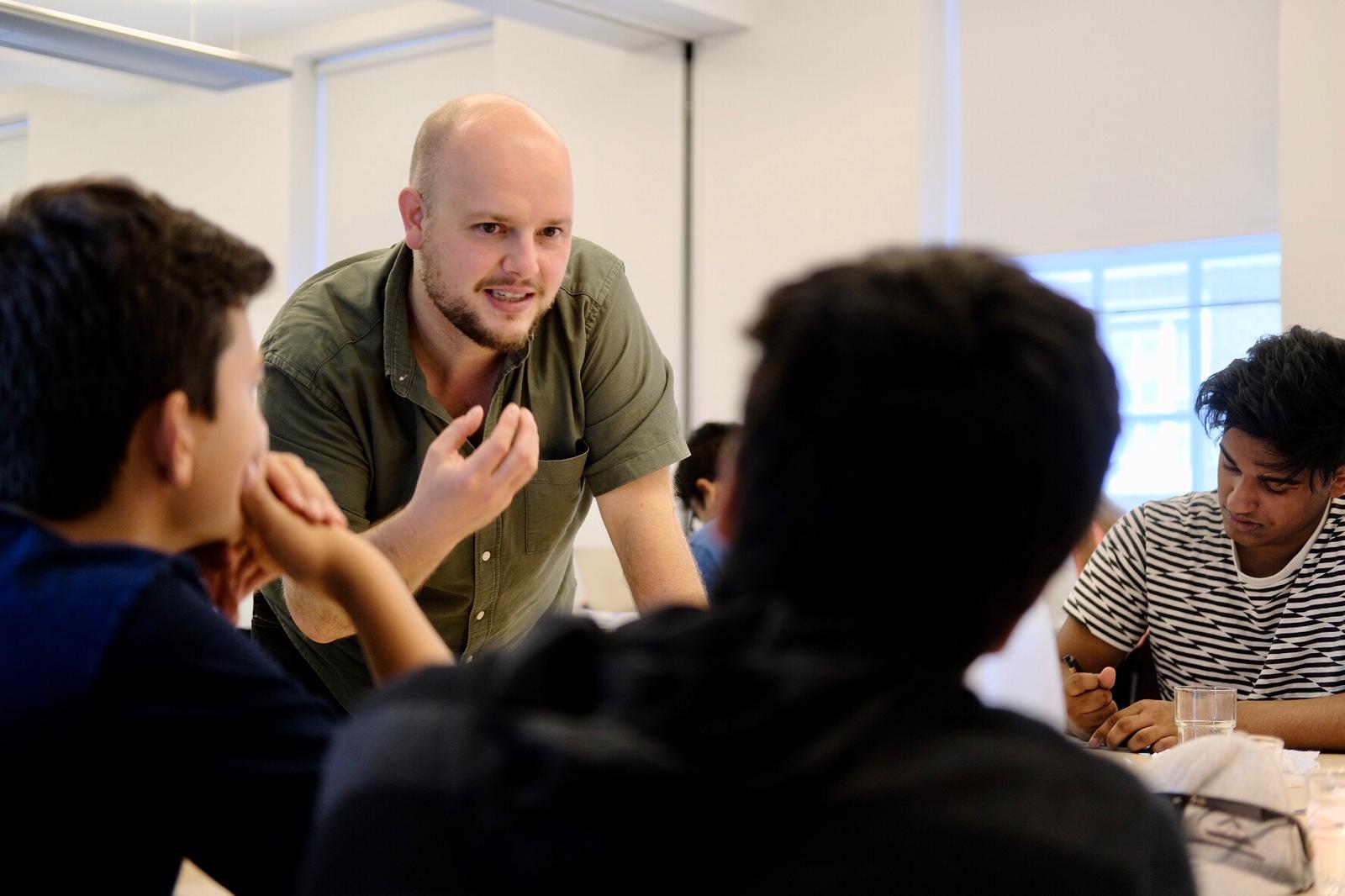
At Atlas Summer Courses, students aged 16–24 can develop many of the skills that support stronger academic debating through tutorial-style teaching, small-group discussion, independent preparation and personalised feedback.
What Is Academic Debating?
Academic debating is the structured discussion of a question, claim or issue using evidence and reasoning.
A debate usually requires students to:
- understand the motion or question
- develop a clear position
- support arguments with evidence
- anticipate objections
- respond to opposing views
- communicate ideas clearly
The goal is not simply to speak confidently.
It is to reason well.
Why Are Academic Debating Skills Important?
Debating can strengthen several academic skills at once.
These include:
- critical thinking
- research
- argumentation
- communication
- active listening
- evaluation
- confidence
- persuasion
These abilities can support students across many different subjects.
Debating and Critical Thinking
Academic debates force students to move beyond simple opinions.
Instead of saying:
I disagree.
a student needs to explain:
- why
- based on what evidence
- under which assumptions
- compared with which alternative
This creates more disciplined thinking.
Debating and Communication
A strong idea can lose impact if it is difficult to understand.
Debating helps students practise communicating:
- clearly
- concisely
- logically
These skills are useful in:
- essays
- seminars
- presentations
- interviews
Debating and Academic Confidence
Students who regularly explain and defend ideas may become more comfortable speaking in academic settings.
Confidence can grow through:
- preparing arguments
- answering questions
- responding to challenge
This can make participation in university seminars easier.
Debating and Persuasion
Persuasion is not about manipulating people.
Academic persuasion depends on:
- evidence
- logic
- clarity
- credibility
A persuasive argument gives the listener a reason to accept the conclusion.
Debating and Open-Mindedness
A strong debater needs to understand the opposing case.
That often means asking:
What is the strongest argument against my position?
Engaging seriously with another viewpoint can make your own argument more sophisticated.
Start by Understanding the Motion
Before building an argument, make sure you understand what is being debated.
A motion might be:
This house believes social media does more harm than good.
You would need to consider:
- what counts as social media
- what counts as harm
- whose experience matters
- what standard is being used
Defining the debate carefully prevents confusion later.
Identify Key Terms
Debate motions often contain broad words such as:
- freedom
- justice
- success
- equality
- harm
These terms may need clarification.
Different definitions can completely change the debate.
Ask What Must Be Proven
Every side has something it needs to establish.
For example:
If the motion is:
Governments should ban facial recognition in public spaces.
The supporting side might need to show that:
- the risks are serious
- regulation is insufficient
- a ban is justified
The opposing side might need to show that:
- the benefits outweigh the risks
- safeguards are possible
- a ban would create greater problems
Knowing your burden of proof helps focus preparation.
Build a Clear Position
Your overall position should be easy to summarise.
Ask:
What is my main reason for supporting or opposing this motion?
A strong position gives the rest of the debate direction.
Don't Use Too Many Arguments
Three strong arguments are usually better than eight weak ones.
Choose points that are:
- distinct
- important
- well supported
Each argument should contribute something different.
Structure Each Argument
A useful argument structure is:
- Claim
- Reasoning
- Evidence
- Impact
For example:
Claim: A ban would reduce wrongful surveillance.
Reasoning: Facial recognition systems can misidentify people and are difficult to challenge once deployed at scale.
Evidence: Research or documented cases.
Impact: Misidentification can affect privacy, policing and public trust.
This makes the argument easier to follow.
Make Claims Specific
Weak claim:
Social media is bad.
Stronger claim:
Algorithmic recommendation systems can amplify emotionally provocative content because engagement-based ranking rewards material that keeps users interacting.
Specific claims are easier to defend.
Explain Your Reasoning
Do not assume the connection between evidence and conclusion is obvious.
After making a claim, explain:
Why does this lead to the outcome I am describing?
Reasoning is what turns information into an argument.
Use Evidence Carefully
Useful evidence might include:
- academic research
- statistics
- case studies
- historical examples
- legal decisions
Evidence should strengthen the reasoning.
It should not replace it.
Evaluate the Quality of Evidence
Ask:
- Who produced it?
- Is the source credible?
- Is the evidence current?
- Is it directly relevant?
- Are there limitations?
A debate can weaken quickly if the evidence is unreliable.
Avoid Evidence Dumping
Listing several statistics without explanation does not make an argument automatically stronger.
Use evidence selectively.
Then explain what it proves.
Use Examples
Examples can make abstract arguments easier to understand.
For instance, a debate about privacy might become clearer through:
- a court case
- a policy example
- a real-world incident
But examples should support the principle rather than become the entire argument.
Build Causal Arguments Carefully
If you claim:
A causes B
explain the mechanism.
Ask:
- Why would A produce B?
- Under what conditions?
- Are there other explanations?
This helps avoid weak causal reasoning.
Anticipate Counterarguments
Before the debate, ask:
What will the other side say?
Then prepare responses.
A strong debater should not be surprised by the most obvious objection.
Steelman the Opposition
A steelman is the strongest version of the opposing argument.
Do not deliberately choose a weak version.
For example:
Instead of saying:
The other side just doesn't care about privacy
ask:
Their strongest case is that security benefits may justify some intrusion. Why is that argument still insufficient?
This creates a more serious debate.
Rebuttal
Rebuttal means responding directly to an opposing argument.
A good rebuttal might:
- challenge the evidence
- challenge the reasoning
- show a contradiction
- show that the impact is smaller than claimed
Do not simply repeat your original point.
Attack the Argument, Not the Person
Academic debate should focus on ideas.
Avoid:
- insults
- personal attacks
- questioning someone's intelligence
These weaken credibility.
Listen Carefully
Good rebuttal depends on good listening.
If you prepare your response before the other person has finished, you may miss the actual argument.
Listen for:
- the claim
- evidence
- assumptions
Then respond.
Take Notes During a Debate
Write down:
- main arguments
- evidence
- weaknesses
- contradictions
Short notes can help you prepare a more precise response.
Prioritise Rebuttal
You do not need to answer every sentence.
Focus on the argument that matters most.
Ask:
Which point, if left unanswered, most threatens my position?
Respond there first.
Identify Hidden Assumptions
Arguments often depend on assumptions that are not stated.
For example:
Students should choose subjects entirely based on future salary.
This assumes that:
- salary should be the main measure of value
Challenging the assumption can weaken the argument.
Look for Contradictions
An opposing case may contain claims that conflict.
For example:
A speaker might argue:
Government intervention is ineffective
and later claim:
Government regulation will solve the problem.
Pointing out the contradiction can be powerful.
Compare Impacts
Debates often require weighing outcomes.
Ask:
- Which impact affects more people?
- Which is more severe?
- Which is more likely?
- Which lasts longer?
This helps move the debate beyond isolated claims.
Short-Term vs Long-Term Impact
One side may produce:
- immediate benefits
while the other focuses on:
- long-term consequences
A strong debate compares both.
Likelihood vs Severity
A highly severe consequence may be unlikely.
A smaller consequence may be almost certain.
Debaters should weigh:
- probability
- scale
rather than considering only one dimension.
Principle vs Practicality
Some debates involve both:
- principle
- practical outcomes
For example:
A policy might be ethically attractive but difficult to implement.
Strong arguments recognise both.
Ethical Arguments
Ethical debates may involve ideas such as:
- rights
- fairness
- duty
- consequences
Students should explain the ethical framework they are using.
Rights-Based Arguments
A rights-based argument might say:
Individuals should retain control over personal data because privacy is a fundamental right.
The debate then becomes partly about:
- how strong that right is
- whether it can be limited
Consequentialist Arguments
A consequentialist argument focuses on outcomes.
For example:
The policy is justified because it produces greater overall social benefit.
The strength depends on whether those outcomes are plausible.
Economic Arguments
Economic debates may examine:
- incentives
- costs
- benefits
- market effects
Students should avoid using economic terminology without explaining the mechanism.
Political Arguments
Political debates often involve:
- power
- legitimacy
- democracy
- public policy
Students should distinguish between:
- what is politically possible
- what is normatively desirable
Legal Arguments
Legal debates may involve:
- precedent
- rights
- statutory interpretation
- proportionality
Students should explain how legal principles support the case.
Scientific Debates
Scientific debates require particular care.
Students should distinguish between:
- established evidence
- uncertainty
- speculation
Scientific credibility matters more than rhetorical confidence.
Current Affairs Debates
Current affairs can provide useful practice because the issues are often:
- complex
- contested
- developing
Students can debate topics involving:
- technology
- economics
- climate policy
- international relations
The goal should be evidence-based analysis rather than partisan point-scoring.
Read Widely
Strong debaters usually read beyond one viewpoint.
Useful sources might include:
- academic journals
- reputable newspapers
- policy reports
- books
- primary sources
The broader your research, the easier it becomes to anticipate competing arguments.
Compare Sources
Do not assume sources agree.
Ask:
- Where do they differ?
- Why?
- Which evidence is stronger?
This can produce more nuanced arguments.
Take Research Notes
Organise notes under headings such as:
- argument
- evidence
- counterargument
- rebuttal
This makes preparation more efficient.
Build an Evidence Bank
Over time, students can collect useful examples relating to recurring themes such as:
- democracy
- inequality
- technology
- education
This can make future debates easier to prepare.
Practise Both Sides
One of the best debating exercises is defending a position you personally disagree with.
This forces you to:
- understand competing arguments
- reduce bias
- think more flexibly
It can also reveal weaknesses in your own preferred position.
Switch Sides Midway
Try debating one side for five minutes.
Then switch.
This develops adaptability.
Avoid Confirmation Bias
Confirmation bias is the tendency to seek information that supports what you already believe.
To counter it:
- search deliberately for opposing evidence
- read critics
- test your own assumptions
This improves academic reasoning.
Speak Clearly
Debating is not a competition to speak fastest.
Aim for:
- clear pronunciation
- controlled pace
- logical emphasis
The audience needs time to follow the argument.
Slow Down
Nervous speakers often rush.
Speaking slightly slower can make you sound more confident.
It also gives you time to think.
Use Pauses
A pause can help:
- emphasise a point
- separate arguments
- give you time to think
Silence is not necessarily a weakness.
Use Signposting
Signposting tells the audience where you are in the argument.
For example:
My first point concerns fairness. My second concerns effectiveness.
This improves clarity.
Summarise Complex Arguments
After a long explanation, briefly restate the point.
For example:
So the key issue is not whether the technology is useful, but whether its benefits justify the loss of privacy.
This keeps the audience oriented.
Avoid Overly Complicated Language
Academic debate does not require obscure vocabulary.
Clear language is more persuasive than unnecessary jargon.
Define Specialist Terms
If you use terms such as:
- utilitarianism
- externality
- proportionality
explain them briefly if the audience may not know them.
Voice and Tone
A strong debating tone should be:
- confident
- respectful
- controlled
Aggression is not the same as strength.
Don't Shout
Volume does not make an argument more correct.
Speak loudly enough to be heard, but keep your delivery composed.
Body Language
Useful debating body language can include:
- open posture
- natural gestures
- appropriate eye contact
Avoid distracting movement.
Eye Contact
Look at:
- the audience
- judges
- opposing speakers where appropriate
Do not spend the entire debate reading notes.
Use Notes, Not Scripts
A full script can make rebuttal difficult.
Use notes containing:
- headings
- evidence
- key phrases
This gives you greater flexibility.
Public Speaking Confidence
Confidence develops through repetition.
Practise:
- class discussions
- short speeches
- formal debates
You do not need to begin with a large audience.
Record Yourself
Recording a practice debate can reveal:
- pace
- filler words
- unclear sections
Focus on one improvement at a time.
Managing Nerves
Feeling nervous before a debate is common.
Preparation can help.
Know:
- your main arguments
- your evidence
- likely objections
This reduces uncertainty.
Use Breathing to Slow Down
Before speaking:
- take a slow breath
- pause
- begin deliberately
This can reduce rushed delivery.
Reframe Nervousness
Instead of:
I'm going to fail
try:
I'm prepared, and I only need to explain my argument clearly.
Keep the focus on the task.
Don't Aim for Perfect Delivery
A small mistake rarely destroys a debate.
If you lose your place:
- pause
- check notes
- continue
Composure matters.
Handling Unexpected Arguments
You cannot anticipate everything.
When faced with a new argument:
- Identify the claim.
- Ask what assumption supports it.
- Evaluate the evidence.
- Respond to the weakest link.
This gives you a simple framework.
Buy Yourself Thinking Time
If needed, briefly summarise the opposing point before responding.
For example:
Their argument is that the policy would reduce costs. The problem with that claim is...
This gives you a moment to organise your response.
Ask Clarifying Questions
If a format allows questions, clarification can expose uncertainty.
For example:
Are you arguing that this should apply in every case, or only under specific conditions?
Precision can reveal weaknesses.
Stay Calm Under Challenge
If someone questions your argument strongly, respond to the substance.
You might say:
That's a fair objection. However, it assumes that...
Calm responses often appear more credible.
Avoid Defensive Reactions
Do not treat disagreement as a personal attack.
Academic debate requires challenge.
The goal is to test ideas.
Structured Debates
Structured formats give students clear rules.
A debate might involve:
- opening statements
- rebuttals
- questions
- closing statements
Knowing the format helps preparation.
Opening Statement
An opening statement should:
- define the motion
- establish your position
- introduce main arguments
Keep it clear.
Rebuttal Round
During rebuttal, focus on:
- responding
- comparing arguments
- defending your case
Do not simply deliver a second prepared speech.
Closing Statement
The closing statement should explain why your side wins.
It should:
- summarise the strongest arguments
- weigh competing impacts
- return to the central question
Avoid introducing major new evidence.
Academic Seminar Debate
Seminar discussions are usually less formal than competitive debating.
Students may need to:
- challenge ideas
- ask questions
- develop a position
The same principles of evidence and respectful disagreement still apply.
Socratic Discussion
A Socratic approach uses questions to examine ideas.
Instead of immediately rejecting a claim, ask:
- What do you mean by that?
- What evidence supports it?
- Does this follow logically?
- Is there an exception?
This can deepen discussion.
Debate and Essay Writing
Debating can strengthen essays because both require:
- thesis
- evidence
- counterargument
- conclusion
Students who can defend an argument verbally may find it easier to structure one in writing.
Turn Debate Arguments Into Essay Plans
After a debate, write down:
- main claim
- evidence
- strongest objection
- response
This can become the basis of an analytical essay.
Debate and Presentation Skills
Debating also strengthens presentation skills.
Students practise:
- structure
- pace
- confidence
- audience awareness
These skills transfer to academic presentations.
Debate and Interview Skills
Interviews often require students to:
- justify opinions
- respond under pressure
- think aloud
Debate practice can support this.
Debate and Leadership
Leadership involves:
- communication
- persuasion
- listening
- decision-making
Academic debate can strengthen all four.
Debate and Negotiation
Negotiation differs from debate because the goal may be agreement rather than victory.
However, skills such as:
- understanding priorities
- responding to objections
- making persuasive cases
are transferable.
Academic Debating in Philosophy
Philosophy naturally encourages debate.
Students may explore questions such as:
- What is justice?
- Do humans have free will?
- What makes an action moral?
These topics require careful reasoning.
Academic Debating in Law
Law involves argument by its nature.
Students may need to:
- interpret principles
- compare cases
- defend conclusions
Debating can help sharpen legal reasoning.
Academic Debating in Politics
Politics provides opportunities to debate:
- democracy
- policy
- institutions
- power
Students should use evidence rather than relying only on ideology.
Academic Debating in Economics
Economics debates may involve:
- taxation
- regulation
- trade
- inequality
Students can strengthen arguments by considering:
- incentives
- unintended consequences
- trade-offs
Academic Debating in Business
Business debates might focus on:
- strategy
- ethics
- leadership
- regulation
Students can use:
- case studies
- financial evidence
- market analysis
to support arguments.
Academic Debating in Medicine
Medical debates may involve:
- ethics
- public health
- resource allocation
Students need to balance:
- scientific evidence
- ethical considerations
- practical constraints
Academic Debating in Technology
Technology debates may explore:
- artificial intelligence
- privacy
- automation
- regulation
These topics often require interdisciplinary thinking.
Debate Topics for Practice
Students might practise with questions such as:
- Should university education be free?
- Should governments regulate social media algorithms?
- Is economic growth compatible with environmental sustainability?
- Should AI systems be used in criminal sentencing?
- Should voting be compulsory?
The aim is not necessarily to find a final answer.
It is to practise reasoning.
Use Timed Practice
Set a timer for:
- two minutes
and argue one side.
Then switch.
This develops concise thinking.
One-Minute Argument Exercise
Choose a claim and give yourself one minute to present:
- claim
- evidence
- conclusion
This can improve structure.
Rebuttal Drill
Ask a friend to present an argument.
Give yourself:
- 30 seconds
to identify the weakest point.
This builds response speed.
Devil's Advocate Exercise
Choose an issue you care about.
Argue the opposite side.
This can reveal:
- blind spots
- hidden assumptions
Evidence Challenge
Take one claim.
Find:
- one source supporting it
- one source challenging it
Compare the evidence.
This improves research discipline.
Explain Without Notes
Try presenting an argument without a script.
If you cannot explain it clearly, you may not yet understand it deeply enough.
Practice With Friends
Small discussions can help students become more comfortable challenging ideas.
Agree beforehand that criticism should focus on arguments.
Join Debate Clubs
Debate clubs can provide:
- regular practice
- structured formats
- peer feedback
Repeated exposure builds confidence.
Attend Public Lectures
Lectures can provide ideas for future debates.
Listen for:
- claims
- assumptions
- evidence
Then ask yourself how the argument could be challenged.
Read Opinion Pieces Critically
When reading an opinion article, identify:
- thesis
- evidence
- counterargument
- assumptions
This turns everyday reading into debating practice.
Watch Formal Debates
Watching debates can help students notice:
- structure
- delivery
- rebuttal
Focus on why particular arguments work.
Don't Copy Style Blindly
A dramatic debating style may work for one person and not another.
Develop a delivery that feels:
- natural
- controlled
- clear
Respectful Disagreement
Strong academic debate depends on respect.
Useful phrases include:
I understand that argument, but...
The difficulty with that position is...
That evidence is relevant, although it does not necessarily show...
These phrases keep disagreement focused on ideas.
Avoid Straw Man Arguments
A straw man misrepresents the opposing position so that it is easier to attack.
For example:
Anyone who supports regulation wants the government to control everything.
This exaggerates the other side.
Respond to what they actually argued.
Avoid Ad Hominem Arguments
Ad hominem attacks focus on the person rather than the argument.
For example:
You can't trust that argument because the speaker is wealthy.
The speaker's identity does not automatically determine whether the reasoning is correct.
Avoid False Dichotomies
A false dichotomy presents only two options when more exist.
For example:
Either we ban the technology or we accept unlimited surveillance.
There may be several regulatory alternatives.
Avoid Slippery-Slope Claims
A slippery-slope argument assumes one action will inevitably produce extreme consequences.
If you make this claim, explain the mechanism.
Avoid Appeals to Popularity
Something is not necessarily correct because many people believe it.
Popularity can be relevant, but it is not proof.
Avoid Cherry-Picking
Do not select only evidence that supports your position while ignoring significant contrary evidence.
Acknowledge complexity.
Avoid Moving the Goalposts
Do not change the standard of proof whenever the opposing side meets it.
Agree on what is being evaluated.
How Atlas Summer Courses Supports Academic Debating Skills
At Atlas Summer Courses, students aged 16–24 can develop many of the skills that support effective academic debate through tutorial-style teaching and discussion-led learning.
Academic debating may not be a standalone component of every course, but the learning environment can create regular opportunities to:
- present ideas
- defend arguments
- respond to challenge
- consider alternative perspectives
Tutorial-Style Teaching
Tutorial-style teaching places students in an active role.
A tutor may ask:
Why do you believe that?
Then:
What evidence supports your position?
Then:
What would someone who disagreed say?
This kind of questioning develops many of the same skills required in debate.
Small-Group Academic Discussion
Small-group discussion can make it easier for students to practise speaking.
Students may:
- present an interpretation
- question a classmate
- respond to criticism
These are valuable debating habits.
Personalised Feedback
Individual feedback can help students identify specific strengths and weaknesses.
For example, a tutor might observe that a student:
- has strong evidence
- but does not respond fully to counterarguments
That gives the student a clear area to improve.
Developing Arguments
Subjects such as:
- philosophy
- law
- politics
- economics
require students to construct and evaluate arguments.
This naturally supports academic debating ability.
Learning to Defend a Position
Tutorial discussion may require students to explain why they reached a conclusion.
This develops the habit of supporting claims rather than simply stating them.
Learning to Change Your Mind
Academic discussion should also create space for students to revise their views.
Changing a position after encountering stronger evidence is a strength.
It shows intellectual flexibility.
Learning to Ask Better Questions
Debate improves when students ask useful questions.
Tutorial-style learning can encourage questions such as:
- What assumption are we making?
- Is this evidence sufficient?
- Are there exceptions?
These questions deepen discussion.
Research and Preparation
Students may need to prepare before academic sessions.
This can involve:
- reading
- research
- note-taking
Preparation makes debate more informed.
Academic Confidence
Regularly discussing challenging ideas can make students more comfortable contributing in academic settings.
They may become more willing to:
- ask questions
- challenge assumptions
- explain their views
Philosophy and Debate
Philosophy students may explore:
- ethical dilemmas
- political theory
- knowledge
- logic
These topics lend themselves naturally to argument and counterargument.
Law and Debate
Law students may need to:
- interpret cases
- defend legal reasoning
- respond to competing arguments
This can sharpen debating skills.
Economics and Debate
Economics students may compare:
- policies
- theories
- trade-offs
Debate can help them understand where models succeed and where they have limitations.
Business and Debate
Business students may discuss:
- strategy
- ethics
- leadership
- entrepreneurship
These discussions can require persuasive reasoning.
Politics and Debate
Political questions often involve competing values and priorities.
Students can practise separating:
- evidence
- ideology
- assumptions
This supports more rigorous debate.
Debate Without Exam Pressure
A summer academic environment can give students space to explore arguments without every discussion contributing to a formal grade.
This can make it easier to:
- take intellectual risks
- test unfamiliar ideas
- admit uncertainty
That can be valuable for developing confidence.
Learning From International Perspectives
Students may meet peers with different:
- cultural backgrounds
- educational experiences
- assumptions
This can make discussion more interesting.
A viewpoint that feels obvious in one context may be challenged in another.
Debate and Academic Independence
One important goal is helping students become able to evaluate arguments without relying on a tutor to tell them what to think.
Students can gradually become more confident asking:
- Is this convincing?
- What evidence is missing?
- What alternative explanation exists?
This supports independent academic thinking.
Academic Debate for Ages 16–17
Students aged 16–17 may be preparing for:
- university
- advanced school qualifications
- academic interviews
Debate can help them practise:
- forming arguments
- thinking under pressure
- explaining ideas
Academic Debate for Ages 18–24
Older students may encounter debate in:
- university seminars
- research discussions
- professional contexts
At this stage, the emphasis may move towards:
- more advanced evidence
- theoretical frameworks
- nuanced argument
Academic Debating and University Preparation
University seminars often expect students to contribute.
Students may need to:
- challenge readings
- defend interpretations
- respond to peers
Debate practice can make these situations less intimidating.
Academic Debating and University Interviews
Some academic interviews may involve difficult questions.
Interviewers may challenge:
- assumptions
- reasoning
- evidence
Students who are comfortable defending and revising arguments may find this easier.
Academic Debating and Professional Skills
The ability to construct and communicate an argument can be useful in careers including:
- law
- politics
- business
- consulting
- research
- journalism
Professional disagreement also requires calm, evidence-based communication.
Debating and Leadership
Leaders often need to:
- persuade
- justify decisions
- respond to criticism
Debating can help develop these skills.
Debating and Law Careers
Legal professionals regularly need to:
- build cases
- interpret evidence
- anticipate objections
Academic debate can provide an early foundation.
Debating and Policy Careers
Policy work often requires evaluating:
- evidence
- competing priorities
- unintended consequences
This closely resembles academic debate.
Debating and Journalism
Journalists benefit from understanding:
- different viewpoints
- evidence quality
- logical weaknesses
Debate can strengthen analytical questioning.
Debating and Consulting
Consultants may need to:
- present recommendations
- defend reasoning
- respond to clients
Clear argumentation is useful in these environments.
Debating and Research
Researchers regularly need to:
- defend methodology
- explain findings
- respond to criticism
Academic debate can support these skills.
Common Academic Debating Mistakes
Students often weaken debates by:
- relying on opinion
- ignoring counterarguments
- using weak evidence
- speaking too quickly
- becoming defensive
These problems can improve through deliberate practice.
Don't Mistake Confidence for Evidence
Speaking confidently does not make a claim true.
Strong arguments need support.
Don't Ignore the Opposition
A debate is not two independent speeches.
Listen and respond.
Don't Repeat the Same Point
If an argument has already been challenged, repeating it without further reasoning will not strengthen it.
Address the criticism.
Don't Use Too Many Statistics
Statistics can help.
But the audience also needs to understand:
- what they mean
- why they matter
Don't Attack Motives
Focus on:
Is the argument correct?
rather than:
Why does this person believe it?
Don't Treat Debate as Conflict
Disagreement can be productive.
Academic debate should help clarify ideas.
Don't Assume You Must Win Every Point
Sometimes conceding a minor point can strengthen your credibility.
For example:
I agree that the policy may increase costs in the short term. However, the long-term benefits still outweigh that disadvantage because...
This demonstrates judgement.
Don't Be Afraid to Change Position
If the evidence genuinely undermines your claim, acknowledge it.
Academic strength includes intellectual honesty.
How to Reflect After a Debate
Afterwards, ask:
- Which argument was strongest?
- Which rebuttal worked?
- Where did I hesitate?
- What evidence was missing?
- Did I listen carefully?
Reflection turns experience into improvement.
Keep a Debate Journal
Record:
- topic
- strongest argument
- weakest argument
- feedback
- next target
Over time, patterns become visible.
Use Feedback
If a tutor says:
Your arguments are strong, but you don't engage with opposing evidence
turn it into a goal:
In the next debate, respond directly to the other side's strongest piece of evidence.
Specific goals are easier to practise.
Measure Progress
Debating progress might include becoming better at:
- structuring arguments
- responding quickly
- speaking clearly
- evaluating evidence
The goal is not simply to sound more confident.
A Simple Academic Debate Preparation Routine
A practical preparation process might be:
- Read the motion.
- Define key terms.
- Identify your burden of proof.
- Choose three main arguments.
- Find evidence.
- Anticipate counterarguments.
- Prepare rebuttals.
- Practise the opening.
- Practise responding without a script.
- Review afterwards.
This provides enough structure without making the debate overly rehearsed.
Questions to Ask Before a Debate
Before speaking, ask:
- What exactly am I arguing?
- What evidence supports it?
- What assumption am I making?
- What will the other side say?
- What is my strongest rebuttal?
- What is the most important impact?
If you can answer these clearly, your preparation is probably on the right track.
How to Know Whether Your Debating Skills Are Improving
Ask whether you are becoming better at:
- forming clear arguments
- using evidence
- listening carefully
- responding to counterarguments
- speaking calmly
- changing your position when necessary
These are stronger indicators of progress than simply winning more debates.
Studying in Oxford and Cambridge
Atlas Summer Courses offers independent academic summer programmes in Oxford and Cambridge.
Its programmes are organised and delivered by Atlas Summer Courses and are not provided by, affiliated with or part of the University of Oxford or the University of Cambridge.
Students and families should distinguish between attending an independent summer programme in Oxford or Cambridge and being enrolled at either university.
Final Thoughts: How to Improve Your Academic Debating Skills
Improving academic debating skills requires more than learning how to speak confidently.
Research carefully.
Build clear arguments.
Use evidence.
Anticipate objections.
Listen.
Respond directly.
Stay calm.
Question assumptions.
And be willing to change your mind when stronger evidence appears.
At Atlas Summer Courses, students aged 16–24 can develop many of the reasoning and communication skills that support stronger academic debating through tutorial-style teaching, small-group academic discussion and personalised feedback.
The aim is not simply to become better at winning arguments. It is to develop the ability to think critically, communicate ideas clearly, engage seriously with opposing perspectives and build well-reasoned arguments that can withstand academic challenge.
About the author
Rhys Mackenzie is responsible for creating and maintaining educational content at Atlas Summer Courses, helping students and families access clear, accurate information about studying in Oxford. With several years of experience in digital content and student-focused resources, Rhys specialises in presenting academic programmes in a way that reflects the quality and integrity of Atlas Summer Courses' academic offering. Learn more about Rhys here.
Summary
Academic debating is essential for developing critical thinking, effective communication, and persuasive skills, especially for students aged 16–24. Atlas Summer Courses develops these skills through small group seminars, structured debates, and personalised feedback to help students refine their academic debating abilities.