
How to Improve Public Speaking Skills

Key takeaways:
How to Build Public Speaking Confidence in Young Learners
Public speaking is an important communication skill that can support young people throughout their education and into adult life. From contributing to classroom discussions and delivering presentations to taking part in interviews and working collaboratively, students regularly encounter situations where they need to communicate their ideas clearly.
For students aged 13–15, developing public speaking confidence does not necessarily mean learning how to deliver formal speeches to large audiences. It can begin with something much simpler: feeling comfortable asking a question, explaining an idea, contributing to a group discussion or presenting a piece of work to classmates.
These experiences can help young people become more confident communicators while developing related skills such as critical thinking, active listening and collaboration.
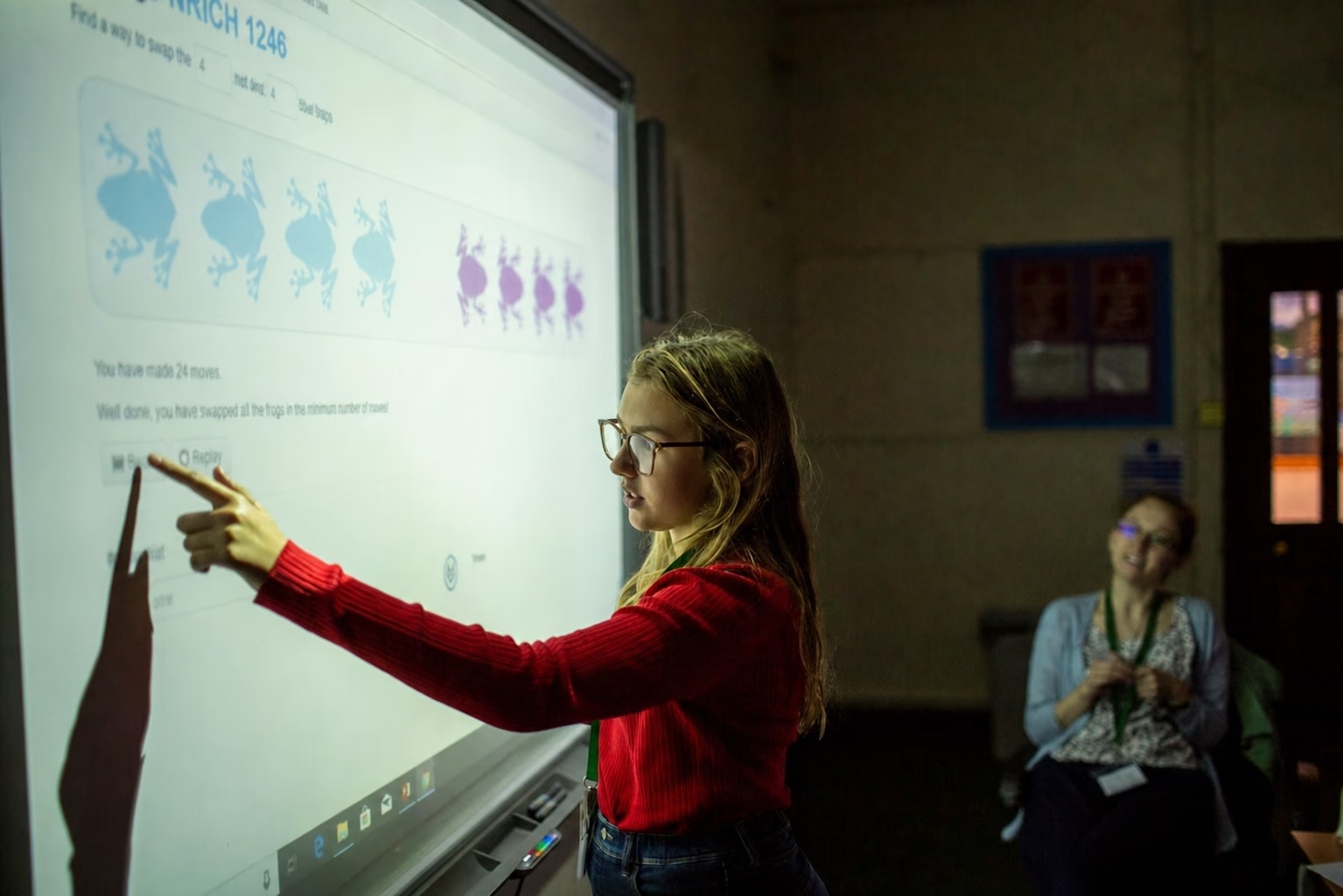
Small-group academic environments can be particularly useful for encouraging these skills. When students have opportunities to discuss ideas, respond to questions and hear different perspectives, communication becomes a natural part of the learning process.
At Atlas Summer Courses, small-group teaching is designed to encourage academic discussion and active participation. Rather than following a fixed curriculum, tutors can shape academic content around the interests, goals and level of their students, creating opportunities for students to explore subjects through discussion and collaborative learning.
Why Is Public Speaking Important for Students?
Public speaking is often associated with formal presentations, but the underlying skills have much wider applications.
Being able to communicate an idea clearly can help students participate in lessons, explain their reasoning, contribute to group projects and interact confidently with other people. These skills can also become increasingly relevant as students progress through school and encounter more presentations, interviews and collaborative academic work.
Here are some of the ways developing public speaking and communication skills can benefit young learners.
1. Developing Clear Communication Skills
Effective communication involves more than simply speaking confidently. Students need to consider what they want to say, organise their thoughts and communicate them in a way that others can understand.
Practising public speaking can encourage students to think about the structure of their ideas. They may need to decide which information is most important, provide supporting examples and explain their reasoning clearly.
These skills can be useful across many academic subjects, particularly when students are asked to present an argument, explain a concept or contribute to a discussion.
2. Becoming More Comfortable Speaking in Front of Others
Speaking in front of other people can feel uncomfortable, especially when students have had limited experience doing it.
Confidence often develops gradually. A student might begin by contributing a short answer during a discussion before progressing to explaining an idea, participating in a debate or giving a presentation.
Regular opportunities to speak in a supportive environment can help students become more familiar with these situations.
The aim is not necessarily to remove nervousness altogether. Instead, students can learn how to communicate even when they feel slightly nervous and become more comfortable with the experience over time.
3. Strengthening Critical Thinking
Public speaking and critical thinking are closely connected.
Before students can explain an idea clearly, they usually need to understand it themselves. Preparing to speak can encourage them to examine information, consider different perspectives and decide how best to communicate their conclusions.
Discussion-based learning can develop this further. When another student asks a question or offers a different viewpoint, students may need to reconsider their position or explain their reasoning in greater depth.
This process encourages students to move beyond simply remembering information and towards actively engaging with ideas.
4. Learning to Listen and Respond
Strong communication is not only about speaking. Listening is equally important.
Group discussions encourage students to pay attention to what others are saying, consider different perspectives and respond appropriately. This can help students learn that effective discussion involves an exchange of ideas rather than simply waiting for an opportunity to speak.
Listening carefully can also help students become better speakers. By understanding the questions, arguments and perspectives of others, they can provide more relevant and thoughtful responses.
5. Supporting Leadership and Collaboration
Communication is an important part of working effectively with other people.
Whether students are completing a group project, participating in a discussion or taking responsibility for part of a presentation, they need to explain ideas and listen to others.
Students who become more comfortable communicating may find it easier to contribute to collaborative activities, share suggestions and take responsibility within a group.
These experiences can also introduce some of the communication skills associated with leadership, such as explaining a point of view, responding to questions and helping a group work towards a shared objective.
Why Small-Group Learning Can Help Build Public Speaking Confidence
For some young people, moving directly from speaking individually with a teacher to presenting in front of a large audience can feel intimidating.
Small-group learning provides another environment in which students can practise.
A smaller academic group can create more opportunities for individual participation. Instead of listening passively for an entire lesson, students may be encouraged to ask questions, discuss ideas and explain their thinking.
Over time, these smaller interactions can help students become more comfortable communicating academically.
More Opportunities to Contribute
In a large class, there may be limited opportunities for every student to speak.
Smaller groups can provide more space for individual contributions. Students may be asked what they think about a topic, how they reached an answer or whether they agree with another perspective.
These regular contributions can help speaking become a normal part of the learning process rather than something reserved for occasional formal presentations.
Exposure to Different Perspectives
One of the benefits of discussion is hearing how other people approach the same question.
Students may discover that their classmates interpret a text differently, approach a problem from another angle or reach a different conclusion.
Explaining why they agree or disagree encourages students to articulate their own thinking while remaining open to other perspectives.
For students learning alongside peers from different countries and backgrounds, discussions can also introduce a range of experiences and viewpoints.
A Supportive Environment for Trying Ideas
Young people can sometimes hesitate to contribute because they are worried about giving the wrong answer.
A discussion-based environment can help students understand that academic conversations are often about exploring ideas rather than immediately finding one perfect response.
Students can propose an interpretation, ask a question or change their mind after hearing another perspective.
Learning that ideas can be explored and refined through conversation can make participation feel more approachable.
How Seminar-Style Learning Can Develop Communication Skills
Seminar-style learning typically places greater emphasis on discussion and interaction than a purely lecture-based approach.
Students may be introduced to a question, concept or problem before being encouraged to analyse it together. The tutor can guide the discussion, ask further questions and encourage students to explain their reasoning.
This format can naturally involve many of the skills associated with public speaking.
Explaining Ideas
Being able to explain an idea is different from simply knowing the answer.
Students may need to describe how they reached a conclusion, provide evidence for an argument or explain a concept to somebody who approaches it differently.
Doing this regularly can encourage clearer and more structured communication.
Asking Questions
Confidence in communication also involves being willing to ask questions.
Students may sometimes avoid asking for clarification because they are worried about speaking in front of others. A learning environment where questions are encouraged can help make this feel more natural.
Asking thoughtful questions is also an academic skill in its own right. It can help students investigate subjects more deeply and identify areas they want to explore further.
Participating in Debate
Debate can provide a structured way for students to practise presenting and defending an argument.
Students may need to consider evidence, anticipate opposing viewpoints and respond to questions.
The purpose does not have to be winning an argument. Debate can instead help students understand how different positions can be constructed and how ideas can be communicated persuasively while respecting other viewpoints.
Presenting Academic Work
Presentations give students an opportunity to bring several communication skills together.
They may need to research a topic, select the most relevant information, organise it into a logical structure and communicate it to other people.
Depending on the academic context, presentations may be individual or collaborative and can range from short explanations to more structured pieces of work.
Public Speaking Skills Students Can Practise
Becoming a more confident speaker involves several individual skills. Students do not need to master them all at once.
Instead, they can focus on different areas as they gain experience.
Structuring an Argument
A clear structure helps an audience follow what a speaker is saying.
Students can practise introducing their main point, providing supporting evidence or examples and finishing with a clear conclusion.
This approach can also support academic writing because many of the same principles apply when organising an essay or written argument.
Speaking Clearly
Speaking clearly does not mean speaking loudly or adopting a particular accent.
Instead, students can focus on using an appropriate pace, pronouncing words clearly and giving listeners enough time to understand each point.
Students who are nervous sometimes speak very quickly. Practising pauses and slowing down can make communication easier to follow.
Using Body Language
Communication includes non-verbal behaviour as well as words.
Posture, facial expressions and eye contact can influence how a speaker communicates with an audience.
Young people can become more aware of these elements through practice without feeling that they need to perform or adopt an unnatural speaking style.
Responding to Questions
Questions can be one of the most challenging parts of a presentation because students cannot always prepare their answers in advance.
However, this also makes questions a useful way to develop confidence and critical thinking.
Students can practise listening carefully, taking a moment to consider their response and explaining their thinking clearly.
It is also useful to learn that it is acceptable not to know every answer. Being able to acknowledge uncertainty and think through a question can itself be an important communication skill.
How Atlas Summer Courses Supports Discussion-Based Learning
At Atlas Summer Courses, academic learning takes place in small groups, giving students opportunities to engage actively with their chosen subject.
Rather than following a single fixed curriculum for every group, tutors can shape academic content according to students' interests, goals and academic level.
This approach can create opportunities for discussion, questions and collaborative exploration within the classroom.
The precise activities students experience will depend on their chosen subject, age group, tutor and course content. Students may encounter discussions, presentations, collaborative tasks, debates or other activities that involve communicating their ideas.
Courses in areas such as leadership, literature, business, law and other discussion-rich subjects can naturally involve considering different perspectives and explaining arguments. Other subjects may develop communication through problem-solving, project work or presenting findings.
The objective is not to turn every student into a competitive public speaker. Instead, academic participation can provide opportunities for students to practise expressing themselves clearly and engaging thoughtfully with other people's ideas.
Public Speaking for Students Aged 13–15
The ages of 13–15 can be an important period for developing communication skills.
Students are often beginning to encounter more complex academic ideas while also becoming more independent in how they think and learn.
They may be asked to participate more actively in lessons, complete group projects or give presentations at school.
A summer learning environment can provide another setting in which to practise these skills.
Meeting new people can encourage students to introduce themselves, ask questions and communicate with peers they have not met before. Academic discussions can then give them opportunities to express their opinions and explain their thinking.
For international students, studying alongside people from different backgrounds may also encourage careful communication. Students may need to explain ideas clearly, listen closely and recognise that other people can approach the same topic from different cultural or academic perspectives.
How Parents Can Help Young People Build Public Speaking Confidence
Developing communication skills does not have to involve formal public speaking lessons. Parents can encourage many of the same skills through everyday activities.
Encourage Conversation
Regular conversations give young people opportunities to explain their thoughts.
Rather than asking questions that only require a yes or no answer, parents can ask young people why they think something, what they found interesting or how they would approach a problem.
The goal is not to turn every conversation into an academic exercise. It is simply to give young people opportunities to articulate their ideas.
Practise Short Presentations
Students who have an upcoming school presentation can practise at home before presenting to their class.
Starting with a familiar audience can help them become comfortable with the material and identify areas where their explanation could be clearer.
Practising several times can also reduce the pressure of remembering what comes next.
Ask Them to Explain Something They Enjoy
One of the easiest ways to practise speaking is to discuss a familiar subject.
A young person might explain the rules of a sport, talk about a book they enjoyed, describe a scientific idea or discuss a topic they care about.
Because they already understand the subject, they can focus more attention on how they communicate it.
Focus on Progress Rather Than Perfection
Public speaking can be intimidating, and excessive correction may make some young people more reluctant to participate.
Feedback can instead focus on one or two useful areas at a time.
For example, a student might work on slowing down during one presentation and making clearer eye contact during another.
Recognising improvement can help make practice feel constructive.
Encourage Preparation
Confidence often comes from knowing the subject well.
Students can prepare by identifying their main points, practising difficult sections and considering questions they might be asked.
They do not necessarily need to memorise an entire presentation word for word. Understanding the structure and key ideas can often make speaking feel more natural.
How Educators Can Encourage Confident Communication
Teachers and tutors can also help create environments where students feel comfortable contributing.
One approach is to provide different ways to participate. Not every student will immediately feel comfortable giving a long presentation.
A learner might begin by discussing an idea with one other person, then contribute to a small group before eventually speaking to the whole class.
Educators can also make expectations clear. Students may feel more confident when they understand the purpose of an activity, how long they are expected to speak and what they should focus on.
Constructive feedback can then help students recognise both their strengths and areas for development.
What Makes a Supportive Environment for Public Speaking?
Confidence is easier to develop when students feel that they can participate without being embarrassed for making a mistake.
A supportive learning environment can encourage respectful discussion, curiosity and constructive feedback.
Students should be able to disagree with one another without making the discussion personal. They should also feel able to ask for clarification or acknowledge when they are unsure.
These behaviours are useful beyond public speaking. They contribute to productive academic discussions and collaborative learning more broadly.
Can Public Speaking Confidence Be Learned?
Public speaking is sometimes treated as a natural talent: some people are confident speakers and others simply are not.
In reality, many of the skills involved can be practised.
Students can learn how to organise a presentation, control their pace, communicate an argument, use evidence and respond to questions. Familiarity with speaking situations can also make them feel less intimidating.
Different students will progress at different rates, and confidence may vary depending on the situation. Someone who is comfortable discussing their favourite subject with classmates may still feel nervous giving a formal presentation.
The aim is therefore not to eliminate nerves completely. It is to give young people strategies and experiences that can help them communicate effectively despite those nerves.
The Connection Between Public Speaking and Academic Confidence
Communication and academic confidence can reinforce one another.
When students become more comfortable asking questions, they may find it easier to seek clarification when they do not understand something.
When they become more confident explaining their reasoning, they may participate more actively in discussions.
And when they hear other students explore ideas openly, they may become more comfortable testing their own interpretations.
This can help create a more active approach to learning in which students are participants in academic conversations rather than simply recipients of information.
Building Communication Skills for the Future
The value of communication skills extends beyond school.
As young people progress through education, they may encounter university interviews, group projects, presentations and other situations that require them to communicate effectively.
Later, similar skills can be useful in professional environments, whether someone is explaining an idea to a colleague, participating in a meeting or presenting information to a larger group.
There is no single route to becoming a confident communicator. What matters is having opportunities to practise, reflect and gradually take on new challenges.
Developing Public Speaking Confidence at Summer School
Summer school can provide a different environment from students' usual classrooms.
Students may be learning alongside new peers, exploring subjects in greater depth and encountering different approaches to academic discussion.
Within a small-group environment, these experiences can create natural opportunities to practise communication.
A student might contribute an opinion during a discussion, explain their reasoning to another student, ask a tutor a question or present an idea to the group.
Each experience is relatively small on its own, but together they can help students become more accustomed to communicating in unfamiliar situations.
Final Thoughts
Public speaking confidence is not simply about being able to stand on a stage and deliver a speech. For young learners, it begins with being able to communicate ideas, ask questions, listen to others and contribute to discussions.
Small-group learning can provide regular opportunities to practise these skills in an academic setting. Through discussion, collaborative activities and the exploration of different perspectives, students can become more comfortable expressing their thoughts while developing broader communication and critical-thinking skills.
At Atlas Summer Courses, students aged 13–15 can explore academic subjects in small-group learning environments alongside other young people. Course content varies according to subject and group, with tutors able to adapt their teaching to students' interests, goals and academic level.
For families considering a summer school experience, communication skills are one of many areas that students may have opportunities to practise as they engage with new subjects, new ideas and new people.
About the author
Rhys Mackenzie is responsible for creating and maintaining educational content at Atlas Summer Courses, helping students and families access clear, accurate information about studying in Oxford. With several years of experience in digital content and student-focused resources, Rhys specialises in presenting academic programmes in a way that reflects the quality and integrity of Atlas Summer Courses' academic offering. Learn more about Rhys here.
Summary
Public speaking is a valuable skill that boosts confidence, communication, and leadership in young learners. Atlas Summer Courses uses seminars, small group discussions, and interactive workshops to help students aged 13–15 develop these essential public speaking skills.