
Bach, Shakespeare, and Karaoke

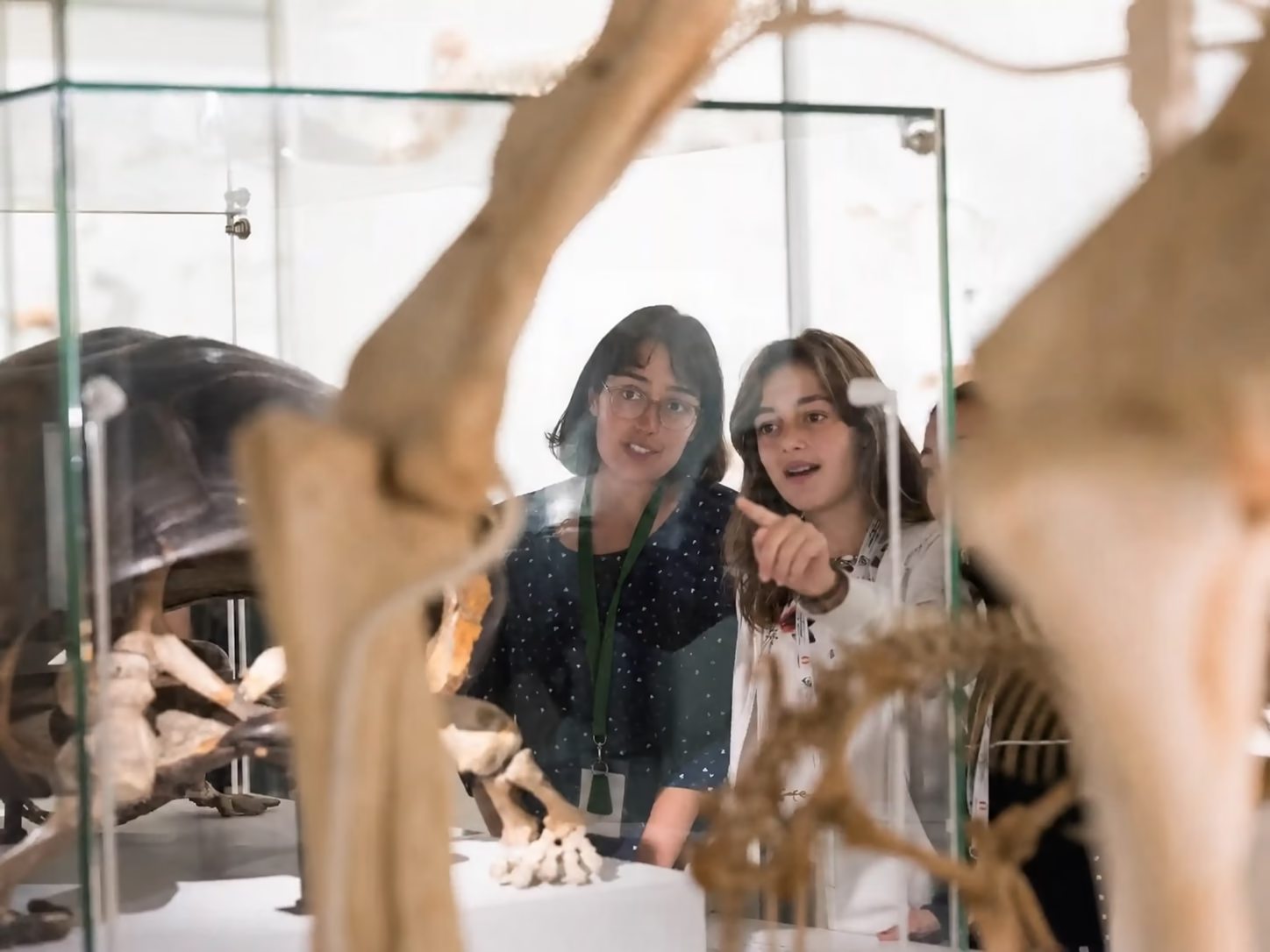
Culture and Activities on an Atlas Summer Course in Oxford
Studying with Atlas Summer Courses in Oxford isn't only about what happens in the classroom. The wider programme gives students opportunities to experience the city, spend time with new friends and enjoy cultural and social activities alongside their academic studies.
For students staying in Oxford, that might mean discovering historic landmarks, visiting museums and cultural attractions, taking part in organised activities or simply experiencing the city during the summer.
Looking back at previous Atlas summers shows just how varied those experiences can be. From classical concerts and Shakespeare to karaoke nights, students have had plenty of opportunities to enjoy life beyond their academic programme.
Experiencing Oxford Beyond the Classroom
Oxford is a city with centuries of history, distinctive architecture, museums, theatres, parks and cultural venues.
For students arriving from elsewhere in the UK or overseas, spending part of the summer here provides an opportunity to experience a new city as well as study their chosen subject.
The academic programme remains an important part of the experience, but learning does not have to stop when lessons finish.
Exploring somewhere unfamiliar, visiting a museum, watching a performance or simply talking to students from different countries can all introduce new perspectives.
That balance between academics and the wider summer experience is an important part of life at Atlas Summer Courses.
A Summer Evening at the Sheldonian Theatre
One memorable Atlas summer saw students attend a classical concert at Oxford's Sheldonian Theatre.
The building itself is one of Oxford's best-known landmarks. Designed by Sir Christopher Wren and completed in the 17th century, the Sheldonian is used by the University of Oxford for major ceremonies and also hosts concerts and other events.
On this particular evening, however, Atlas students were there for the music.
The programme included works by composers such as Bach, Pachelbel and Vivaldi, giving students the chance to experience classical music in one of the city's most distinctive historic venues.
It was a very different evening from a normal classroom session—and that was precisely the point.
A summer programme can introduce students to experiences they might not ordinarily choose for themselves.
Discovering Classical Music
You do not need to arrive at Atlas as a classical music enthusiast to enjoy a concert.
For some students, an event like this may be familiar. For others, it could be their first time hearing a live orchestra.
That is part of the value of having different experiences during the summer.
Students can encounter something unfamiliar without needing to be experts in it.
They might discover a composer they want to hear again.
They might become interested in the building itself.
Or they may simply enjoy spending an evening somewhere completely different with their new friends.
Not every cultural experience needs to become a lifelong passion to be worthwhile.
Sometimes trying something new is enough.
Shakespeare in Oxford
Music wasn't the only cultural experience students enjoyed during this particular Atlas summer.
A few evenings later, the group attended an outdoor performance of Shakespeare's Much Ado About Nothing.
The comedy follows the relationships between its characters through romance, deception, misunderstandings and reconciliation, with Beatrice and Benedick's famously combative relationship at the centre of much of the humour.
Watching Shakespeare performed can also be a very different experience from reading the same play in a classroom.
Characters become physical.
Jokes become easier to recognise.
The audience responds.
And language that might initially seem difficult on the page can become much clearer when delivered by actors.
For students who had previously encountered Shakespeare primarily through school, an outdoor performance offered another way to experience his work.
Why Cultural Activities Matter
It would be easy to treat cultural activities as simply something to fill the time between lessons.
They can be more valuable than that.
Academic learning encourages students to explore ideas within their chosen subject. Cultural experiences can broaden that curiosity.
A Law student might become interested in history.
A science student might discover architecture.
Someone studying Business might unexpectedly enjoy Shakespeare.
Students do not have to restrict their interests to the subject written on their course application.
One of the pleasures of spending the summer somewhere new is having opportunities to encounter things you did not expect.
Exploring Oxford During the Summer
Oxford itself provides plenty to discover.
The city contains museums, galleries, green spaces, historic streets and cultural venues within a relatively compact area.
For students on Atlas programmes, organised activities and opportunities to experience the local area vary according to the programme and age group.
Younger students have greater supervision, while arrangements for older students reflect their age and the rules of their particular programme.
Students should therefore check their current programme information rather than assuming that activities or free-time arrangements from a previous summer will apply to their course.
But whatever the precise timetable, being somewhere new is part of the experience.
Cultural Activities Don't Have to Be Serious
Not every evening needs Bach or Shakespeare.
One of the most memorable social activities from the same Atlas summer was considerably less formal:
karaoke.
Students and staff swapped concert halls and theatre performances for pop songs and group performances.
The playlist included everything from Beyoncé and Katy Perry to the inevitable group karaoke classics.
It was not academically demanding.
It was not intended to be.
Social activities give students opportunities to relax, laugh and get to know people outside lessons.
That matters on a residential summer programme.
Why Social Activities Are an Important Part of Summer School
Imagine arriving in another country knowing nobody.
Walking into your first class can be intimidating enough.
Trying to make friends afterwards can feel even harder.
Organised activities make that process easier because students immediately have something to do together.
Instead of having to manufacture a conversation from nothing, they can participate in an activity, join a team, watch a performance or laugh through a particularly ambitious karaoke attempt.
Friendships often develop through ordinary shared experiences like these.
And as students become more comfortable with one another outside lessons, they may also become more confident participating together academically.
Meeting Students From Around the World
Atlas Summer Courses brings together an international student community.
That means the people you meet can become as important to the summer as the places you visit.
Students may arrive with different languages, cultures, school systems and perspectives.
Someone you meet during an evening activity might have grown up thousands of miles away from you.
You may be studying completely different subjects.
Yet for part of the summer, you are sharing the same experience.
Those conversations can broaden students' perspectives in ways that cannot be planned into a lesson.
Learning Through New Experiences
Learning beyond the classroom does not mean every activity needs an explicit educational objective.
There is value in simply experiencing something unfamiliar.
Attending a concert can introduce you to music you have never heard.
Watching Shakespeare can change your understanding of a play.
Visiting a historic location can make something from a textbook feel tangible.
Meeting someone from another country can challenge assumptions you did not realise you had.
Even karaoke can teach you that your new friends are much braver with a microphone than you are.
The point is participation.
Making the Most of Activities at Summer School
Students will naturally be more excited about some activities than others.
That is normal.
You might love sport but have little interest in theatre.
You might be excited about museums but terrified by karaoke.
Try some of it anyway.
A summer programme is a relatively short period of time, and experiences that initially seem outside your comfort zone can become some of the ones you remember most clearly.
You do not need to love everything.
But being willing to participate makes it much easier to get to know the people around you and make the most of your time away.
Academic Study and Social Life
One reason students choose a summer programme rather than simply studying independently at home is the wider experience surrounding the academics.
During an Atlas Summer Courses programme, students spend part of their time focused on their chosen subject.
The rest of the experience can include activities, socialising and opportunities to explore their surroundings, according to the programme.
Both sides matter.
Academic sessions provide opportunities to ask questions, discuss ideas and develop subject knowledge.
The wider programme gives students time to relax, meet people and experience somewhere different.
The aim isn't to choose between learning and enjoying the summer.
There is room for both.
What Activities Can Students Expect Today?
The examples in this article come from a previous Atlas Summer Courses programme and should be understood as a look back at one particular summer rather than a current itinerary.
Activities, excursions and entertainment can change between years, locations, courses and age groups.
Students should therefore check the current information for their programme to see what is planned for their summer.
This distinction matters.
A previous group attending a particular concert, theatre performance or excursion does not mean that the same event is included in every future Atlas programme.
What the story does show is how cultural and social experiences can sit alongside academic study as part of a residential summer.
Is Atlas Summer Courses Part of the University of Oxford?
No.
Atlas Summer Courses is an independent education provider and is not affiliated with the University of Oxford.
Atlas operates its own summer programmes in Oxford. Where facilities belonging to educational institutions are hired for teaching or accommodation, their use does not mean that the institution provides, endorses or academically validates the Atlas programme.
This also means that visiting places connected with the University of Oxford, such as the Sheldonian Theatre, does not make an Atlas programme a University of Oxford programme.
Students should describe their experience accurately as attending Atlas Summer Courses in Oxford.
Why Spend Part of Your Summer in Oxford?
For students attending an Atlas programme in Oxford, the city provides the setting for much more than academic sessions.
There are historic streets to explore, museums to visit, green spaces to enjoy and cultural venues hosting events throughout the year.
But the value of the experience does not come simply from being in Oxford.
It comes from what students do with their time there.
Study something that genuinely interests you.
Ask questions.
Talk to people you would never have met at home.
Join an activity you would normally avoid.
Explore somewhere unfamiliar.
Go and watch something you know nothing about.
Those experiences are what turn a location into a summer you actually remember.
From Bach to Karaoke
The summer described in the original Atlas student account captured that variety particularly well.
Students went from listening to Bach and Vivaldi in the Sheldonian Theatre to watching Shakespeare outdoors and singing pop songs at karaoke.
Those activities could hardly be more different.
And that's exactly what makes the story worth keeping.
A summer programme does not have to consist entirely of academics.
Nor does every cultural activity need to be serious.
There is space for intellectual curiosity, new experiences and simply having fun with the people around you.
Final Thoughts
A memorable summer is rarely built around one thing.
For the students looking back on this particular Atlas programme, academic study sat alongside concerts, theatre, excursions, social activities and time spent with new friends.
Today's programmes will not follow exactly the same itinerary. Activities change, students change and every summer develops its own character.
But there is something worth taking from the original story.
Be willing to try things.
Listen to music you have never heard.
Watch a play you have never seen.
Talk to somebody you have just met.
Join the activity even if you are unsure whether it is for you.
And if someone hands you a karaoke microphone?
You can always give it a go.
Questions about activities, excursions or what to expect from your programme? Check our FAQs or contact our team for current information.
Ready to Join Atlas Summer Courses?
Atlas Summer Courses combines academic study with a wider summer experience shaped around meeting new people, discovering new places and making the most of your time away.
Explore our current programmes and check the individual course information for the activities and arrangements available to your age group.
Apply now to begin your application.
About the author
Rhys Mackenzie is responsible for creating and maintaining educational content at Atlas Summer Courses, helping students and families access clear, accurate information about studying in Oxford. With several years of experience in digital content and student-focused resources, Rhys specialises in presenting academic programmes in a way that reflects the quality and integrity of Atlas Summer Courses' academic offering. Learn more about Rhys here.
Summary
Experience enchanting summer evenings in Oxford, with concerts, Shakespearean performances, and karaoke nights. Join Atlas Summer Courses for a memorable summer in 2027. Apply now for Oxford, Cambridge, or London locations.