
Transforming Education with Artificial Intelligence

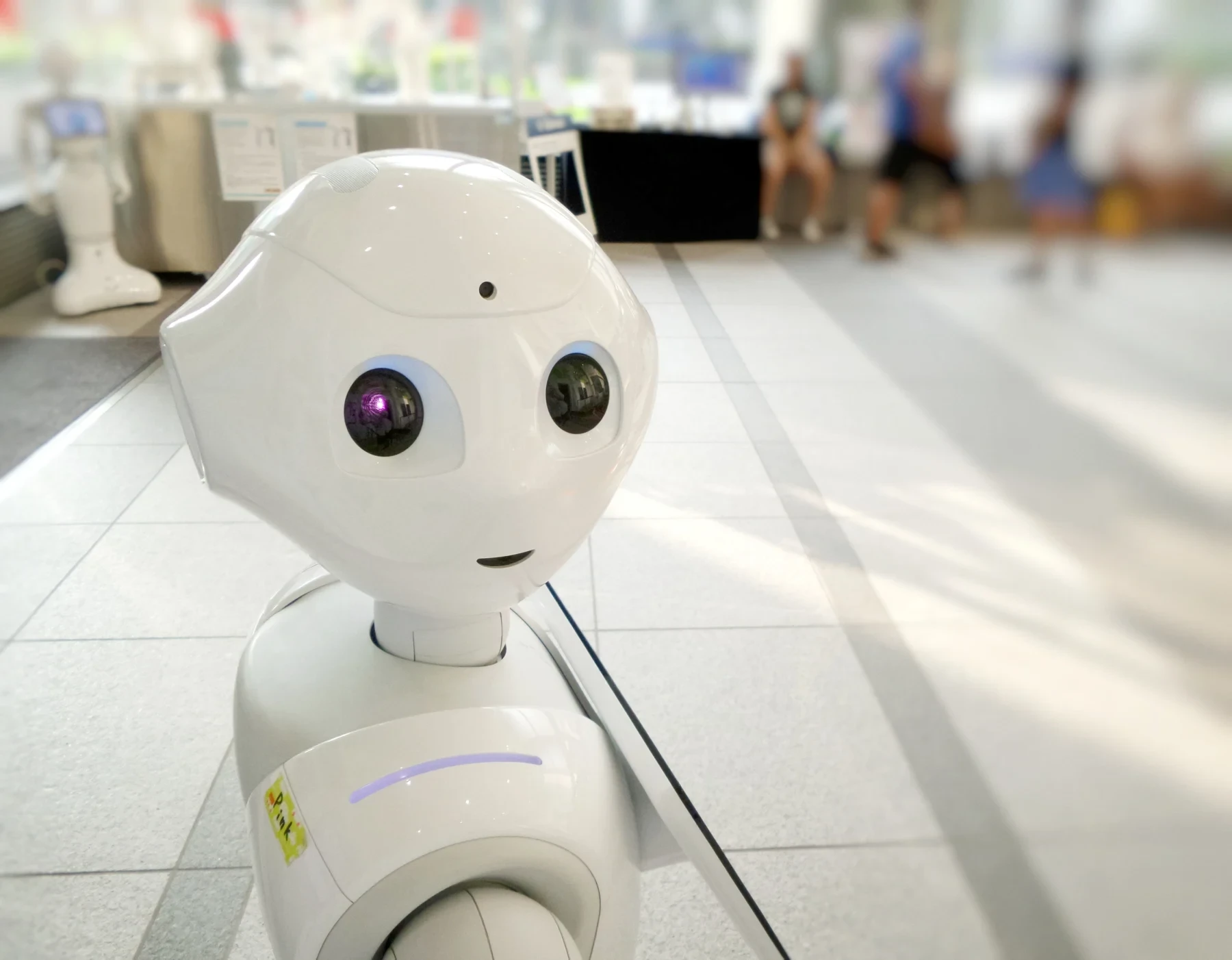
Transforming Education with Artificial Intelligence
Artificial intelligence is changing how people work, communicate, create and solve problems. Education is no exception.
AI tools can now explain difficult concepts, generate practice questions, provide feedback, translate material, analyse student performance and support teachers with planning and administration. For students, this creates opportunities to learn in more personalised and flexible ways. For teachers and schools, AI may help reduce repetitive tasks and identify where learners need additional support.
But artificial intelligence also creates difficult questions.
What happens if students use AI to complete work instead of learning how to do it themselves? How reliable are AI-generated answers? Could automated systems reinforce bias? How should schools protect student data? And if AI can produce essays, explanations and solutions within seconds, which skills should education prioritise in the future?
The most useful way to think about AI in education is therefore not as a technology that will simply replace traditional teaching.
Its real potential lies in how it can support human learning while preserving the thinking, discussion, creativity and judgement that education is supposed to develop.
Here are 15 ways artificial intelligence is transforming education and the questions students, teachers and parents should consider.
1. AI Can Make Learning More Personalised
Students do not all learn at the same pace.
One student may understand algebra quickly but struggle with geometry. Another might write excellent essays but need more support organising revision.
Traditional classrooms need to accommodate many learners simultaneously, which can make completely individualised instruction difficult.
AI systems can potentially respond more directly to the learner.
A student might receive additional questions on an area they consistently get wrong.
Someone who understands a topic quickly could move towards more challenging material.
An explanation could be simplified or expanded depending on what the learner already understands.
This type of adaptive learning is one of the most frequently discussed educational uses of AI.
The aim is not necessarily to create a separate curriculum for every student.
It is to provide more responsive support within the learning process.
2. AI Can Provide Immediate Feedback
Feedback is most useful when students can act upon it.
Imagine completing an assignment and receiving comments three weeks later.
By that point, you may have forgotten the reasoning behind some of your decisions.
AI systems can potentially provide much faster feedback.
A student writing an essay might receive suggestions about structure, clarity or missing evidence.
Someone solving mathematics problems could be shown which step appears incorrect.
A language learner could receive feedback on grammar or vocabulary.
Speed is valuable.
But instant feedback is not automatically good feedback.
Students still need to ask whether the feedback is accurate and whether following it will actually improve their understanding.
AI feedback should therefore be treated as something to evaluate rather than something to obey automatically.
3. AI Can Support Students Who Need More Practice
Learning often requires repetition.
Students studying vocabulary, multiplication, scientific terminology or mathematical procedures may need repeated opportunities to practise.
AI can generate large numbers of questions adapted to a particular topic.
A student could ask for ten questions about quadratic equations.
Then another ten at a more difficult level.
They could request hints rather than full answers.
They could even ask the system to focus specifically on mistakes they made previously.
This makes practice easier to personalise.
However, quantity alone does not create learning.
Completing fifty questions while paying little attention to mistakes may be less effective than completing ten carefully and understanding exactly why each answer is correct or incorrect.
AI can generate practice.
Students still need to think.
4. AI Can Explain Difficult Ideas in Different Ways
Sometimes a student does not understand an explanation simply because it was presented in a way that does not connect with their existing knowledge.
AI can potentially provide alternative explanations.
A student might ask:
“Explain photosynthesis to me simply.”
Then:
“Now explain it at A-level standard.”
Or:
“Explain it using an analogy.”
Or:
“Show me how photosynthesis and respiration are connected.”
This ability to reformulate information can be extremely useful.
Students can keep questioning an idea until they identify the part they do not understand.
However, explanations generated by AI are not guaranteed to be correct.
Students should compare important academic information with reliable sources, textbooks or teacher guidance rather than assuming fluency equals accuracy.
5. AI Can Help Students Ask Better Questions
Students often struggle not because they cannot understand an answer, but because they do not know what question to ask.
AI can help begin that process.
Imagine you are studying renewable energy.
Instead of simply requesting a summary, you might ask an AI system to generate challenging questions:
What are the limitations of solar power?
How should electricity grids manage variable generation?
What environmental problems can renewable technologies create?
Should nuclear energy be considered alongside renewables?
These questions push learning beyond simple factual recall.
Students can then investigate the answers independently.
Used this way, AI becomes less like an answer machine and more like a tool for generating intellectual problems.
That may be one of its most valuable educational uses.
6. AI Can Support Language Learning
Language learning requires regular exposure and practice.
AI can provide opportunities to practise vocabulary, grammar, writing and conversation.
A student learning French might ask for a conversation suitable for their level.
Someone preparing for a Spanish examination could practise responding to common questions.
AI can also explain grammatical mistakes and generate exercises around particular weaknesses.
This can make language practice more accessible outside lessons.
However, students should remain aware that AI-generated language may not always reflect natural usage, regional differences or cultural context perfectly.
Interaction with teachers, speakers, books, films and authentic language remains important.
AI can supplement those experiences.
It should not become the only source of language exposure.
7. AI Can Make Education More Accessible
Artificial intelligence could improve accessibility for some learners.
Speech-to-text systems can help students who struggle with typing or writing.
Text-to-speech tools can make written material accessible in another format.
Translation can support students working across languages.
AI systems may also help simplify complicated passages or reorganise information into more manageable forms.
For students with particular learning needs, technology can sometimes reduce barriers that have little to do with the subject itself.
However, accessibility tools should be designed carefully.
An AI system should support the student's ability to engage with learning rather than make assumptions about what they are capable of doing.
Human judgement remains important when deciding which adjustments genuinely help an individual learner.
8. AI Can Help Teachers With Routine Tasks
Teachers spend substantial amounts of time on work that happens outside direct teaching.
They prepare materials.
Create questions.
Organise information.
Review work.
Write administrative documents.
AI could help reduce some of this workload.
A teacher might use AI to generate a first draft of a quiz, suggest examples for a lesson or reorganise existing material for students working at different levels.
The important word is draft.
Teachers still need to verify the content.
AI can produce errors, inappropriate questions or misleading explanations.
The goal should therefore not be to remove professional judgement.
It should be to reduce repetitive work so teachers have more time for activities requiring human expertise, including explanation, discussion, feedback and supporting individual students.
9. AI Can Help Identify Learning Gaps
Digital education systems can generate large quantities of data.
Which questions do students consistently answer incorrectly?
Which concepts take longest to master?
When does performance begin to decline?
AI systems may help teachers identify patterns within this information.
Suppose half a class gets the same type of equation wrong.
That may indicate a common misunderstanding rather than individual carelessness.
A teacher can then revisit the concept.
At an individual level, patterns might reveal that a student understands factual knowledge but struggles when questions require application.
This information could make intervention more precise.
But data need context.
A student may perform poorly because they were tired, anxious or misunderstood the instructions.
Numbers cannot always explain why something happened.
Teachers still need to interpret what the data mean.
10. AI Can Support Independent Learning
One of AI's most significant possibilities is giving students access to academic support outside scheduled lessons.
A student working late on a homework problem may be able to ask for a hint.
Someone exploring a new subject independently can request explanations and questions.
Students can also use AI to structure their own learning.
For example:
“I want to understand basic economics. What should I learn first?”
The system might suggest a sequence involving scarcity, supply and demand, markets, inflation and macroeconomics.
That can help students begin.
However, independent learning requires independent judgement.
Students need to decide which information is trustworthy, when to consult another source and whether they genuinely understand something.
AI can increase access to explanations.
It cannot automatically create intellectual independence.
11. AI Is Changing How Students Write
Generative AI can produce essays, reports, summaries and creative writing within seconds.
This creates one of the biggest challenges facing education.
If the purpose of an essay is to assess a student's ability to construct an argument, handing that thinking over to AI defeats the purpose of the task.
The finished essay may look polished.
The student may have learned very little.
That does not mean AI has no place in writing.
Students could use it to:
- generate questions;
- challenge an argument;
- identify unclear passages;
- suggest alternative structures;
- test whether an explanation makes sense; or
- provide feedback on a draft.
The distinction is between using AI to support thinking and using AI to avoid thinking.
Education will increasingly need to teach students how to recognise that difference.
12. AI Is Changing Assessment
If students can generate essays or solutions using AI, traditional assessment methods may need to change.
Teachers may place greater emphasis on work completed under supervision.
Oral examinations could become more important.
Students might be asked to explain how they reached a conclusion.
Projects could involve several stages showing how ideas developed.
Assessment may also focus more strongly on applying knowledge to unfamiliar problems.
This could ultimately improve education.
A student who genuinely understands something should usually be able to discuss it, apply it and respond to questions.
Simply producing a polished final document may become less convincing evidence of learning.
AI therefore creates pressure to design assessments that measure thinking rather than only finished outputs.
13. AI Makes Critical Thinking More Important
Artificial intelligence can produce confident answers that are wrong.
This is one of the most important things students need to understand.
A well-written paragraph can create an impression of authority.
But fluency is not evidence.
Students increasingly need to ask:
Where did this information come from?
Can I verify it?
Does the explanation contain contradictions?
Is important context missing?
Could the system have invented a source or statistic?
Critical thinking was important before generative AI existed.
AI makes it even more important.
Students who simply accept the first answer produced by a system may become less informed rather than more informed.
The ability to question information is therefore becoming a core part of digital literacy.
14. AI Raises Questions About Academic Integrity
Schools and universities need to decide what types of AI use are acceptable.
The answer may vary according to the task.
Using AI to generate practice questions may be perfectly appropriate.
Using it to produce an essay that is submitted as your own work may not be.
Students therefore need clear guidance.
Academic integrity involves being honest about what work is yours and where ideas or assistance came from.
AI complicates this because its contribution can range from tiny grammatical suggestions to generating an entire piece of work.
The solution is unlikely to be one simple rule for every situation.
Students should understand the policies applying to their school, examination or university and ask for clarification when uncertain.
15. AI Will Change Which Skills Education Values
If AI can retrieve information rapidly, summarise documents and generate basic written content, education may increasingly emphasise the things humans need to do with that information.
Students will still need knowledge.
You cannot evaluate an AI-generated explanation of chemistry if you know nothing about chemistry.
But additional skills become increasingly important:
- critical thinking;
- problem-solving;
- creativity;
- communication;
- judgement;
- source evaluation;
- ethical reasoning;
- collaboration; and
- independent learning.
The future of education is therefore unlikely to be about choosing between knowledge and skills.
Students will need both.
Knowledge provides the foundation.
Higher-level thinking determines what they can do with it.
What Is Artificial Intelligence in Education?
Artificial intelligence in education refers broadly to the use of AI technologies to support teaching, learning, assessment and educational administration.
This can include:
- adaptive learning systems;
- automated feedback;
- generative AI;
- intelligent tutoring systems;
- language tools;
- data analysis;
- accessibility technologies; and
- administrative automation.
The technologies differ considerably.
A system recommending another mathematics question based on a student's performance is very different from a chatbot generating an essay.
It is therefore misleading to discuss “AI in education” as though it were one single tool.
Different applications create different benefits and risks.
What Is Generative AI?
Generative AI refers to artificial intelligence systems capable of producing new content.
This might include:
- text;
- images;
- audio;
- video;
- code; or
- other forms of digital content.
Large language models can generate text by analysing patterns learned from large amounts of data and predicting useful sequences of language.
This can make their responses appear highly conversational.
However, they do not necessarily understand information in exactly the way a human does.
They can also produce incorrect or invented information.
Students therefore need to distinguish between convincing language and verified knowledge.
How Is AI Already Being Used in Education?
AI is already used in various educational technologies.
Digital learning platforms can recommend material based on student performance.
Language-learning systems can adjust exercises according to progress.
Automated tools can support spelling and grammar.
Generative AI can answer questions and create explanations.
Schools and universities are also exploring AI for administration, accessibility, assessment support and academic research.
The important point is that AI in education is not a distant future possibility.
Students are already encountering it.
That makes AI literacy increasingly important.
Will AI Replace Teachers?
It is unlikely that effective education can be reduced entirely to automated systems.
Teaching involves much more than transferring information.
Teachers interpret confusion.
They recognise when students lack confidence.
They manage discussion.
They adapt explanations.
They challenge assumptions.
They motivate.
They notice when something appears wrong beyond the academic task itself.
AI can potentially support some teaching functions.
But human relationships are central to education.
A strong teacher does not simply possess the correct answers.
They understand how to help another person reach understanding.
That distinction matters.
Can AI Replace Tutors?
AI can provide some functions that resemble tutoring.
Students can ask questions repeatedly without embarrassment.
They can request alternative explanations.
They can receive practice tasks instantly.
This may make AI particularly useful for supplementary learning.
However, an experienced human tutor can interpret much more than the words in an answer.
They may recognise hesitation.
Ask an unexpected follow-up question.
Notice that a student has memorised an answer without understanding it.
Challenge the student's assumptions.
Adapt a discussion in response to subtle signals.
AI may become an increasingly capable learning tool.
That does not make human intellectual interaction irrelevant.
What Are the Benefits of AI in Education?
AI offers several potential benefits.
It can make support available more frequently.
Learning materials can be adapted more easily.
Students can receive faster feedback.
Teachers may be able to reduce repetitive administrative work.
Accessibility tools can help some learners engage with material more effectively.
AI can also help students explore subjects independently.
The potential is substantial.
However, benefits depend on implementation.
A technology that saves time but produces unreliable information may create new problems.
A system that personalises learning but collects excessive personal data may create privacy concerns.
Educational technology should therefore be evaluated according to outcomes rather than novelty.
What Are the Risks of AI in Education?
The risks include:
- inaccurate information;
- overreliance;
- cheating;
- reduced independent thinking;
- bias;
- privacy concerns;
- unequal access;
- excessive automation; and
- misunderstanding of how AI works.
Perhaps the greatest risk for students is intellectual dependence.
If every difficult question is immediately handed to AI, students lose opportunities to struggle with problems themselves.
That struggle is often where learning happens.
The goal should therefore be to use AI where it adds value without allowing it to remove all cognitive effort.
Can AI Give Wrong Answers?
Yes.
Generative AI systems can produce inaccurate information.
They can misunderstand questions.
They can invent details.
They can occasionally create convincing references or claims that do not exist.
This behaviour is sometimes called hallucination.
Students should therefore verify important factual claims.
The more specialised or consequential the question, the more important verification becomes.
An AI response can be a useful starting point.
It should not automatically become the final authority.
How Can Students Check AI Answers?
Start by identifying the claims that matter.
Then look for reliable evidence.
For academic subjects, this might involve:
- textbooks;
- teacher guidance;
- academic publications;
- official organisations;
- primary sources; or
- trusted educational materials.
Ask whether multiple reliable sources agree.
Be particularly careful with specific statistics, quotations, dates and references.
Students should also use their existing knowledge.
If an answer contradicts something you understand well, investigate the discrepancy rather than assuming the AI must be correct.
Verification is becoming part of digital learning.
What Is AI Bias?
AI systems learn from data.
If the underlying data contain inequalities, stereotypes or gaps, the system may reproduce them.
Bias can also emerge through decisions about how technologies are designed and evaluated.
This matters in education.
Imagine an automated system used to assess student writing or recommend academic pathways.
If it performs differently for different groups, the consequences could be significant.
Students should therefore understand that algorithms are not automatically neutral simply because computers execute them.
Humans design systems, choose data and decide how outputs are used.
AI and Student Privacy
Education involves sensitive information.
Schools may hold data about academic performance, attendance, behaviour and personal circumstances.
AI systems can create questions about how this information is stored and processed.
Students should be cautious about entering private information into public AI tools.
Schools and organisations also need appropriate policies governing which systems can be used and what information can be shared.
Convenience should not override privacy.
Students should understand that information entered into digital systems may not always remain under their control.
AI and Inequality in Education
Artificial intelligence could reduce some educational inequalities.
Students without easy access to tutoring might gain additional explanations and practice.
Translation could help learners studying in another language.
Accessibility tools could reduce certain barriers.
But AI could also create new inequalities.
Some students may have access to more advanced tools, better devices or paid services.
Schools with greater resources may integrate technology more effectively.
Differences in digital literacy could also influence who benefits most.
Technology therefore does not automatically create equality.
How access is distributed matters.
AI and Homework
AI creates an obvious question:
What counts as completing your own homework?
Suppose a student asks AI to explain a difficult question and then solves it independently.
That may support learning.
Suppose the student copies the entire question into AI, copies the answer back and submits it.
The homework has been completed.
But the student may have learned nothing.
The important distinction is whether AI contributes to the student's thinking or substitutes for it.
Students should also follow the rules established by their teacher or institution.
AI and Essay Writing
AI can be particularly tempting when students face essays.
It can generate introductions.
Produce arguments.
Suggest evidence.
Write conclusions.
The danger is that the essay becomes disconnected from the student's own understanding.
A much more valuable approach is to use AI after doing your own thinking.
Draft an argument.
Ask for objections.
Request questions that challenge your conclusion.
Ask whether one paragraph is unclear.
Then decide whether the feedback is valid.
The student remains the author and thinker.
AI and Mathematics
AI can be useful for mathematics when it supports reasoning.
Students might ask for:
- another example;
- a hint;
- an explanation of one step;
- a similar problem;
- a harder version of a question; or
- feedback on their working.
But immediately requesting the full solution removes the opportunity to solve the problem.
Mathematical ability develops through attempting problems, making errors and testing methods.
AI should ideally function like a tutor who gives enough support to keep the student progressing without solving everything for them.
AI and Science Education
AI can support science students by explaining concepts, generating questions and helping analyse data.
Students might use AI to explore how variables affect an experiment or compare competing scientific explanations.
However, science depends heavily on evidence.
A generated explanation is not experimental evidence.
Students still need to understand scientific methods, evaluate sources and distinguish hypotheses from established findings.
AI may become an increasingly powerful research tool.
That makes scientific literacy more important, not less.
AI and Creative Writing
Artificial intelligence can generate stories, poetry and dialogue.
Does that make creative writing less important?
Probably not.
It changes the questions writers face.
A student can use AI to generate ten plot ideas within seconds.
The more interesting challenge is deciding which idea has potential and how it should be developed.
Human writers bring personal experiences, intentions and judgement to creative work.
Students can also use AI as a creative constraint.
Ask for an unusual scenario and then write the story yourself.
Ask it to challenge your character's motivation.
The creative decision-making should remain with the student.
AI and Coding
Generative AI can produce and explain computer code.
This can accelerate programming.
But students learning to code still need to understand what the code does.
If an AI system generates a program and it fails, can you identify the problem?
Could the code introduce a security issue?
Does it actually satisfy the intended requirements?
Experienced programmers increasingly use AI tools, but expertise allows them to evaluate the results.
This creates an important educational principle:
AI becomes more useful when you already understand the subject well enough to judge its output.
AI and Research
AI can help researchers search, organise and analyse large quantities of information.
It may help identify patterns within data or summarise complex material.
However, students should be careful about using AI-generated summaries as substitutes for reading important original sources.
A summary removes detail.
It also introduces another layer of interpretation.
For serious academic work, students need to know what the original author actually argued.
AI may help navigate research.
It should not necessarily replace engagement with evidence.
What Is AI Literacy?
AI literacy means understanding enough about artificial intelligence to use it critically and responsibly.
A student with AI literacy should understand that:
- AI can be useful;
- AI can be wrong;
- outputs need evaluation;
- data privacy matters;
- systems may contain bias;
- different tasks require different levels of AI involvement; and
- using AI does not remove responsibility for the final work.
AI literacy may eventually become as fundamental as digital literacy.
Students will not necessarily need to understand every technical detail of machine learning.
But they should understand the limitations of the tools they use.
Should Schools Ban AI?
A complete ban may be difficult to enforce and could prevent students from learning how to use technologies they are likely to encounter later.
At the same time, unlimited AI use can undermine learning and assessment.
A more realistic approach may involve clear boundaries.
Some tasks could prohibit AI completely.
Others could allow limited assistance.
Certain activities might explicitly teach students how to use AI responsibly.
The rules should connect with the purpose of the task.
If an assignment is intended to assess independent writing, extensive AI generation defeats that purpose.
If the lesson is about evaluating AI-generated arguments, using AI is obviously necessary.
Context matters.
Should Students Be Taught How to Use AI?
Yes, because simply giving students access to powerful tools does not teach them how to use those tools well.
Students need to understand:
- how to ask useful questions;
- how to verify answers;
- how to protect personal information;
- how to recognise unreliable outputs;
- how to follow academic-integrity rules; and
- when not to use AI.
Perhaps most importantly, students need to recognise when AI is reducing their learning.
Convenience can be attractive.
But learning often requires effort.
What Skills Will Students Need in an AI World?
Students will still need strong subject knowledge.
Without knowledge, evaluating AI becomes extremely difficult.
They will also need:
- critical thinking;
- reasoning;
- communication;
- creativity;
- collaboration;
- digital literacy;
- adaptability;
- ethical judgement; and
- independent learning.
These are not entirely new skills.
AI simply increases their importance.
A world where information can be generated instantly makes the ability to evaluate that information more valuable.
Will Students Still Need to Memorise Things?
Yes.
The existence of search engines did not eliminate the need for knowledge, and AI will not eliminate it either.
Imagine trying to have a sophisticated discussion about economics when you understand none of the basic concepts.
You would be unable to judge whether an AI-generated answer was sensible.
Knowledge stored in memory also supports thinking.
Students who know foundational information can recognise patterns and solve problems more efficiently.
The goal should not be memorising everything.
It is building enough knowledge to reason effectively.
Does AI Make Critical Thinking More Important?
Absolutely.
When information was difficult to access, education often emphasised finding it.
Now students may have almost too much information.
The challenge becomes deciding what to trust.
A strong student increasingly needs to ask:
What evidence supports this?
Who produced it?
What assumptions are hidden?
What is missing?
Could there be another interpretation?
Can I verify the claim independently?
AI therefore does not reduce the importance of thinking.
It increases it.
AI and the Future of Exams
Examinations may evolve as AI becomes more capable.
Some assessments may remain supervised and closed-book because universities and schools need evidence of what students can do independently.
Other assessments could incorporate AI deliberately.
Students might be given an AI-generated answer and asked to identify its weaknesses.
They could compare sources.
They might explain how they improved an AI-assisted draft.
The objective could shift from pretending AI does not exist to measuring whether students can use it intelligently.
Different subjects will require different approaches.
Could AI Personalise Education for Every Student?
Potentially, but completely personalised education is more complicated than automatically adjusting question difficulty.
Education is also social.
Students learn through discussion.
They encounter perspectives different from their own.
Teachers deliberately introduce unfamiliar ideas rather than only giving students what they already prefer.
If an AI system personalises everything too aggressively, learners could become trapped within narrow pathways.
Good education balances individual needs with exposure to shared knowledge and challenging perspectives.
Personalisation should expand learning rather than reduce it.
Could AI Reduce Teacher Workload?
Potentially.
Teachers perform many repetitive tasks that could be partially automated.
But poorly implemented AI could also increase workload if teachers constantly need to correct inaccurate material or manage new problems caused by technology.
Implementation therefore matters.
The useful question is not:
“Can AI do this task?”
It is:
“Will using AI for this task improve teaching or free teachers to spend more time on work requiring professional judgement?”
Technology should solve real educational problems rather than being introduced simply because it is new.
Could AI Improve Special Educational Support?
AI technologies may help some students through text-to-speech, speech recognition, alternative formats and adaptive materials.
This could increase independence for certain learners.
However, students with additional needs are not one homogeneous group.
A tool that helps one student may be ineffective for another.
Human assessment and support remain essential.
Technology should provide additional options rather than becoming an excuse to reduce specialist support.
AI and Teacher-Student Relationships
Education is relational.
Students are more likely to ask questions when they feel comfortable.
Teachers can recognise frustration.
They can encourage someone after a difficult result.
They can challenge a student who is capable of more.
AI systems can provide responses.
That is not identical to a human relationship.
As technology becomes more powerful, schools may need to protect the parts of education that depend specifically on human interaction.
Efficiency is valuable.
But education is not simply an information-delivery problem.
What Does Responsible AI Use Look Like?
Responsible AI use begins with purpose.
Ask:
Why am I using AI for this task?
If the answer is “because I want to avoid doing the difficult part”, the tool may be reducing learning.
A stronger use might be:
“I wrote my own answer and want something to challenge it.”
or:
“I cannot understand this concept and want another explanation.”
Students should also verify important information, protect personal data and follow academic rules.
Responsible use means remaining accountable for what you produce.
How Can Students Use AI to Study?
Students can use AI to:
- generate practice questions;
- quiz themselves;
- request hints;
- explain difficult concepts;
- create examples;
- compare theories;
- practise languages;
- challenge arguments; or
- receive feedback on reasoning.
One particularly useful approach is asking AI not to give you the answer.
For example:
“Give me one hint at a time.”
This keeps the student engaged in solving the problem.
How Can Students Avoid Becoming Dependent on AI?
Try the problem first.
This simple rule can make a major difference.
Write your answer before asking for feedback.
Attempt the equation before requesting a hint.
Read the original source before requesting a summary.
Then use AI to test or extend your thinking.
Students can also deliberately complete some work without AI.
You need to know what you can do independently.
Otherwise, it becomes difficult to distinguish your own ability from the support provided by the tool.
How Can Parents Approach AI in Education?
Parents do not necessarily need to ban AI or encourage unrestricted use.
Instead, conversations can focus on learning.
Ask:
What did you use AI for?
What did you do yourself?
How did you check the answer?
Could you explain the topic without the AI now?
These questions shift attention away from the technology itself and towards whether learning actually occurred.
Parents can also encourage students to follow school policies and avoid sharing private information with inappropriate services.
How Can Teachers Use AI Responsibly?
Teachers can begin with low-risk uses.
Generate possible questions and verify them.
Create alternative examples.
Draft materials that will then be reviewed professionally.
AI can also be used explicitly as teaching material.
Ask students to critique an AI-generated essay.
Give them an incorrect explanation and ask them to fix it.
Compare AI-generated arguments with reliable sources.
This turns AI's limitations into opportunities for learning.
The teacher remains responsible for deciding what educational value the technology provides.
AI and Cognitive Learning
Artificial intelligence connects closely with cognitive learning.
AI can support retrieval, explanation, practice and feedback.
But it can also remove cognitive effort.
Suppose a student asks AI to summarise every chapter, answer every question and write every essay.
The workload becomes easier.
The learning may become weaker.
Cognitive learning reminds us that students need to process information themselves.
AI should ideally create more opportunities for thinking rather than fewer.
AI and Independent Thinking
Independent thinking becomes particularly important when AI can produce an answer instantly.
Students need confidence to disagree with the system.
An AI response should not end the discussion.
Ask:
Do I agree?
What evidence supports this?
What assumptions does the answer make?
How could someone challenge it?
This approach prevents AI from becoming an unquestioned authority.
The best educational use of AI may be when it gives students something to think against, not simply something to copy.
AI and Creativity
Some people worry that generative AI will reduce creativity because machines can produce ideas rapidly.
The opposite is also possible.
AI can provide prompts, variations and unfamiliar combinations that encourage people to explore new directions.
The key question is who makes the meaningful creative decisions.
A student might ask AI for ten unusual settings for a short story.
They then choose one, create the characters, determine the conflict and write the story.
AI has expanded the starting possibilities.
The student remains responsible for the creative work.
AI and Future Careers
Students are likely to encounter AI in many careers.
Doctors may use AI-assisted diagnostic systems.
Engineers may use AI during design.
Lawyers may use it to review documents.
Scientists may analyse data with machine learning.
Programmers increasingly use AI coding tools.
Businesses may automate routine tasks.
The valuable skill will not simply be “knowing how to use AI”.
Most tools will become easier to use.
The more important ability will be knowing when to trust it, when to question it and how to combine it with genuine expertise.
Will AI Eliminate Jobs?
AI is likely to change some jobs and automate particular tasks.
Predicting exactly which occupations will disappear or emerge is much more difficult.
Technological changes often remove certain tasks while creating new forms of work.
A profession may remain while the daily activities within it change substantially.
This is another reason education needs to develop adaptability.
Students cannot prepare for a forty-year career by memorising one fixed set of workplace procedures.
They need to become capable of learning new technologies throughout their lives.
What Should Schools Teach About AI Ethics?
AI ethics involves questions about fairness, accountability, privacy and responsibility.
Who is responsible when an AI system makes a harmful decision?
Should some decisions ever be completely automated?
How should personal data be used?
How do we identify bias?
Should AI-generated work always be labelled?
These questions belong across several subjects.
Computer science students need them.
So do future lawyers, doctors, politicians, business leaders and designers.
AI is not purely a technical issue.
It is increasingly a social and ethical one.
Will AI Make Education Better?
It can.
But there is nothing automatic about that outcome.
A badly designed AI system could produce misinformation, encourage shortcuts or reduce human interaction.
A thoughtfully used system could provide personalised practice, increase accessibility and help teachers spend more time on meaningful instruction.
Technology itself does not determine the result.
Educational decisions do.
The most important question is therefore not whether schools use AI.
It is how they use it and what type of learning they want the technology to support.
What Will Education Look Like in the Future?
Nobody knows exactly.
Schools are likely to use more digital tools.
AI-assisted learning may become increasingly common.
Assessment may change.
Students may spend less time producing work that can easily be automated and more time explaining, discussing, creating and applying ideas.
But some parts of education are unlikely to disappear.
Students will still need teachers.
They will still need knowledge.
They will still need to read.
They will still need to solve problems.
And they will still need other people.
The future classroom may contain much more advanced technology while retaining many of the fundamental characteristics of good learning.
How Can Students Prepare for an AI-Driven Future?
Do not concentrate only on learning how to operate today's AI tools.
Those tools will change quickly.
Instead, develop abilities that remain useful even when technology changes:
- understand your academic subjects deeply;
- learn how to research;
- ask good questions;
- evaluate evidence;
- communicate clearly;
- solve unfamiliar problems;
- work with others;
- understand technology;
- recognise ethical issues; and
- keep learning independently.
Those abilities make AI more useful because students can evaluate and direct the technology rather than simply depend upon it.
Artificial Intelligence and Academic Study
AI connects naturally with many academic subjects.
Computer science explores how AI systems are developed.
Mathematics provides foundations for machine learning.
Psychology raises questions about intelligence and cognition.
Philosophy asks what intelligence, consciousness and responsibility mean.
Law considers regulation and accountability.
Medicine explores diagnostic and research applications.
Business and economics examine productivity, employment and technological change.
Politics addresses how governments should regulate powerful systems.
Students interested in AI therefore do not necessarily need to become computer scientists.
Artificial intelligence is becoming relevant across disciplines.
Exploring AI During the Summer
Summer can provide students with time to investigate artificial intelligence beyond the immediate pressure of school assessments.
A computer science student might experiment with machine learning concepts.
A future lawyer could explore questions about copyright or responsibility.
Someone interested in medicine might investigate how AI could assist diagnosis.
A philosopher could ask whether machines can genuinely understand language.
An economist might examine how automation changes labour markets.
The most useful approach is interdisciplinary.
AI becomes particularly interesting when students connect the technology with questions they already care about.
Academic Summer Programmes and AI
Academic summer programmes can provide opportunities for students to discuss artificial intelligence within broader subject areas.
The value should not come simply from using AI tools.
Students should have opportunities to question the technology.
What can it do?
Where does it fail?
What ethical problems does it create?
How might it transform a particular profession?
These discussions can help students become more thoughtful users of AI rather than simply more frequent users.
Atlas Summer Courses and Artificial Intelligence
Students attending Atlas Summer Courses can explore academic subjects in which questions surrounding artificial intelligence are increasingly relevant.
A computer science student may be interested in how AI systems work.
Someone studying business could consider how automation changes organisations.
A student exploring medicine might investigate AI-assisted healthcare, while philosophy and law students could examine questions involving ethics, responsibility and regulation.
The aim is not simply to teach students how to generate answers using AI.
More valuable academic questions concern how students evaluate the technology, test its limitations and decide when human judgement is still required.
Students attending Atlas Summer Courses in Oxford or Cambridge are staying and studying in those cities as part of their own independent programme.
They are not enrolled at the University of Oxford or the University of Cambridge.
Atlas Summer Courses is an independent summer education provider and is not part of the University of Oxford or the University of Cambridge.
Can AI Replace Academic Discussion?
AI can simulate conversation.
But discussion between students creates something different.
A classmate may interpret an idea through experiences or cultural assumptions unlike your own.
They may challenge you unexpectedly.
You need to explain yourself in real time.
You also learn how to listen and respond respectfully.
These are social as well as intellectual skills.
AI can help students prepare for discussion or generate questions.
It should not automatically replace opportunities for people to think together.
Why Human Feedback Still Matters
AI feedback can be fast.
Human feedback can contain contextual understanding.
A tutor who has worked with a student over several sessions may recognise patterns.
They may know that one weak essay is unusual.
They might recognise that the student is capable of a stronger argument and deliberately push them further.
They can also discuss the reasoning behind feedback.
The strongest future educational model may therefore combine technology with human teaching rather than treating them as competitors.
AI and Tutorial-Style Teaching
Tutorial-style teaching depends heavily on interaction.
Students present ideas.
Tutors question them.
Arguments change during discussion.
AI can support preparation for this type of learning.
Students might use AI to generate objections or practise explaining a concept.
But the tutorial itself can push students into areas they did not anticipate.
A skilled tutor can identify exactly where reasoning becomes uncertain and ask the next question accordingly.
The value lies not simply in receiving information.
It lies in having your thinking challenged.
What Should Students Never Outsource to AI?
Students should be cautious about outsourcing the intellectual work they are actually trying to develop.
If you are learning to write arguments, do not outsource every argument.
If you are learning mathematics, do not outsource every calculation.
If you are learning to code, do not outsource all programming.
If you are learning to research, do not rely entirely on AI summaries.
Use technology for support.
Keep enough difficulty in the process that you still need to learn.
That principle will remain useful even as AI becomes much more capable.
Common Mistakes Students Make With AI
One mistake is assuming that a confident answer is correct.
Another is asking AI to complete an entire assignment rather than supporting a specific stage.
Students may also rely too heavily on summaries.
Another common problem is failing to verify citations.
Some students use AI repeatedly because it is faster without noticing that their independent ability is weakening.
The solution is not necessarily avoiding AI completely.
It is developing habits that keep the student intellectually involved.
A Better Way to Use AI for Learning
A useful sequence is:
- Try the task yourself.
- Identify exactly where you are stuck.
- Ask AI for limited help.
- Check the information.
- Return to the task independently.
- Explain what you learned without the AI.
This keeps AI in a supporting role.
The student remains responsible for the learning.
Is AI Making Students Smarter?
AI can provide access to information and explanations more quickly than ever.
That does not automatically make students more knowledgeable or capable.
A calculator can produce the answer to a difficult calculation.
That does not mean the person holding it understands mathematics.
The same distinction applies to generative AI.
Students become stronger learners when technology helps them understand, practise and question.
They may become weaker learners if technology consistently replaces those processes.
The effect depends on how the tool is used.
The Future of Teachers in an AI Classroom
Teachers may spend less time creating basic resources or performing certain repetitive tasks.
Their uniquely human responsibilities could become even more important.
They may spend more time:
- questioning students;
- facilitating discussion;
- giving sophisticated feedback;
- designing meaningful tasks;
- helping students evaluate information;
- supporting motivation; and
- teaching ethical technology use.
AI could therefore change teaching without eliminating teachers.
It may shift more attention towards the parts of education that require judgement and relationships.
The Future of Students in an AI Classroom
Students may increasingly be expected to demonstrate not simply that they can produce an answer but that they understand how the answer was reached.
They may need to explain reasoning.
Evaluate AI-generated material.
Identify mistakes.
Compare sources.
Defend conclusions.
Create something from information rather than simply reproduce it.
This could ultimately place greater emphasis on intellectual independence.
If AI makes basic content generation easy, genuine understanding becomes easier to distinguish from polished surface-level work.
Conclusion
Artificial intelligence has the potential to transform education.
It can personalise practice, provide rapid feedback, support accessibility, help teachers with repetitive tasks and give students additional ways to explore difficult ideas.
But AI can also undermine learning if students use it to avoid thinking.
It can produce incorrect information.
It raises questions about privacy, bias, academic integrity and unequal access.
And as AI becomes increasingly capable of writing, coding and answering questions, schools and universities will need to reconsider what meaningful assessment looks like.
The most important educational principle therefore remains surprisingly traditional:
students still need to think for themselves.
AI can explain.
It can question.
It can generate.
It can provide feedback.
But the student still needs to understand, evaluate, decide and create.
The future of education is unlikely to involve humans competing against artificial intelligence.
A more useful goal is teaching students how to use powerful technology without surrendering the intellectual abilities education exists to develop.
That means building strong subject knowledge alongside critical thinking, creativity, communication, judgement and independence.
For students exploring AI through academic study or a summer programme, the most valuable question is therefore not simply:
“What can artificial intelligence do for me?”
It is:
“How can I use artificial intelligence in a way that helps me become a better thinker rather than allowing the technology to do all the thinking for me?”
That distinction may become one of the most important educational skills of the coming years.
Atlas Summer Courses is an independent summer education provider and is not part of the University of Oxford or the University of Cambridge.
About the author
Rhys Mackenzie is responsible for creating and maintaining educational content at Atlas Summer Courses, helping students and families access clear, accurate information about studying in Oxford. With several years of experience in digital content and student-focused resources, Rhys specialises in presenting academic programmes in a way that reflects the quality and integrity of Atlas Summer Courses' academic offering. Learn more about Rhys here.
Summary
Fears of AI dominating education are unwarranted. AI can enhance learning, tailor education, and ease administrative burdens. Ethical considerations and evidence-based practices are vital. At Atlas Summer Courses, we embrace AI's potential.