
A Global Village in Oxford

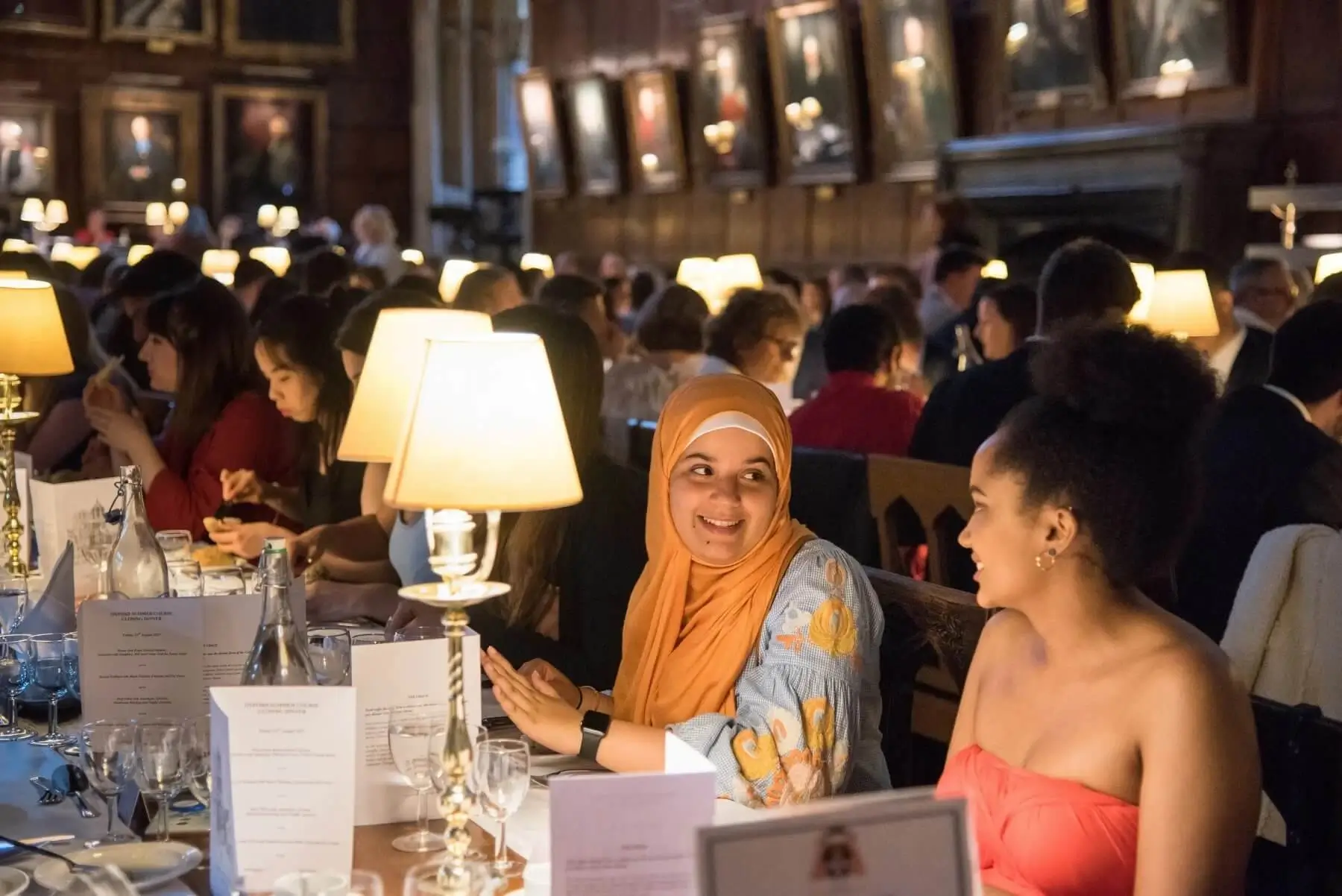
Learning in an International Community at Atlas Summer Courses
One of the most distinctive parts of attending an international summer programme is the people you meet.
Students at Atlas Summer Courses come from different countries, cultures, schools and educational backgrounds. For many participants, this means spending part of the summer learning and living alongside people they would be unlikely to meet in their everyday lives.
That international environment can shape far more than the social side of the programme.
A discussion about economics may change when one student has experienced the policy being discussed in their own country. A debate about international relations may sound different when classmates have grown up within different political systems. Even conversations over dinner can reveal how differently people experience education, family life, music, food and culture.
The value is not that every student becomes a representative of their country. It is that bringing different people together creates opportunities to encounter perspectives beyond your own.
What Is an International Learning Community?
An international learning community brings together students from different countries and backgrounds within the same educational environment.
Students may have different:
- first languages;
- school systems;
- cultural traditions;
- academic interests;
- political and social experiences; and
- ways of approaching questions.
Those differences can make the learning environment more interesting.
A classroom where everybody has had broadly the same experiences can still produce excellent discussion. But an international classroom creates the possibility of hearing perspectives that may simply never arise within a student's normal school environment.
Learning From Other Students
Education does not only happen between a tutor and a student.
Students can learn from one another too.
Imagine a seminar discussing international trade.
A textbook can explain tariffs and their economic effects.
But a student whose family or community has direct experience of an export industry may bring another perspective to the conversation.
Someone else may have grown up in a country where trade policy is a major political issue.
Another student may approach the same question primarily through economics.
None of these students automatically has the definitive answer.
What they do have is different context.
Bringing those perspectives into the same conversation can make the discussion richer.
Why Different Perspectives Matter
Students naturally develop assumptions based on the environments in which they grow up.
That happens to everyone.
An international environment can make some of those assumptions more visible.
A student may say:
“School normally works like this.”
Only for somebody else to reply:
“Not where I live.”
Or:
“Everybody thinks this policy is a bad idea.”
And another student asks:
“Everybody where?”
Those moments are useful.
They encourage students to distinguish between:
what I have experienced
and
what is universally true.
That is an important part of critical thinking.
International Perspectives in Academic Discussions
Some subjects lend themselves particularly well to international discussion.
International Relations
Students can explore how countries perceive the same events differently.
Foreign policy that appears reasonable from one government's perspective may be viewed very differently elsewhere.
Economics
Economic policies can affect countries, industries and communities in different ways.
Students may be able to connect theoretical questions with examples from their own countries.
Law
Legal systems vary significantly around the world.
Students can discover that ideas they assumed were universal may depend heavily on a particular legal tradition.
History
Historical events can be taught and remembered differently depending on where someone went to school.
Comparing those perspectives can encourage students to think more carefully about sources, interpretation and national narratives.
Business
Students may encounter different attitudes towards entrepreneurship, regulation, consumer behaviour and employment across countries.
Literature
Readers from different linguistic and cultural backgrounds can interpret the same text in very different ways.
The same principle can apply across many other subjects.
You Don't Have to Represent Your Country
This is an important point.
Being the only student from a particular country in a discussion does not make you responsible for explaining the views of everyone who lives there.
Countries are not single opinions.
Students within the same country can have completely different experiences and beliefs.
An international classroom works best when students are able to say:
“This is my experience.”
rather than feeling they need to say:
“This is what everyone in my country thinks.”
That distinction keeps conversations curious rather than stereotypical.
Small-Group Teaching and International Discussion
The international character of a programme becomes particularly valuable when students have opportunities to actually talk to one another.
Current Atlas Summer Courses for older students use small-group seminars with a maximum of eight students, alongside workshops.
In a small seminar, students have more opportunities to contribute directly to the discussion.
A tutor can ask one student what they think.
Another student can challenge that view.
Somebody else can introduce an example from a different country.
The conversation can develop in response to the people in the room rather than remaining a one-way presentation.
Tutorials and Personalised Feedback
For students aged 16–17 and 18–24, tutorial-style teaching also forms part of the Atlas academic experience.
Students complete independent academic work before taking part in a one-hour tutorial with two students and one tutor.
The smaller format gives students the opportunity to discuss their own arguments and receive detailed feedback.
The second student can also contribute another perspective.
They may have approached the same question differently.
They may disagree with an interpretation.
Or they may notice something the other student missed.
This means students can learn both from their tutor and from another student working through the same academic problem.
International Learning Doesn't Require Agreement
Bringing students from different countries together does not mean everybody will agree.
They probably won't.
That can be useful.
Good academic discussion requires students to encounter ideas they do not automatically share.
The important skill is learning how to disagree constructively.
Students can ask:
Why do you think that?
What experiences shaped your position?
What evidence supports it?
Would the argument change in another context?
This is very different from simply trying to prove that somebody else is wrong.
The objective is to understand the argument well enough to examine it seriously.
Learning to Listen
International learning is not simply an opportunity to tell other people what you think.
It also requires listening.
Students may hear opinions that initially seem surprising.
Before responding, it helps to understand why the other person holds them.
Perhaps the disagreement comes from different evidence.
Perhaps the countries involved have different histories.
Perhaps a word means something slightly different within another culture.
Or perhaps two students simply disagree.
Listening does not require agreement.
It requires enough curiosity to understand the other position before responding to it.
Learning Outside the Classroom
Some of the most interesting cross-cultural conversations may not happen during academic sessions at all.
They can happen:
over breakfast;
during dinner;
on an excursion;
while travelling to an activity;
around the accommodation;
or simply while students are relaxing together.
A former Atlas Residential Dean described sitting at dinner with students connected to countries including Bangladesh, India, the United States, Lebanon, Egypt, the Netherlands and the United Kingdom.
What stood out to them was how unusual it was to have so many different experiences represented around one table.
That kind of conversation cannot easily be scheduled into a lesson plan.
It happens because people have been brought together.
Discovering Differences Through Everyday Life
Not every cultural difference needs to involve politics or academic theory.
Students may discover differences through extremely ordinary conversations.
What time do you normally eat dinner?
What is school like where you live?
How long are your holidays?
What music do you listen to?
Which sports are popular?
How do university applications work in your country?
What food do you miss from home?
These conversations may sound trivial.
But they reveal how much of everyday life students normally assume is universal.
Discovering What Students Have in Common
An international environment does not only emphasise differences.
Often, students are surprised by how much they share.
Someone from Singapore and someone from Spain may like the same musician.
Students from completely different educational systems may both be nervous about university applications.
People from several countries may discover they watch the same television programmes, support the same football club or struggle with the same type of mathematics problem.
Cultural background matters.
But it is not the only thing that defines somebody.
International friendships often develop precisely because students move beyond nationality and discover ordinary interests they have in common.
Making Friends From Different Countries
Residential summer programmes create repeated opportunities for friendships to develop.
Students see one another during:
classes;
meals;
activities;
excursions;
and the ordinary moments between scheduled events.
Friendships do not need to be engineered.
Spending time together makes conversations easier.
At first, somebody may simply be:
“the student from my seminar.”
A few days later, they may be the person you always sit beside at dinner.
There is no guarantee that every student will leave with lifelong friendships.
But an international residential programme creates plenty of opportunities to meet people outside your normal social world.
Why Residential Life Matters
If international students only met for one lesson and then immediately returned home, many of these interactions would never happen.
Residential programmes create more time together.
Students learn alongside one another and then share the wider experience of living away from home.
That might include:
eating together;
joining activities;
travelling on excursions;
getting used to a new routine;
and navigating an unfamiliar environment.
Those shared experiences help people get to know one another beyond their academic subject.
An International Community Can Build Confidence
Meeting students from different countries can initially feel intimidating.
What if everybody else seems more confident?
What if they speak English differently?
What if you do not know what to say?
Then conversations begin.
Students discover that almost everybody has arrived somewhere unfamiliar.
The person who seemed intimidating may also be nervous.
The student whose English sounds effortless may be speaking their second or third language.
Confidence can develop through repeated small interactions.
Introducing yourself.
Joining a conversation.
Speaking during a seminar.
Asking somebody where they are from.
None of these actions is dramatic on its own.
Together, they can make students much more comfortable communicating with unfamiliar people.
English as a Shared Language
For many students attending an international programme, English is not their first language.
Using English throughout academic and social situations can therefore become another part of the experience.
Students may need to explain complicated ideas during lessons and then use the same language informally with friends from several countries.
This can create a particularly interesting environment because English becomes a shared language between people who may all speak something different at home.
Students should not feel that they need perfect native-level English to contribute an interesting idea.
Clear communication matters more than having a particular accent.
Learning About Different Education Systems
Students can also discover how differently education works around the world.
One student may already have chosen highly specialised subjects.
Another may still follow a broad curriculum.
Some countries emphasise final examinations heavily.
Others use continuous assessment.
University applications can also look completely different depending on where students live.
Talking about these differences can help students understand that the education system they know is only one way of organising learning.
That can be particularly interesting for teenagers beginning to think about studying internationally in the future.
International Friendships and University Ambitions
Students considering universities outside their home country may find an international summer environment especially interesting.
They can speak to people who already understand another education system.
A British student might learn about applying to universities in the United States.
An American student may hear what A-Levels involve.
Someone considering studying in Europe may meet students who already live there.
These conversations should not replace official university admissions advice.
But they can help students understand what questions they need to research afterwards.
Avoiding Cultural Stereotypes
International environments are most valuable when they make students less likely to stereotype one another.
Meeting one person from a country does not tell you everything about that country.
Meeting ten people probably doesn't either.
Instead, personal relationships can reveal the limitations of broad assumptions.
Students begin to see individuals first.
The country someone comes from remains interesting, but it stops being the only thing that defines them.
That is a more meaningful form of cultural understanding than simply memorising facts about different countries.
Why Curiosity Matters
The simplest way to make the most of an international community is to ask questions.
Not intrusive questions.
Curious ones.
What is your school like?
What do you want to study?
Have you visited the UK before?
What do you think about the question we discussed in class?
What surprised you most about being here?
Most people enjoy talking about their experiences when they feel the other person is genuinely interested.
Curiosity turns difference into conversation.
Learning to Explain Your Own Perspective
Meeting people from other countries can also make students think more carefully about their own background.
Someone asks:
“Why does your country do it that way?”
And suddenly you realise:
I have absolutely no idea.
Things that feel completely normal at home can become interesting once somebody else asks about them.
Students may begin examining their own culture, politics or education system with the same curiosity they apply to somebody else's.
That self-awareness can be just as valuable as learning about another country.
International Perspectives and Critical Thinking
Critical thinking requires students to recognise that their first interpretation is not necessarily the only reasonable one.
An international classroom can make this very visible.
A political policy may appear successful according to one measure and damaging according to another.
A historical figure may be celebrated in one country and remembered very differently elsewhere.
An economic decision may benefit consumers in one place while affecting workers somewhere else.
Hearing these perspectives encourages students to ask:
Whose perspective am I considering?
Whose am I missing?
That is a powerful academic habit.
Can Diversity Automatically Improve Learning?
No.
Simply putting people from different countries into the same room does not automatically create excellent education.
Students still need good teaching.
They need opportunities to speak.
They need to listen to one another.
And the academic environment needs to encourage respectful discussion.
International diversity creates opportunities for richer learning.
What students and tutors do with those opportunities determines their value.
What Is the Tutor's Role?
Tutors can help students use different perspectives academically.
If a student provides an example from their home country, the tutor can ask how it connects to the broader concept being discussed.
Another student may then contribute a contrasting case.
The tutor can help the group compare them.
This prevents international examples from becoming isolated anecdotes.
They become evidence students can examine.
The tutor also has an important role in ensuring that nobody is treated as though they must speak for an entire nationality or culture.
International Students and Group Discussion
Students who are less confident speaking English may initially participate less in discussion.
Small-group teaching can help.
There is more space for individuals to contribute.
Tutors can ask students questions directly rather than relying only on whoever speaks first.
Classmates also become more familiar with one another over time.
The objective is not for everybody to speak equally every minute.
It is to create an environment where different students have genuine opportunities to participate.
Learning Through Disagreement
One of the most useful things an international group can teach is that disagreement does not need to damage relationships.
Students may strongly disagree during a seminar and then eat dinner together afterwards.
That experience matters.
Ideas can be challenged without treating the person holding them as an enemy.
Students can say:
“I disagree with your argument because...”
rather than:
“You're wrong.”
That ability to separate ideas from people is valuable at university, at work and in everyday life.
International Learning and Problem-Solving
Different experiences can also affect how students approach problems.
A solution that seems obvious in one country may be impractical elsewhere because of:
different infrastructure;
different laws;
different resources;
different geography;
or different social expectations.
When students approach a problem together, these differences can become visible.
That is particularly useful in fields dealing with global challenges.
Climate change.
Public health.
Technology.
International trade.
Migration.
Energy.
None can be understood fully from only one national perspective.
Does Every Atlas Course Have the Same Nationality Mix?
No.
The composition of the student community naturally changes from one programme and summer to another.
Atlas cannot guarantee that a student will meet somebody from a particular country.
Nor should one previous cohort be treated as representative of every future course.
The important point is that Atlas welcomes an international student community, creating opportunities for students from different backgrounds to learn and spend time together.
The International Experience Is More Than a Number
It is tempting to measure international diversity simply by counting nationalities.
That tells you something.
But it does not tell you everything.
What matters to an individual student is more personal.
Did you actually speak to people outside your normal circle?
Did somebody challenge your assumptions?
Did you hear an argument you had never considered?
Did you make a friend who lives somewhere you had never visited?
Did you discover how differently another school system works?
Those experiences are where international diversity becomes meaningful.
What Students Can Do to Make the Most of an International Programme
Do not spend the entire summer only with students from your own country or school if you already know people attending.
Meet somebody new.
Sit beside different people at meals.
Talk to students studying another subject.
Participate in activities.
Ask classmates about their experiences.
And be willing to explain your own.
You do not need to force friendships.
Simply being open to conversation creates many more opportunities.
What Parents Can Expect
Parents considering an international summer programme may understandably focus first on academics, accommodation and supervision.
The student community is worth considering too.
Living and learning alongside students from different backgrounds can give young people experiences they are unlikely to encounter through online communication alone.
It is one thing to know intellectually that people around the world live differently.
It is another to have breakfast with them, study alongside them and discover that you also laugh at exactly the same terrible joke.
International Community at Harrow
Younger Atlas students attending programmes in Harrow also share their residential experience with other students during the summer.
Teaching for Junior and Scholars programmes takes place in interactive classes with a maximum of 15 students.
For younger learners, meeting students outside their normal school environment can be part of learning how to communicate confidently, join a new group and become more comfortable away from home.
The level of independence and supervision is naturally adapted to their age.
International Community in Oxford and Cambridge
Older Atlas Summer Courses programmes take place in Oxford and Cambridge.
For these students, small-group seminars, tutorials, meals, activities and the wider residential experience all create opportunities to spend time with other participants.
Atlas Summer Courses is an independent education provider and is not affiliated with the University of Oxford or University of Cambridge.
An international Atlas student community studying in either city therefore remains part of the Atlas Summer Courses programme.
What Can Students Take Home From an International Summer?
Some outcomes are obvious.
Students may return with new friends.
New photographs.
New academic interests.
Other changes are less visible.
A student may become more comfortable introducing themselves.
Less likely to assume their own experience is universal.
More confident discussing ideas with people who disagree.
More curious about another country.
Or simply more aware of how much people can share despite coming from very different backgrounds.
Those are difficult things to measure.
That does not make them unimportant.
Frequently Asked Questions About the International Community at Atlas Summer Courses
Do Atlas Summer Courses students come from different countries?
Yes. Atlas welcomes an international student community, although the exact mix of nationalities varies between programmes and summers.
Will I meet someone from a particular country?
This cannot be guaranteed. Every cohort is different.
Is English used during the programme?
Atlas courses are taught in English, and students need an appropriate level of spoken and written English for their programme.
Do international students learn together?
Yes. Students participate in the teaching structure relevant to their age and programme alongside other participants.
How large are seminars for older students?
Current Plus, Superior and Premier academic programmes use small-group seminars with a maximum of eight students, alongside workshops.
How do tutorials work for students aged 16+?
Students aged 16–17 and 18–24 take part in one-hour tutorials with two students and one tutor after completing independent academic work.
How large are classes for younger students?
Junior and Scholars programmes use interactive classes with a maximum of 15 students.
Does everyone make lifelong international friends?
No experience like that can be guaranteed. However, residential programmes create many opportunities for students to meet and spend time with people from different backgrounds.
Is Atlas part of Oxford or Cambridge University?
No. Atlas Summer Courses is independent of both universities.
Why an International Community Matters
The value of an international summer programme is not simply that students can say they met people from lots of countries.
The more interesting question is what happens because they did.
Perhaps a seminar becomes more complicated because someone introduces an example from another part of the world.
Perhaps a political assumption gets challenged.
Perhaps a student discovers that school life elsewhere is completely different.
Perhaps two people from opposite sides of the world discover that they are interested in exactly the same music, books or subject.
These experiences help students see both difference and similarity more clearly.
And that can change the way they approach other people.
Final Thoughts
A good education should expose students to ideas they have not considered before.
Sometimes those ideas come from a tutor.
Sometimes they come from a book.
And sometimes they come from the person sitting beside you.
An international summer community creates opportunities for all three.
Students can explore their subject with tutors, discuss ideas in small groups and then continue learning informally through conversations with people whose lives may look very different from their own.
That does not mean every disagreement disappears.
It does not mean every student thinks alike.
Quite the opposite.
The value comes from learning how to engage with those differences while discovering the many things people still have in common.
For many students, that international community becomes one of the most memorable parts of spending a summer away from home.
Join an International Community at Atlas Summer Courses
Explore the current subjects and programmes available through Atlas Summer Courses and find an academic experience suited to your age and interests.
Alongside your studies, you will become part of a summer community bringing together students from different backgrounds and countries.
Atlas Summer Courses is an independent summer education provider and is not affiliated with the University of Oxford or University of Cambridge.
Apply now to begin your application.
About the author
Rhys Mackenzie is responsible for creating and maintaining educational content at Atlas Summer Courses, helping students and families access clear, accurate information about studying in Oxford. With several years of experience in digital content and student-focused resources, Rhys specialises in presenting academic programmes in a way that reflects the quality and integrity of Atlas Summer Courses' academic offering. Learn more about Rhys here.
Summary
Embrace cultural diversity at Atlas Summer Courses. Our international community brings together students from around the world, fostering a rich exchange of perspectives. Engage in one-on-one tutorials with subject experts and group seminars to gain global insights.