
A Day in the Life of an Atlas Summer Courses Student

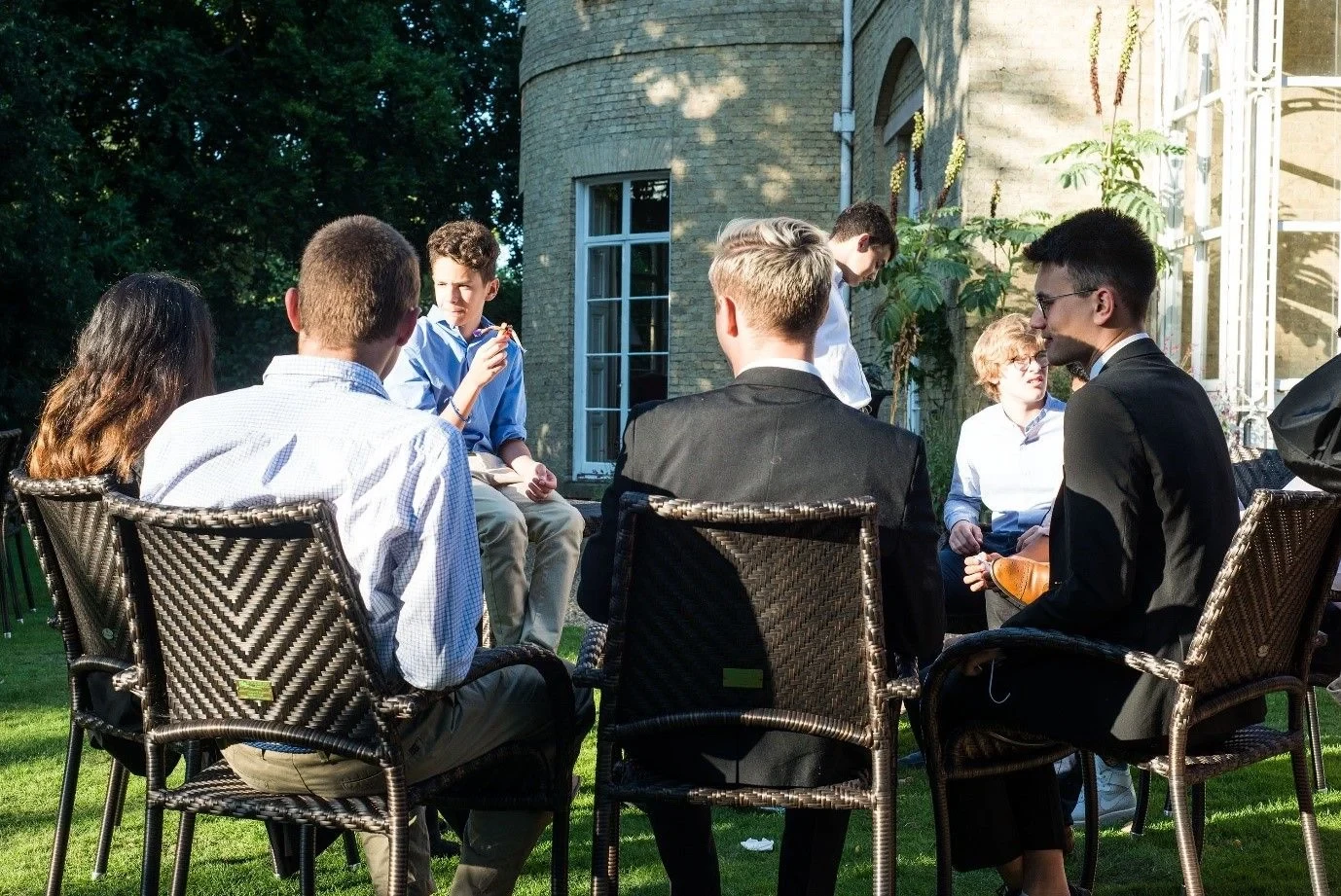
A Day in the Life at Atlas Summer Courses in Oxford
What does a typical day at Atlas Summer Courses in Oxford actually look like?
The answer depends on your age, subject, programme and timetable. Academic sessions, meals, activities and free time can all vary, so there is no single schedule that every student follows.
What students can expect is a balance between academic study and the wider residential experience. Depending on the programme, a day might include small-group teaching, independent work, time to explore Oxford, meals with other students and organised evening activities.
The original version of this article followed one previous Atlas student through a day involving the Ashmolean Museum, the Covered Market, seminars, dinner and punting. Those exact venues and times should not be treated as a current itinerary, but they still give a useful sense of how varied a summer day in Oxford can be.
Here is a more realistic look at what a day with Atlas Summer Courses might involve.
Starting the Day in Oxford
Residential students begin the morning at their accommodation before moving into the day's academic and activity programme.
Breakfast arrangements depend on the student's age and package.
For students aged 13–15, current Plus, Superior and Premier programme information includes full board. For students aged 16–24, those packages include half board.
Students should check the details of their own programme so they know exactly which meals are included.
The start of the day is also a chance to get organised.
What academic sessions do you have?
Do you need to bring work for a tutorial?
Is there an activity later?
Have you actually remembered your notebook?
A residential programme gives students plenty of opportunities to become more responsible for managing their own routine.
Morning Activities and Exploring Oxford
Depending on the timetable, students may have opportunities to take part in activities or experience more of Oxford outside their academic sessions.
Previous Atlas Summer Courses have included visits to museums, cultural attractions and other locations around the city.
One place featured in the original day-in-the-life article was the Ashmolean Museum.
The Ashmolean is the University of Oxford's museum of art and archaeology. It was founded in 1683, when it opened as Britain's first public museum and the world's first university museum. Its collections now range from ancient Egyptian material to European and Asian art and contemporary works. (Ashmolean Museum)
That makes it an interesting place to explore even if your Atlas subject has nothing directly to do with art or archaeology.
Visiting the Ashmolean Museum
A museum visit can give students something very different from a normal academic session.
You might encounter an object from a civilisation you have studied.
Discover an artist you have never heard of.
Notice how history, politics, religion and art connect.
Or simply spend twenty minutes looking at something because it interests you.
That kind of curiosity does not need to result in an assignment to be worthwhile.
The Ashmolean itself is part of the University of Oxford, but visiting it does not make an Atlas student a member of the University. Atlas Summer Courses remains an independent education provider.
Learning Beyond Your Chosen Subject
One advantage of spending the summer somewhere new is that students do not need to confine every experience to their course title.
A Law student can enjoy archaeology.
A Medicine student can become interested in art.
A Business student might discover ancient history.
Someone studying Creative Writing may find an object that inspires a story.
Academic interests often overlap in unexpected ways.
A summer programme can leave room for those discoveries alongside more focused subject study.
Lunch and Time in Oxford
Older students may have opportunities to experience more of the city during the time allowed within their programme and age-group rules.
One location mentioned in the previous Atlas article was Oxford Covered Market.
The Covered Market has been part of central Oxford since 1774 and today contains around 60 independent traders offering food, drink, retail and local products.
Its central location makes it a popular place for residents, students and visitors.
The exact arrangements for meals and free time vary, so students should follow the rules and timetable for their current programme rather than relying on an older Atlas itinerary.
What Is Oxford Covered Market?
Oxford Covered Market sits in the heart of the city centre and has operated for more than 250 years.
It originally opened with butcher shops but has developed into a mixture of independent food businesses, cafés, shops and specialist traders.
For students spending time in Oxford, places like this can become part of getting to know the city beyond its most famous historic buildings.
A residential experience is partly built from these ordinary moments too:
finding somewhere to eat;
working out where streets lead;
meeting friends between activities;
and gradually feeling less like a visitor.
Academic Teaching During the Day
Academic teaching is at the centre of Atlas Summer Courses.
The exact format depends on the student's age and programme.
For current Plus, Superior and Premier programmes, teaching includes small-group seminars with a maximum of eight students plus workshops.
Students aged 16–17 and 18–24 also take part in tutorial-style teaching and independent academic work.
This is considerably different from the old article's claim that seminars were capped at six and tutorials were always one-to-one.
Current Atlas tutorials for students aged 16+ involve two students and one tutor for one hour.
What Happens in a Seminar?
Seminars are designed around participation.
Instead of listening passively to a long lecture, students have opportunities to engage directly with the subject.
Depending on the discipline, they might:
analyse an argument;
work through a problem;
discuss evidence;
compare different interpretations;
respond to a case study;
or debate a difficult question.
With no more than eight students in current Plus, Superior and Premier seminars, there is space for students to contribute directly.
The aim is not simply to cover information.
It is to explore ideas.
What Happens in a Tutorial?
For students aged 16–17 and 18–24, tutorials give students a more focused opportunity to discuss work they have prepared independently.
Students complete academic work before meeting with their tutor for a one-hour session involving two students and one tutor.
The tutor can then question their reasoning and give personalised feedback.
Why did you reach that conclusion?
What evidence supports it?
Could you have approached the problem differently?
Is there a weakness in the argument?
The tutorial gives students space to examine their own thinking rather than simply being told whether an answer is correct.
Independent Academic Work
Older students are also expected to take responsibility for work outside formal teaching sessions.
For students aged 16–17 and 18–24, completing both pieces of tutorial work is part of successfully completing the course for the purposes of receiving an Atlas Letter of Recommendation.
Independent work may look different depending on the subject.
An arts or humanities student might research and develop an argument.
A student in a quantitative discipline may work through problems.
The important part is that students arrive at their tutorial having already attempted the academic challenge themselves.
Why Independent Work Matters
It is easy to feel that you understand something while a tutor is explaining it.
Working alone tests that understanding.
You suddenly discover:
I don't know how to begin.
I thought I understood this concept, but I can't explain it.
These sources disagree.
My answer works, but I don't know why.
Those moments are useful.
They give students genuine questions to take into their tutorial rather than simply waiting for the tutor to provide information.
Academic Life Doesn't Fill Every Hour
A residential academic programme should have a serious academic component.
But students also need time outside their lessons.
That wider programme might include activities, cultural experiences, excursions or social events depending on the course and current schedule.
These experiences give students opportunities to relax and spend time with people they may only have met a few days earlier.
For many students, that social side becomes an important part of the summer.
Dinner and Time With Other Students
Meals are a natural part of residential life.
Students may sit with people studying different subjects and coming from different countries.
A conversation could begin with what happened in class and end somewhere completely unrelated.
What is school like in your country?
Which university subjects are you considering?
What music do you listen to?
Have you ever been to Oxford before?
Those informal conversations are difficult to plan, but they are one of the reasons an international residential programme feels different from simply taking an academic course online.
Do Atlas Students Eat at Restaurants Every Night?
Students should not assume so.
The original article described a dinner at Pierre Victoire, a French restaurant in Oxford, as though restaurant dining formed part of the daily schedule.
That reflects a previous programme experience rather than a universal current arrangement.
Current meal provision depends on the student's age, course and package.
Families should check the programme inclusions rather than expecting a specific restaurant or dining schedule based on an old blog post.
Evening Activities
After academic sessions and dinner, the programme may include organised evening activities.
The exact activities change by programme and year.
Previous Atlas groups have taken part in everything from cultural events and theatre to social activities and punting.
Students should use their current itinerary to find out what is planned for their own course.
The important point is that an evening activity gives students a change of pace after academic work and another opportunity to spend time together.
Punting in Oxford
Punting is strongly associated with both Oxford and Cambridge.
A punt is a flat-bottomed boat moved through shallow water using a long pole pushed against the riverbed.
In Oxford, punting is commonly associated with the River Cherwell.
For somebody who has never tried it before, the technique can look considerably easier from the riverbank than it feels once you are holding the pole.
The previous Atlas day-in-the-life article ended with students going punting in the evening.
That is best understood as an example from a previous summer rather than a guaranteed current Atlas activity.
Why Activities Like Punting Can Be Memorable
The attraction is not simply the boat.
Students are sharing an unfamiliar experience with people they have recently met.
Someone needs to steer.
Somebody confidently claims they know what they are doing.
Five minutes later, the punt is facing the wrong direction.
These are the kinds of ordinary shared experiences that can help students become friends.
Not every memorable part of summer school needs to have an academic objective.
How Much Structure Do Students Have?
This depends heavily on age.
Younger students have a more structured and supervised programme.
Older students can have greater independence within the rules of their course.
This is why old descriptions saying students are simply “free to explore Oxford” should be used carefully.
Free-time arrangements depend on the student's age and current programme.
Students should always follow the guidance provided by the Atlas On-Course team.
A Day for a Student Aged 13–15
Students aged 13–15 can expect a more structured residential experience than older participants.
Current academic teaching for eligible Plus, Superior and Premier programmes includes small-group seminars with a maximum of eight students plus workshops.
The package information also includes full board for this age group.
Beyond academic sessions, students participate in the wider programme according to the timetable and supervision arrangements for their age.
The experience combines structured study with opportunities to meet other students and experience the programme location.
A Day for a Student Aged 16–17
For students aged 16–17, academic independence becomes more important.
Their programme can include:
small-group seminars;
workshops;
independent academic preparation;
and one-hour, two-student tutorials with a tutor.
Students also need to complete both pieces of tutorial work to meet the academic completion requirements for their Letter of Recommendation.
Current Plus, Superior and Premier meal arrangements for students aged 16–24 are half board.
This means students should look at their individual programme information carefully so they understand how academics, meals and the wider schedule fit together.
A Day for a Student Aged 18–24
Students aged 18–24 experience the greatest level of independence within Atlas's age groups.
Academic sessions can include small-group seminars, workshops, independent work and focused tutorials.
At this stage, students are expected to take greater responsibility for preparation and managing their academic commitments.
The residential and social experience remains part of the programme, but the daily structure reflects the greater independence appropriate to university-age students.
Again, current meal arrangements for Plus, Superior and Premier students aged 16–24 are half board.
Does Every Day Look the Same?
No.
A day involving a museum visit may be followed by one with a very different schedule.
Academic commitments can vary.
There may be excursions.
Activities change.
Students may have tutorial work to complete.
That variety is one reason it is misleading to present an old hour-by-hour schedule as though every Atlas student currently follows it.
A better way to think about the experience is as a combination of:
academic teaching
independent learning
residential life
activities
and time spent with other students.
The balance changes from day to day.
What About Excursion Days?
Some days can look very different from a normal academic day because the wider programme may include excursions.
Previous Atlas Summer Courses have included visits to destinations outside Oxford, but current itineraries vary.
Students should check the programme information for their dates rather than assuming a particular destination will be included because it appeared in a previous student story.
An excursion day may involve less conventional academic structure, while another day may contain more concentrated teaching or independent work.
Getting to Know Oxford
A summer in Oxford is also an opportunity to become familiar with the city itself.
Students may encounter places including museums, historic streets, markets, cultural venues and green spaces during their time there.
But Oxford should be treated as the location of the Atlas Summer Courses, not as evidence of affiliation with the University of Oxford.
That distinction is particularly important when an activity involves a University-owned museum or building.
Is Atlas Summer Courses Part of the University of Oxford?
No.
Atlas Summer Courses is an independent summer education provider and is not affiliated with the University of Oxford.
Students attending an Atlas Summer Courses in Oxford are Atlas Summer Courses participants.
They are not University of Oxford students.
Likewise, visiting University buildings or attractions such as the Ashmolean does not make the programme a University of Oxford course.
Does Atlas Use Oxford University Teaching?
Atlas provides its own academic programme.
For older students, this includes small-group seminars and tutorial-style teaching.
A tutorial-style teaching method should not be confused with institutional affiliation.
An Atlas tutorial in Oxford is an Atlas Summer Courses tutorial.
It is not teaching provided by the University of Oxford.
What About Somerville College?
The original version of this article repeatedly referred to Somerville College as though all students were based there.
That description should no longer be treated as current programme information.
Teaching and accommodation venues can change between courses and years.
Where Atlas hires facilities belonging to an Oxford college, students remain Atlas Summer Courses participants and do not become members of that college.
Current students should check their own confirmed programme information for venue details.
Why Older “Day in the Life” Articles Need Updating
Older student blogs are useful because they capture what one summer felt like.
But operational details change.
Class sizes change.
Tutorial formats change.
Accommodation changes.
Restaurants change.
Activities change.
Meal arrangements change.
That means an old schedule can become misleading even when the original story was completely accurate at the time.
The best way to preserve the value of these articles is to keep the experience while updating the factual framework around it.
What Should Students Expect From Their Own Day?
Expect variety.
You may have an academically intensive day involving seminars and tutorial preparation.
Another day may contain more activities.
An excursion may change the schedule completely.
Some evenings may be social.
Others may leave more time to recharge.
Your experience will depend on your course and age group.
That is why the programme timetable you receive is more useful than any generic “day in the life” article.
What Should Students Bring to Academic Sessions?
Bring whatever materials Atlas asks you to have for your programme.
For many students, it is also useful to have something for taking notes.
That may be a notebook or an appropriate digital device.
More important than the format is what you record.
You may want to note:
questions;
feedback;
ideas you want to investigate;
arguments raised during seminars;
or areas you need to return to during independent work.
The aim is not to transcribe everything the tutor says.
It is to capture what will help you think later.
How to Make the Most of a Day at Summer School
Participate in your academic sessions.
Complete your independent work.
Talk to your tutor.
Speak to people outside your existing friendship group.
Join activities.
Explore appropriately within the rules of your programme.
And give yourself time to rest.
Trying to make every minute productive is not necessarily the best way to experience an intensive summer programme.
A good day can contain both difficult academic work and an evening spent laughing with new friends.
Frequently Asked Questions About a Day at Atlas Summer Courses
What time does the day start?
Daily schedules vary by programme. Students receive information relevant to their own timetable rather than following one universal Atlas schedule.
Do students have academic classes every day?
Academic teaching is central to the programme, but exact teaching schedules vary, particularly around excursions and other programme activities.
How large are seminars?
Current Plus, Superior and Premier teaching uses small-group seminars with a maximum of eight students plus workshops.
How do tutorials work?
Students aged 16–17 and 18–24 take part in one-hour tutorials involving two students and one tutor after completing independent academic work.
Are tutorials one-to-one?
No. The current tutorial format described by Atlas is two students with one tutor.
Do students visit the Ashmolean Museum?
The Ashmolean featured in a previous Atlas Summer Courses. Students should check their current itinerary rather than assuming it will be included.
Is the Ashmolean part of Oxford University?
Yes. It is the University of Oxford's museum of art and archaeology. It opened in 1683 as Britain's first public museum and the world's first university museum.
Do students eat at Oxford Covered Market?
The Covered Market featured in the previous day-in-the-life article. Current meal arrangements and activities vary.
Do students go punting?
Punting has appeared in previous Atlas Summer Courses, but specific activities are not guaranteed across every course and year.
Are meals included?
Meal arrangements depend on age and package. Current Plus, Superior and Premier information specifies full board for ages 13–15 and half board for ages 16–24.
Can students explore Oxford independently?
Free-time arrangements depend on age and programme rules. Students should follow current guidance from the Atlas team.
Is Atlas Summer Courses part of Oxford University?
No.
A More Realistic Day in the Life
So what might a day actually feel like?
You wake up in Oxford and get ready for the programme.
Perhaps the morning includes an activity or time to experience part of the city.
You eat, talk to friends and move into your academic schedule.
During a seminar, eight or fewer students may spend several hours examining ideas within their subject.
If you are 16 or older, you may also be preparing independent work for a tutorial or discussing completed work directly with your tutor.
Later, the academic day gives way to the residential and social side of the programme.
Dinner.
An activity.
A conversation with somebody from another country.
Maybe a chance to experience something in Oxford you have never tried before.
Then you return knowing that tomorrow probably will not look exactly the same.
That is a more accurate picture of summer-school life than pretending every student follows the same timetable from 8am until 9:30pm.
Final Thoughts: A Day at Atlas Summer Courses in Oxford
A day at Atlas Summer Courses combines different parts of the summer experience.
Academic teaching is central.
For current older-student programmes, that means small-group seminars with a maximum of eight students plus workshops, while students aged 16–17 and 18–24 also complete independent work and attend focused tutorials with two students and one tutor.
Beyond academics, students experience the wider residential programme through meals, activities, excursions and time with other students, depending on their age and current itinerary.
Oxford provides the setting.
That may mean discovering somewhere like the Ashmolean, exploring the Covered Market or experiencing another part of the city during an organised activity.
The exact places will change.
So will the timetable.
What stays consistent is the combination of learning, greater independence, new experiences and an international student community.
The original day described in this article—breakfast, the Ashmolean, the Covered Market, seminars, dinner and punting—belongs to one previous Atlas summer.
Your day will be your own.
Ready to Spend Your Summer in Oxford?
Explore the current Atlas Summer Courses programmes in Oxford and find a subject suited to your age and interests.
Check your individual programme information for current teaching arrangements, accommodation, meals, activities and excursions.
Atlas Summer Courses is an independent summer education provider and is not affiliated with the University of Oxford.
Apply now to begin your application.
About the author
Rhys Mackenzie is responsible for creating and maintaining educational content at Atlas Summer Courses, helping students and families access clear, accurate information about studying in Oxford. With several years of experience in digital content and student-focused resources, Rhys specialises in presenting academic programmes in a way that reflects the quality and integrity of Atlas Summer Courses' academic offering. Learn more about Rhys here.
Summary
Experience a day at Atlas Summer Courses: breakfast, registration, trips to attractions like the Ashmolean Museum, independent lunch in Oxford, engaging seminars, dinner at Pierre Victoire, and sunset punting on the River Cherwell.